
Inventory ties up the most cash for any product-based business—thus, it’s also an area with plenty of opportunities for savings. However, not all inventory moves at the same pace; some products sell quickly, while others become obsolete, tying up capital and warehouse space. Minimizing this unsold or unused stock requires mastering inventory management, but it’s worth the effort. Solid inventory management is good for cash flow; with the right strategies, businesses can limit the amount of stock they write off and free up that money for growth initiatives.
What Is Obsolete Inventory?
Obsolete inventory, also called “excess” or “dead” inventory, is stock a business doesn’t believe it can use or sell due to a lack of demand. Inventory usually becomes obsolete after a certain amount of time passes and it reaches the end of its life cycle.
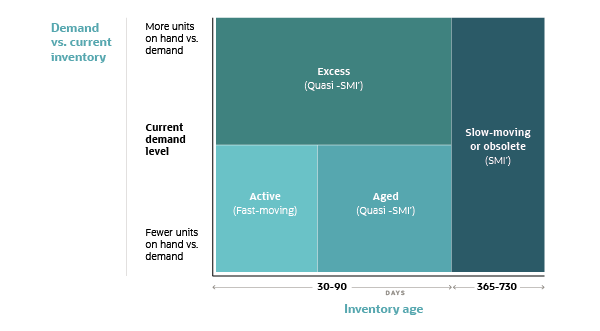
Inventory that becomes obsolete goes through multiple steps before it become unsellable. It usually starts as slow-moving inventory, then becomes excess inventory, and finally turns into obsolete inventory. Raw materials may also become obsolete. Minimizing both is a function of inventory best practices and analysis techniques.
Age and demand determine whether inventory is ‘slow-moving.’
Key Takeaways
- Organizations should immediately review their balance sheets to see if obsolete inventory is negatively impacting their finances.
- Poor forecasting, faulty design, imprecise purchasing, and outdated inventory management systems yield poor inventory visibility. These are root causes of obsolete inventory.
- Companies can limit the need to write off stock by monitoring inventory in real time and regularly measuring inventory turnover, days of inventory on hand, and other key metrics down to the SKU level.
- Employing inventory forecasting and management best practices plus technology delivers dual benefits: Businesses keep large amounts of excess inventory from piling up, and leaders spot slow-moving stock and figure out how to sell it before it loses all value.
Obsolete Inventory Explained
Businesses that sell physical products, as well as those in the maintenance and repair industry, need to track obsolete inventory. The amount of obsolete inventory an organization has is an important indicator of whether it’s optimizing purchasing and inventory management, aka material requirements planning, or needs to reevaluate those aspects of its business.
Because obsolete inventory can lead to major cash flow problems, it can hurt a business’s ability to weather a rough patch. If a company with slim margins consistently finds itself with obsolete inventory and doesn’t address the problem, it could end up in a deep hole.
Why Does Obsolete Inventory Matter?
Since obsolete inventory is stock a company can no longer sell, it can negatively affect a company’s overall financial health. The business has already invested money and, in the case of manufacturers, time into these goods and can no longer recoup those costs—and the longer the business stores the unprofitable inventory, the more money it will end up costing.
For many companies, a large percentage of their inventory may be obsolete at any given time, and they may write off most or all of those goods as a loss. Depending on where a given company falls, obsolete inventory could represent the breaking point for a struggling organization. Even for a healthy business, it hurts the bottom line.
How Does Obsolete Inventory Work?
Businesses must come up with their own parameters for when different types of inventory become obsolete, and this will vary among industries—think about food vs. furniture, for example—and product categories. Start with industry-specific standards to build guidelines for when inventory items should be categorized as slow-moving, excess, and obsolete.
Reasons inventory could become obsolete include problems with the product, poor forecasting, or inventory management shortcomings. But the good news is companies can minimize dead inventory by closely tracking their inventory positions: If you can spot items while they’re still in the slow-moving or excess stages, you can earn some money from them before they become obsolete.
Consequences of Obsolete Inventory
High rates of obsolete inventory can ultimately affect profitability and the long-term viability of a business. As the financial health of an organization declines, that damages its ability to attract investors or qualify for loans.
Obsolete inventory also shows up as an expense on the balance sheet, one of a company’s most important financial documents. Additionally, obsolete inventory is often ignored for far too long even as it takes up valuable space in the warehouse. Instead of using this costly real estate to store profitable and fast-moving products, old stock collects dust and continues to depreciate.
7 Causes of Excess and Obsolete Inventory
There are a number of contributing factors that can cause inventory to become obsolete. Businesses should take a close look at their operations and address any of the following issues before they lose money.
Inaccurate Forecasting
Poor forecasting is one of the biggest drivers of obsolete inventory. If a company forecasts certain SKUs will be top sellers for the first two quarters, it will naturally place large orders with the suppliers for those items. But if demand fails to live up to those expectations, the business is left with a lot of extra inventory. Over time, that inventory will lose its value.
Inadequate Inventory Management System
An inventory management system that shows inaccurate numbers or lacks the reporting capabilities to give a comprehensive view of current stock will only exacerbate the obsolete inventory problem. If the inventory management system tells a retailer it has 100 pairs of pants in a certain size, but there are actually 400 pairs in the warehouse, for example, the retailer will end up buying more product than it needs. Similarly, if a business can’t monitor inventory turn or days of inventory on hand, it has to guesstimate when it should order more inventory.
Poor Product Quality or Design
Sometimes it’s not hard to see why products flop. Perhaps an item breaks easily or doesn’t work as advertised due to either a design oversight or a mistake in the manufacturing process. Customers may return these items—a problem in itself—and leave negative reviews. As others hear about issues, sales plummet. Similarly, a new item that has no advantage over similar products already on the market could underperform and result in excess inventory.
Purchasing Mistakes
Purchasing should be data-driven and closely tied to forecasting and demand planning. When it’s not, and the purchasing team is buying based on anecdotal knowledge or other unreliable factors, it leads to problems. Deal-hungry purchasing managers willing to buy everything in bulk to reduce the cost per item can also leave a company with too much product on its hands.
Inaccurate Lead Times
Lead times make buyers’ jobs more difficult. They need to understand how long after they place an order they’ll actually receive products, which could vary among vendors. Extended lead times, especially if they’re longer than expected, can be especially problematic because demand for a product could drop in the months that pass before a business receives the goods.
Rapid Shifts in Consumer Preference
Consumer tastes can change quickly, and many companies struggle to keep up as last quarter’s top seller falls out of favor, new trends arise, and competitors innovate. Industries like fashion and home goods are especially vulnerable, where a new influencer trend or style can make existing offerings outdated within months. Service-based businesses, such as managed service providers (MSPs), face similar challenges—hardware or software they’ve stocked becomes obsolete when new tech takes the industry by storm. Businesses should keep an eye on the market, including social media trends, and adjust their inventory purchases accordingly, or they risk holding inventory that no one wants.
Supply Chain Disruptions
Delayed materials or goods can quickly turn obsolete as customers stock up on competitors’ products or move on to alternatives before items hit shelves. Supply chain disruptions from transportation delays, raw material shortages, or global events can also cause businesses to order excess safety stock, leaving surplus inventory when conditions normalize. The longer lead times stretch, the greater the risk that goods arrive too late to capitalize on current demand.
Identifying Obsolete Inventory
The Federal Reserve says that at the end of January 2026, the total business inventory/sales ratio, based on seasonally adjusted data, was 1.35. That means that, as January ended, US manufacturers and retailers were holding approximately $1.35 of inventory for every $1 in sales.
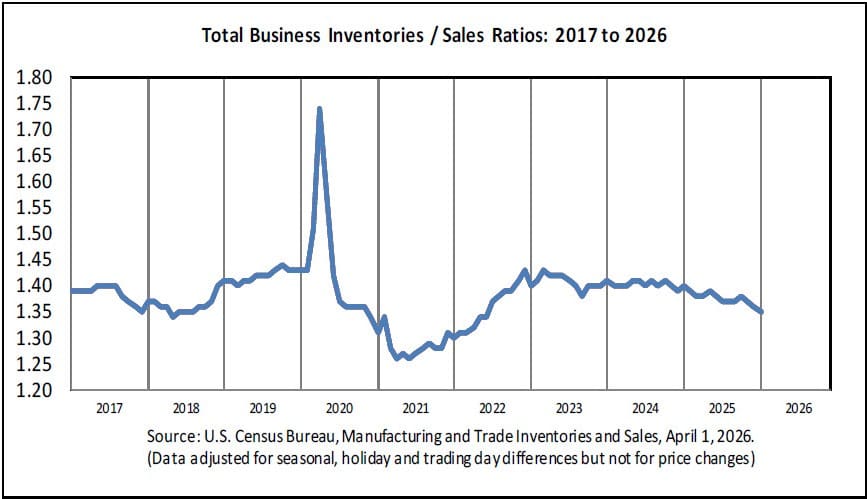
With that much capital tied up in stock, companies need to proactively analyze their inventory to identify which items are at risk—and take steps to move them before they lose all value.
Inventory Analysis
It’s critical that companies regularly take a close look at inventory levels and trends as part of their efforts to maximize supply chain visibility and efficiency. Staff should review sales numbers as part of their inventory analysis on at least a monthly basis and compare those to current inventory levels, often determined with a physical inventory count. Businesses can use these numbers to calculate inventory turnover, which is a ratio of how often it sells-through inventory over a certain period of time.
The formula for calculating inventory turnover is:
Inventory turnover = Sales / Average inventory
An organization may find that certain products are highly seasonal—they’re much bigger sellers in the fall and winter than the spring and summer, for example—or that sales dropped off suddenly for a certain category of goods. In this case, they may perform inventory cycle counting for specific categories.
Another metric that can help spot the source of obsolete inventory is days (or months) of inventory on hand. This tells a company how long it has had certain stock in its warehouse. To measure days of inventory on hand, use this formula:
Days of inventory on hand = Average inventory / Cost of goods sold × 365
Reviewing these and other inventory metrics regularly will help businesses improve purchasing and inventory management, which helps decrease obsolete inventory.
Benefits of Getting Rid of Obsolete Inventory
Holding onto obsolete stock is expensive—not just in sunk costs, but in ongoing storage expenses and missed opportunities while funds sit in inventory. Clearing out old goods brings far-reaching benefits across three areas:
- Cost savings: Obsolete inventory ties up working capital and racks up carrying costs like storage, insurance, and handling expenses for products that may never generate revenue. Clearing dead stock can bring in a cash infusion or reduce ongoing overhead, freeing up funds for other products or growth initiatives. And over time, fewer inventory write-offs mean stronger margins and more sustainable net income.
- Better financial reporting: Dead stock can obscure financial performance by inflating inventory assets and carrying costs. Minimizing obsolete inventory reduces the chance of overlooking the dusty corner shelves of the warehouse that haven’t been counted or valued in ages.
- Optimized warehouse space: Old inventory takes up valuable space that could go to more profitable, faster-moving products. Clearing it out also reduces bottlenecks in picking and fulfillment and can even lower storage costs if the business downsizes its footprint.
6 Ways to Get Rid of Obsolete Inventory
As much as organizations might try to eliminate obsolete inventory, most will be left with at least a small number of items they can’t sell. When that happens, here’s what they can do with that stock, in order of what’s likely to drive the best financial returns.
-
Remarket Items
If the items still have solid sales potential, rethink how you position them. This could include moving them to a different place in a store or on a website or highlighting them in a marketing email to customers. Businesses could also experiment with different channels—if certain items aren’t selling in store, promote them through social media or online ads that drive shoppers to the ecommerce site.
-
Sell Items at a Discount
Promotions are a proven way to move products that aren’t selling as quickly as expected. While this might eat into profit margins, it offers a better return on investment than the other options listed below. Try a slight discount at first and increase it as necessary until the products start coming off the shelves at a faster clip.
-
Bundle Products
Items that don’t sell well on their own may perform better as part of a package. Selling a core item with two or three related, inexpensive accessories could help get rid of slow-moving or excess products. It’s a good idea to price the bundle lower than what it costs to buy all three items separately to encourage sales.
-
Liquidate Items
In most industries, there are liquidators that buy leftover inventory at a steep discount and then resell it. This is a good option if you tried remarketing, discounting, and bundling and it didn’t move enough product. While the price liquidators pay may be at or below cost, it’s still better than writing off obsolete stock as a loss.
-
Donate Obsolete Inventory
Businesses may be able to donate their obsolete inventory to charity. Not only is this much preferred to disposing of the items, but it can also make organizations eligible for a tax deduction equivalent to the cost of those products. This option is more relevant for retailers and distributors that sell finished goods, rather than manufacturers or suppliers that work with raw materials.
-
Write Off Obsolete Inventory
When a company has exhausted all other options, it must write off obsolete inventory as a loss. Under Generally Accepted Accounting Principles, businesses should list the obsolete inventory as an expense and use an inventory reserve account (a type of contra asset account) to offset the loss.
5 Ways to Prevent Obsolete Inventory
What’s even better than getting rid of obsolete inventory? Not getting stuck with it in the first place. Here are a few ways to sell as much of the stock you purchase as possible.
-
Accurately Forecast Demand
As noted earlier, forecasting is key to striking the right balance with inventory. Businesses should spend time closely studying historical demand, including seasonal trends for certain products, as they build forecasts. Powerful forecasting tools, such as an inventory optimization module, that can account for internal and external factors will help close the gap between expectations and reality. Accurate forecasting requires both the right people and the right tools.
-
Keep Inventory Visible and Available Across Channels
When inventory isn’t moving in one location, visibility across channels helps you redirect it before it goes stale. Instead of letting stock sit in an underperforming store while another location sells out, you can shift inventory to where it’s actually needed—and avoid reordering for channels where demand has cooled.
-
Know Your Reorder Point
To avoid unnecessary inventory, staff must know when they should order more items and how big those orders should be. Software can trigger alerts for purchasers when it’s time to reorder, but supply chain employees need to be on the lookout for a surge or drop in sales of a certain inventory item.
Here’s the general formula for calculating reorder point:
Reorder point = (Average daily unit sales × Average lead time in days) + Safety stock
-
Track Inventory Levels in Real Time
Visibility into real-time inventory levels is critical in helping organizations optimize purchasing and inventory management, which will minimize obsolete stock. Supply chain employees need constant access to their inventory positions for every SKU so they can place purchase orders or promote products when stock is low or high, respectively. These numbers can change quickly, so employees need the most up-to-date information. ERP inventory systems draw on a variety of data sources to help companies better understand the performance history of various SKUs, among other insights.
-
Use Inventory Management Software
The right inventory management software will help companies adopt all of these strategies and cut down on obsolete inventory by tracking the movement of items in and out of the warehouse as they happen and alerting staff when the business is running out of a specific item. Inventory management software can automatically track inventory-relevant key performance indicators like reorder point, days of inventory on hand, and inventory turn and deliver daily reports with key numbers. An inventory management solution can also help build more accurate forecasts when it’s integrated with sales and financial software.
Inventory Control System vs. Inventory Management System
|
Inventory Control System |
Inventory Management System |
|---|---|
|
Manages existing stock and warehouse layout. The system also tracks the condition of stock. |
Plans stock replenishments and forecasts future demand. Gauges order cycles and the amount and type of items. Automatically orders inventory. |
|
Receives new inventory and returns and processes transfers. |
Manages demand planning and forecasting. |
|
Manages pick-and-pack inventory for shipping. |
Decides safety stock, reorder cycles, and replenishment stock. |
|
Uses barcode or RFID to trace and record stock transactions. |
Gathers near- and real-time data using barcode or RFID and finds trends to prevent stockouts and overstocks. |
|
Tracks receipt, transfer, or packing of items by lot or serial number, pallet, location, or date and notes where the stock resides in the warehouse. |
Traces and supports inventory processing as items move through warehousing and production phases to delivery or sales. |
|
Manages sales invoices and orders for suppliers. |
Finds obsolete inventory. |
|
Sends alerts about low stock levels or expiration dates. |
Improves warehouse layout and storage of stock. |
|
Supports physical and cycle counts, audits inventory, and generates reports. |
Supports physical and cycle counts. |
This table of features for inventory control and inventory management systems can help businesses decide whether they need one of the systems or both.
Obsolete Inventory Example
Central City Electronics is a home-electronics retailer with four stores and a website. Last year, its profit fell for the first time in a decade, and through two quarters this year, total profit is still down. After reviewing the numbers, the retailer’s accounting team notices a recent rise in inventory costs.
Upon closer inspection, the accountants realize the company wrote off hundreds of thousands of dollars’ worth of product last year, much of it 1080p LCD televisions. Its forecast called for 1080p TVs to be big sellers, but far more people bought 4K and OLED sets instead. A purchasing manager made matters worse by buying 200 more 1080p sets than the forecast called for in exchange for a lower price per TV.
Central City Electronics only gets monthly inventory reports, so it doesn’t realize the problem until it’s too late. At that point, even most liquidators aren’t interested in TVs with this outdated technology.
This experience convinces the business to invest in an inventory management system that updates inventory numbers in real time. The system also allows Central City Electronics employees to view inventory turn and days of inventory on hand by product category or SKU and notifies them when it’s time to place a new purchase order—with suggested quantities. Any purchase order is automatically sent to a manager for approval to prevent over-ordering.
After two quarters with the inventory management software, obsolete inventory costs are down 70%, saving Central City a bundle of money and putting profit back on an upward trajectory. When the business does need to write off inventory, an integration with the accounting system automates much of the work involved in creating an obsolete inventory journal entry (opens in new tab) that debits the write-off and credits the contra asset account.
Take Control of Your Inventory With NetSuite Inventory Management
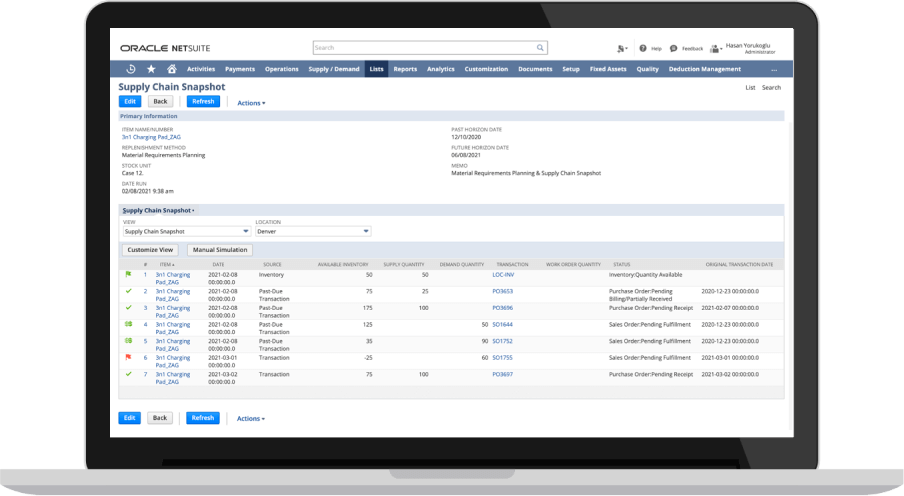
Tracking stock across locations and identifying slow-moving items before they become obsolete requires real-time visibility and accurate demand forecasts. NetSuite Inventory Management helps businesses minimize their inventory costs without sacrificing the agility they need to meet evolving customer expectations. With features for managing multiple locations, setting reorder points, automating replenishment, and optimizing safety stock, NetSuite provides a unified look at companywide inventory. Automated alerts notify teams when items hit aging thresholds or when it’s time to reorder, while integrated financial management tools simplify accounting for write-downs and write-offs.
NetSuite’s Inventory Dashboard
Many businesses waste way too much money on obsolete inventory. While writing off small amounts of inventory is often unavoidable, obsolete stock doesn’t need to be such a big contributor to liabilities on the balance sheet.
Finding a second home for inventory that has lingered in the warehouse for too long is one way to recoup the cost of excess inventory. Software that provides detailed inventory visibility and extensive reporting can help prevent the problem before it ever happens by giving employees the information they need to make smarter purchasing and inventory management decisions. Ultimately, reducing obsolete inventory is a painless way for product-based companies to boost their bottom lines.
Obsolete Inventory FAQs
How do you determine if inventory is obsolete?
Businesses typically identify slow-moving stock with inventory metrics like turnover rate and days of inventory on hand. Regular inventory audits and aging reports use these metrics to flag items that haven’t sold within a defined period—often six months to a year.
What is the accounting treatment for obsolete inventory?
Under US Generally Accepted Accounting Principles and International Financial Reporting Standards, businesses must value inventory at the lower of its original cost or net realizable value. When inventory becomes obsolete, companies expense it by writing it down to its reduced value or writing it off entirely.
Is obsolete inventory a part of COGS?
Obsolete inventory write-downs are commonly included in the cost of goods sold (COGS), especially for routine obsolescence. However, some companies present significant or unusual write-downs as a separate line item on the income statement. Either way, the write-down reduces gross profit or operating income for the period.
How do I get rid of obsolete inventory?
Companies can eliminate obsolete inventory by remarketing, discounting, bundling, or liquidating items. If goods still aren’t selling, some companies donate them to charity for a potential tax deduction or write the inventory off as a loss. The best approach depends on the items’ market value and how quickly the business needs the space or capital.
Are damaged goods considered obsolete inventory?
Damaged goods aren’t always obsolete inventory. Physically compromised items may or may not be sellable or usable for parts, while obsolete inventory refers only to stock that lacks sufficient customer demand to sell. However, accountants typically write off damaged goods and obsolete inventory in a similar manner.