NetSuite Building Materials ERP


What is Building Materials ERP?
Building materials ERP blends financial management with inventory, production, and logistics workflows tailored to lumber, aggregates, cement, and other construction inputs. NetSuite delivers everything in the cloud, so every load ticket, kiln cycle, and sales order posts instantly to the general ledger and job cost ledger for real-time margin analysis.
Keep finance and operations in sync with built-in features
Automated control
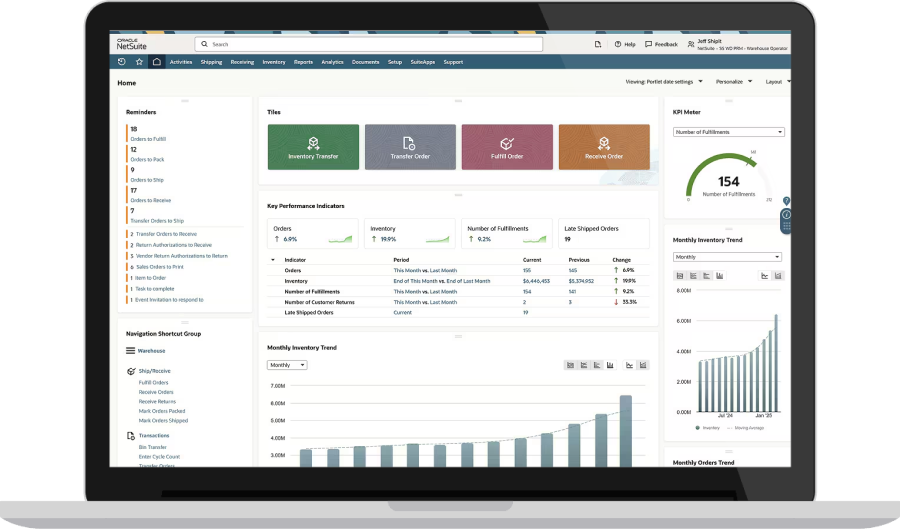
With NetSuite, built-in features like automated unit-of-measure conversions, seasonality-aware demand planning, and role-based dashboards keep finance and operations aligned, helping prevent stockouts and write-offs and accelerating the monthly close.

NetSuite Building Materials ERP features
NetSuite layers industry-specific capabilities onto its core financial modules, transforming standard accounting into end-to-end control for building materials operations.
Accounting software
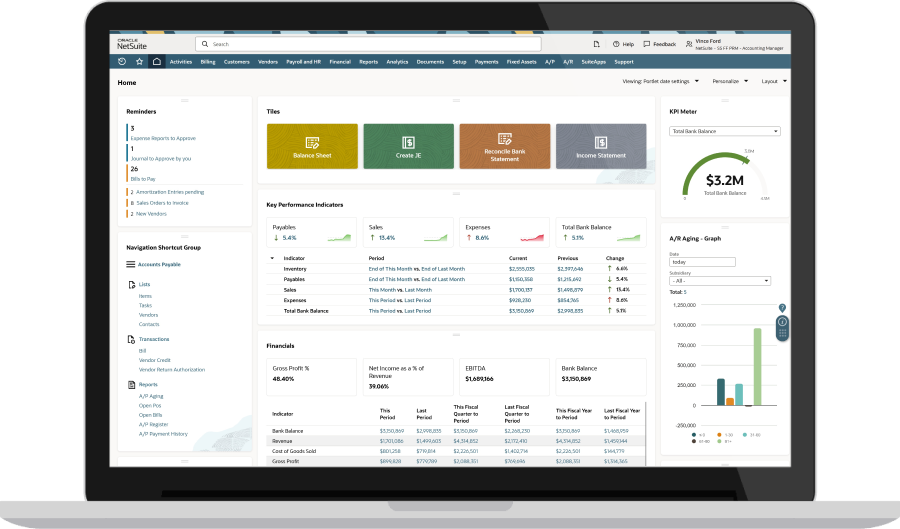
Cloud-based accounting automates GL, receivables, payables, and tax management for every mill, quarry, and distribution yard, replacing spreadsheet reconciliations with real-time cost rolls that show profit per board foot, ton, or bag.
Financial management
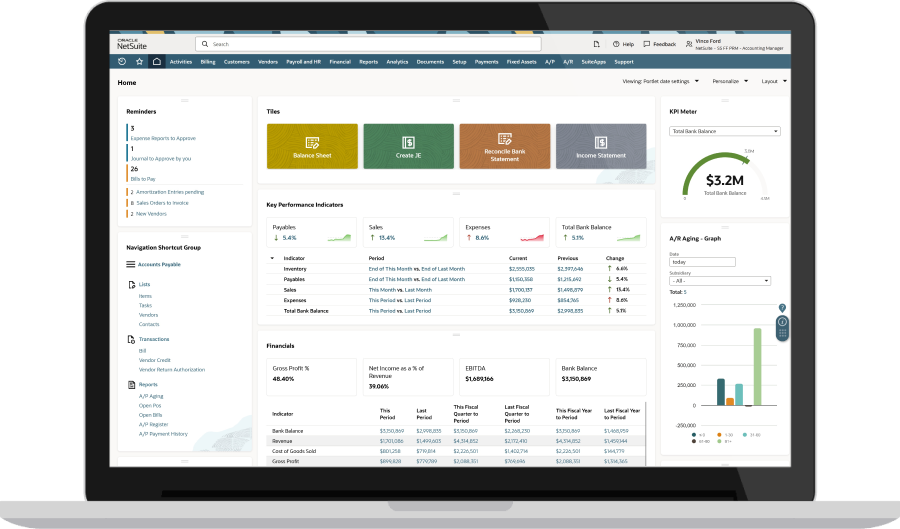
Cash flow forecasting, budget vs. actual dashboards, and automated multicurrency consolidations give finance teams instant insight into material-price exposure, energy spend, and project margins, enabling quicker hedging and CapEx decisions across plants.
Demand planning
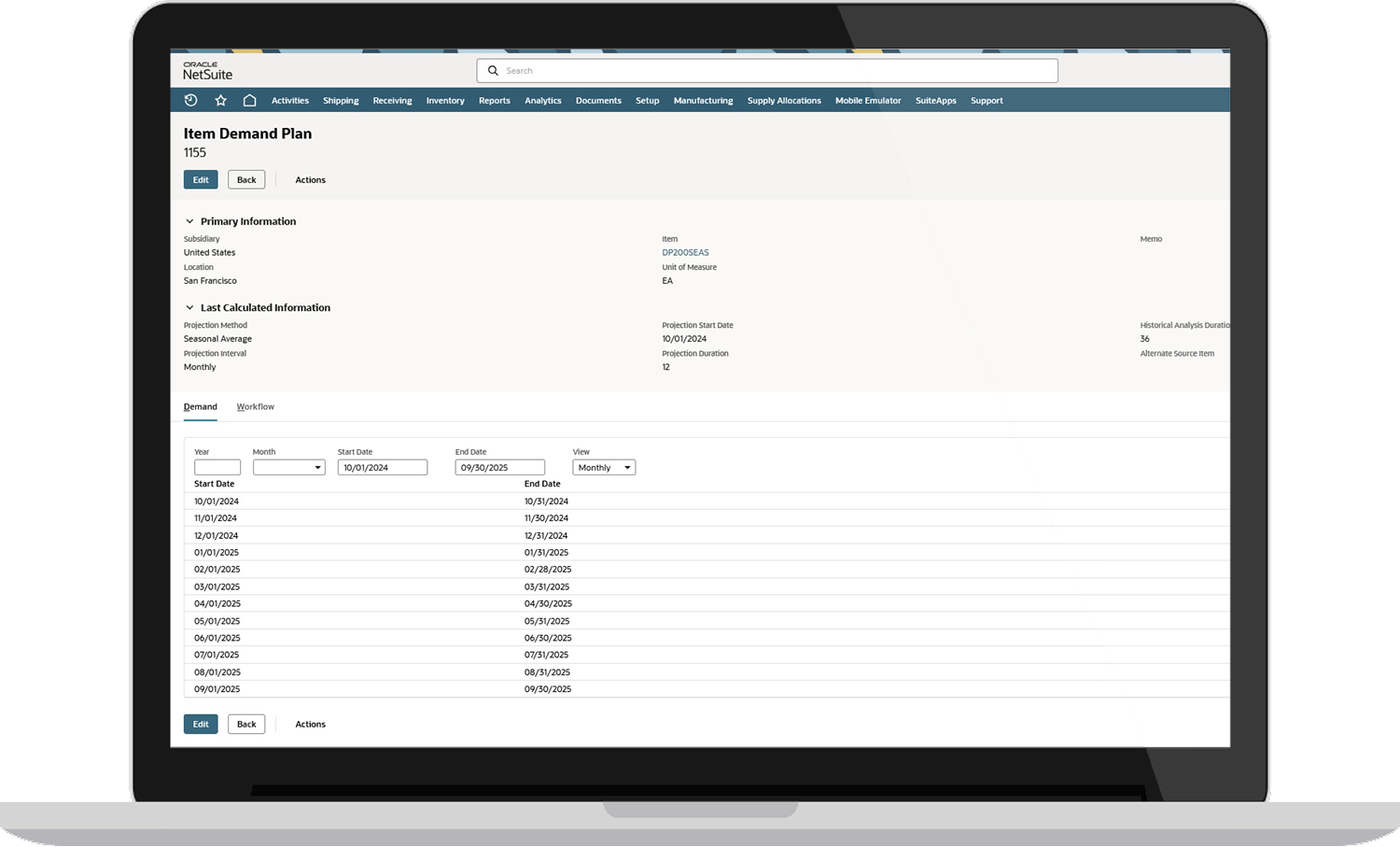
NetSuite’s native demand-planning engine predicts required inventory from multiyear sales records and distributor forecasts, letting mills ramp up production ahead of peak build seasons and schedule kiln maintenance during demand lulls.
Enterprise performance management
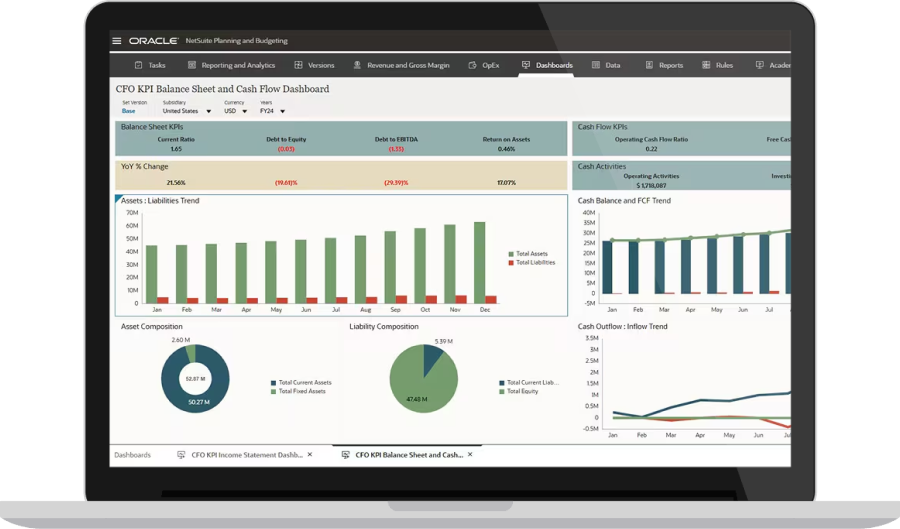
With driver-based planning, budgeting, and scenario modeling inside NetSuite EPM, teams can test cement-price swings, kiln shutdowns, new plant rollouts, and other factors, then push approved plans straight to operations for execution and variance tracking.
Inventory management
NetSuite continually recalculates reorder points using lead-time, seasonal demand, and days-supply targets, flagging moisture-sensitive or high-value SKUs so planners can maintain lumber, cement, and aggregate availability without tying up excess working capital.
Order management
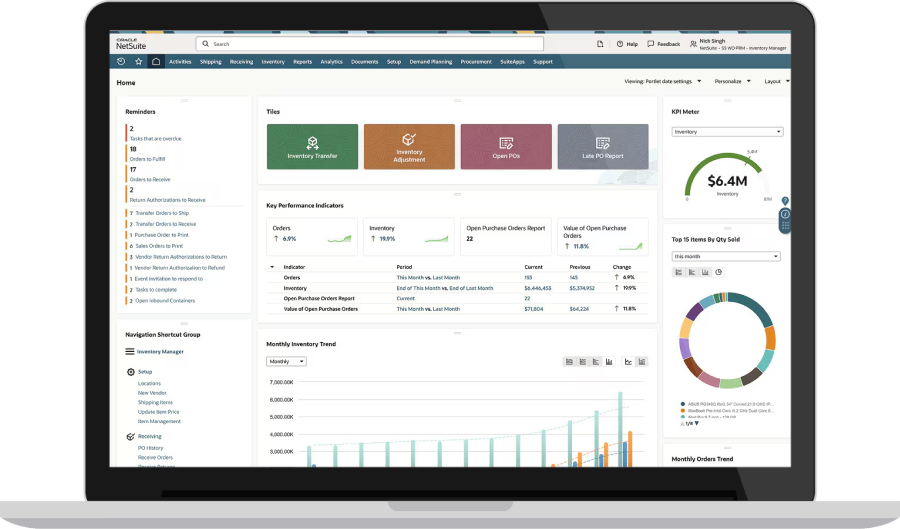
From quote to cash, NetSuite orchestrates mixed-unit orders—cubic yards, board feet, tons—and dispatches via trucking or rail, automatically adjusting price and freight when contractors change volumes or delivery windows.
Supply chain control tower
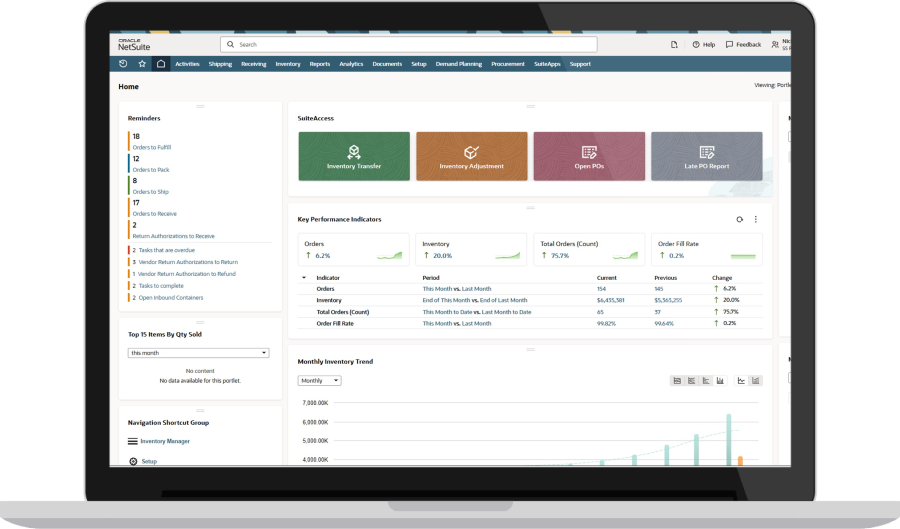
A real-time control tower visualizes inventory, production, and in-transit containers across quarries, plants, and distribution yards, helping planners reroute loads or consolidate inbound shipments to cut freight and demurrage costs and maintain just-right stock levels despite commodity volatility.
Warehouse management
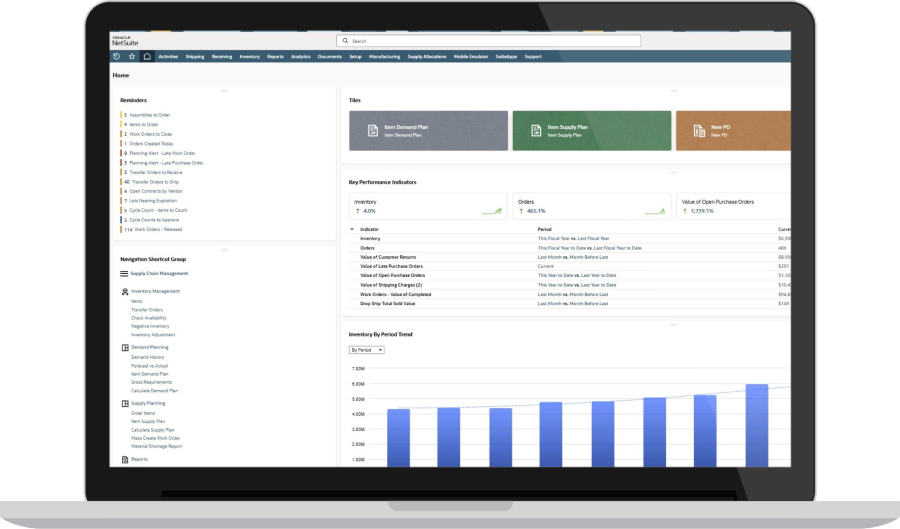
Barcode-driven WMS and native quality workflows track factors including lot numbers, compressive-strength test results, and aging dates, so teams ship only spec-compliant batches while maximizing space in high-throughput yards. Wave picking and cartonization routines speed loading of heavy pallets, minimizing double-handling.
Procurement
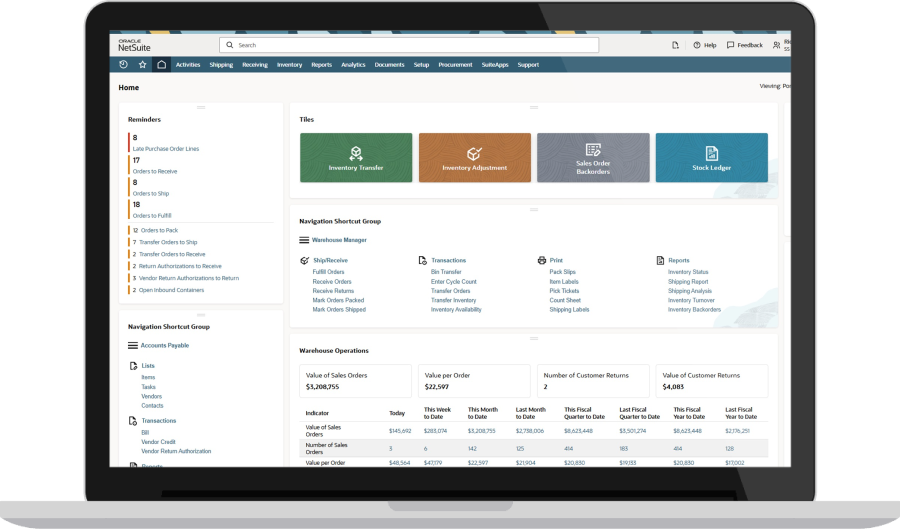
Automated source-to-pay workflows enforce approvals, match scale tickets to invoices, and track vendor rebates, helping buyers lock in future-dated contracts at favorable terms and reduce maverick spend.

Learn how ERP can optimize your
business
Free Product
Tour(opens in a new tab)

NetSuite gives us access to data that’s going to fuel growth and allow us to make better decisions. Now, our controller can focus on that instead of spending 30 hours a week building individual reports for our sales team.
NetSuite Building Materials ERP benefits

Challenges NetSuite Building Materials ERP solves

SuiteSuccess – Your proven path to success
Leveraging more than 25 years of experience working with tens of thousands of organizations, across all industries and business sizes, our SuiteSuccess customer lifecycle methodology helps customers transform their business. It starts by building an AI-powered, integrated business suite with industry-specific solutions. Then we engage with your business to ensure that we’re addressing your specific needs and guiding you along the way on how to best consume and optimize NetSuite to solve challenges of today and the future. This approach helps ensure customers experience faster time-to-value, better ROI, and greater employee adoption.
Learn more
How much does NetSuite Building Materials ERP cost?
Companies of every size, from prerevenue startups to fast-growing businesses, have made the move to NetSuite. Looking for a better way to run your business but wondering about the cost?
Users subscribe to NetSuite for an annual fee. Your license is made up of three main components: core platform, optional modules, and number of users. There is also a one-time implementation fee for initial setup. As your business grows, you can easily activate new modules and add users — that’s the beauty of cloud software.
NetSuite Building Materials ERP Software is available as an add-on module.
Contact NetSuite Now(opens in new tab)Resources

Data sheets
Access specifications, features and benefits of NetSuite Building Materials ERP.

Customer stories
Spark ideas with success stories from NetSuite customers.

Product demos
See NetSuite Building Materials ERP in action.

Essential learning
Discover best practices and learn more about business fundamentals from beginner to advanced levels.
Please note that some capabilities described on the page require partner integrations.