
Startup costs for a small business can run anywhere from a few thousand dollars for a home-based operation to several hundred thousand for a storefront with inventory and payroll. Whatever the number, it comes from two kinds of spending: one-time costs to get the business running, and ongoing costs that recur for as long as it operates.
Founders tend to budget carefully for the one-time costs they can picture—a lease deposit, a website, the first round of inventory—but underestimate the recurring ones that persist after opening day. That imbalance is a common source of the cash shortfalls that force many new businesses to close. Pricing out both cost categories allows startups to build a business plan they can confidently take to a lender or investor. This guide breaks down the common one-time and ongoing expenses involved in getting a startup off the ground, the hidden costs founders tend to miss, and how to calculate your own number.
What Are Small Business Startup Costs?
Small business startup costs are the expenses a new venture incurs before it opens its doors and during its first months of operation. These costs generally split into two buckets: one-time expenses tied to launch and ongoing costs that continue once the business is running. Most companies will need equipment and supplies; communications and collaboration technologies; licenses and permits; professional services, such as a lawyer and for-hire bookkeeper or accountant; advertising and marketing; and a website to reach customers. The small-business format also plays a part in the bill. For instance, a home-based services business might launch on a fraction of what a storefront retailer must spend on lease deposits, build-out, and opening inventory.
Key Takeaways
- Estimating both one-time and ongoing costs guarantees your small business startup has enough capital to sustain itself for a period of time without completely relying on sales.
- Document, document, document: To get a loan, you’ll need copies of agreements with key suppliers and clients, a projection of expected income and costs, and more. So, keep records.
- Typical small business startup expenses include research, licensing fees, payroll, insurance, and rent.
Small Business Startup Expenses Explained
What a business spends to get off the ground depends heavily on what type of business it is. A freelance consultant working from home might open for a few hundred dollars in software and licensing, while a restaurant can spend six figures on a lease, build-out, equipment, and opening inventory before serving a single customer. Several factors account for most of that spread:
- Business model: Home-based and online businesses avoid the lease, utilities, and build-out costs that dominate a physical location’s budget.
- Industry: A retailer or manufacturer needs inventory and equipment up front; a services business may need little more than a laptop and professional licensing.
- Location: Rent, wages, permits, and registration fees all vary by state and city.
- Headcount: Payroll, benefits, and workers’ compensation insurance climb with every employee hired before revenue arrives.
- Legal structure: Registering as an LLC or corporation carries filing fees a sole proprietor avoids, and the business entity a founder chooses affects taxes, liability, and the paperwork required to open.
These expenses also fall into two groups at tax time: startup costs—money paid before opening that would be deductible once the business is running, such as market research and prelaunch advertising—and capital expenses, the physical assets like equipment or vehicles that are deducted gradually through depreciation. That distinction affects how much a startup can write off in year one, covered further down.
Why Calculate Startup Costs?
Running out of cash is one of the most common reasons new businesses fail. Bureau of Labor Statistics data shows that 22.1% of new businesses close within their first year, and nearly half are gone by year five. A realistic estimate of startup costs is the first defense against becoming one of these casualties.
Calculating startup costs tells you two things: how much capital you need to open the doors, and how much you need to keep them open. Totaling one-time expenses shows the upfront investment required to launch. Totaling ongoing expenses—payroll, rent, cost of goods sold—shows your monthly burn and helps you analyze your cash flow needs, so you know how much business revenue you need to at least break even. That total has two other uses as well. It tells you how large a cushion to set aside—many founders aim for six months of operating expenses—so the business isn’t leaning on sales from day one. It’s also the figure lenders and investors ask to see, along with an estimate of when the business expects to turn a profit.
Why You Should Outline Startup Costs in Your Business Plan
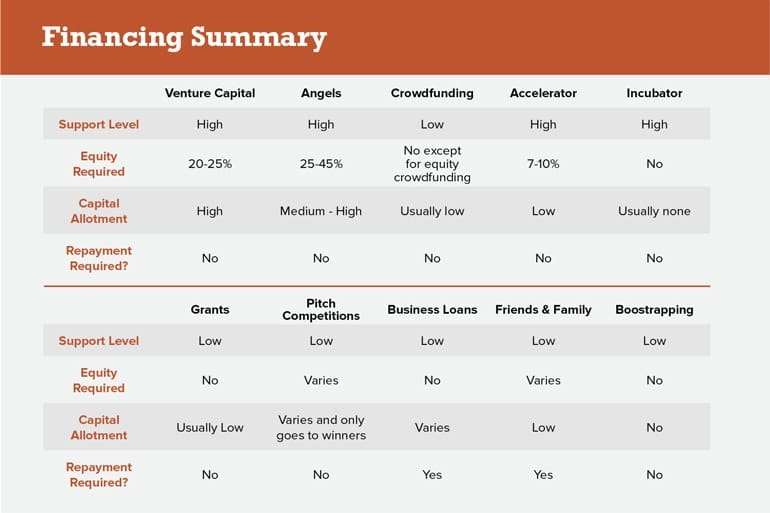
While venture capital dominates headlines in the business press, very few companies pursue that financing route. According to the PitchBook-NVCA Venture Monitor, the VC industry invested $339 billion to fund just 16,700 US companies in 2025, which is a fraction of the millions of new business applications filed. Most founders rely on credit cards, loans, and lines of credit to fund their startup costs. Whatever route you take, you must know approximately how much you’ll need before seeking outside funding. The documentation required for most loans includes copies of agreements with key suppliers and clients along with a detailed one-year projection of expected income and costs and a narrative on how you expect to make those numbers match up.
15 Common Small Business Startup Expenses
Though the list below is divided into one-time and ongoing startup expenses, you’ll notice some of them overlap. What’s important is being thorough and honest about your expectations.
One-time Expenses
These costs are typically incurred once, before or right around the business’s opening day:
- Research expenses: A business plan provides an overview and a map of your new business. It will force you to consider costs and different strategies to certify your business’s longevity. This includes carefully researching the industry you’re in, your target market, and the best tax structure for your needs. If you’re hiring a market research firm, this expense needs to be put in your business plan.
- Borrowing costs and raising funds: Financing can be in the form of equity (such as issuing stock) or debt (such as a bond). Most small business owners take on debt from banks or the Small Business Administration. Depending on the financial institution, you may need to pay an initial fee, such as an application or origination fee. Of course, there will be ongoing costs in the form of principal and interest payments.
- License and permit fees: Depending on the nature of your business, you may need to obtain authorizations and inspections to get your business license or permit. Some industry-specific permits may cost more than others. You’ll also need to factor in filing articles of incorporation or articles of organization, depending on state guidelines.
- Equipment, furniture, and supplies: All businesses need some type of supplies and equipment. These costs may be one-time or ongoing, depending on whether you make a purchase outright or decide to lease.
- Incorporation fees: Filing fees for registering an LLC or partnership vary widely from state to state and can reach several hundred dollars. While skipping optional costs, such as registered agents or attorneys, to handle the paperwork can lower the up-front figure, a filing mistake can turn into a bigger expense down the line.
Ongoing Expenses
These costs continue well past opening day, recurring monthly or annually as the business operates:
- Marketing: Advertising and promotion aren’t only for the early stages. You’ll need to develop and implement a marketing plan that should be factored into ongoing costs. And don’t neglect a PR strategy, which can increase brand visibility and build trust with the public.
- Website fees: Beyond the initial build, a website carries recurring costs for domain registration, hosting, and any ecommerce or booking plugins the business relies on. Costs vary based on who builds the site—DIY, freelance, or an agency—but even a simple site needs occasional updates and security patches, which add up over time.
- Payroll and benefits: The cost of human resources includes wages, salaries, commissions, bonuses, stipends, and any employee benefits you offer. Planning on fair compensation secures lower turnover and attracts talent to your organization. This cost can also include contractors if you’re not hiring employees.
- Property lease or rent payments: A physical location means a recurring monthly lease or rent payment, plus a security deposit and often the first and last months’ rent to sign. Home-based and fully remote businesses skip this cost entirely, one of the biggest reasons their overall startup budget runs so much lower.
- Insurance: Business insurance can include workers’ compensation and short-term disability. Experts warn to be careful of overspending here. Also consider insurance to protect your customers as well as your personal assets from any business-related legal liabilities. Insurance can either be an annual or monthly cost.
- Utilities: Water, electricity, internet, and phone bills are common costs for brick-and-mortar businesses. These costs can also apply to home office spaces, but you can’t deduct all your utilities.
- Technology: Technological expenses include the cost of computers, information systems, and business software, including accounting and payroll software. Most of these costs are billed monthly or annually—software-as-a-service subscriptions and other software license renewals, for example—but hardware maintenance costs also start to inflate the bill as equipment wears down.
- Travel expenses: Travel expenses include airfare, accommodation, meals, car rental, vehicle wear and tear, parking, gas, and mileage costs incurred when conducting business away from the office, such as client visits, supplier visits, and industry conferences. Provided there’s documentation and justifiable reasons for each transaction, they’re deductible as business expenses for tax purposes.
- Professional services: These include legal, accounting, tax, consulting, marketing, and strategy professionals. For small businesses that can’t justify hiring a full-time lawyer or an in-house accountant just yet, outsourcing these experts helps keep the initial costs low and predictable—billed monthly or on retainer.
- Inventory: Businesses in the retail, restaurant, and manufacturing sectors may need to purchase initial inventory to start and budget for ongoing operations. They must carefully calculate to make certain there’s enough inventory to operate, but not so much that the business is stuck with items that aren’t necessary or may spoil. The importance of good inventory management is hard to overstate.
Hidden Startup Costs
New owners often focus on the obvious small business startup costs and end up overlooking the hidden budget lines often crop up. A few categories in particular have a habit of catching founders off guard:
- Taxes: While income tax is on everyone’s radar, self-employment tax and the associated quarterly estimated payments tend to surprise people mid-year, once an accountant flags them. If you sell taxable goods, sales tax collection joins the list, too. The IRS doesn’t just bill the difference if you miss a quarterly payment—it tacks on a penalty on top of what’s already owed.
-
Shipping and delivery: Selling physical products means paying to ship them—carrier rates, packaging, and fuel surcharges all chip away at margins with every order. Free shipping wins customers, but someone still pays for it, and that’s usually the business.
-
Returns and refunds: A returned item rarely comes back in sellable condition—it usually needs to be repackaged, and, in some cases, damaged parts from shipping have to be replaced. This amount of labor and loss often exceeds the value of the refunded sale, which is why a reasonable return policy should have its own line item in the budget.
- Emergency expenses: A supplier may increase its prices without giving any notice, and a business that has no buffer must either take on the cost itself or pass it directly on to customers. To avoid situations like that becoming a cash-flow crisis, experts suggest setting aside between 10% and 20% of the total startup budget to cover unforeseen events, which can also include a piece of equipment breaking down or a permit being delayed.
How to Calculate Business Startup Costs
Calculating your small business startup costs can help attract investors and estimate when you’ll start making a profit. Below are the basic steps to get started:
- Create a list of necessary expenses: This includes one-time and ongoing costs.
- Research estimated costs: Get as close as you can to the real cost of each item on your list. Your research should include comparing different vendors to help you minimize expenses without sacrificing quality. Depending on your business, research can include equipment leases, rent, office supplies and contractor salaries.
- Total expense amounts: Add up your one-time expenses. Then, look at how much your ongoing expenses will cost for one month and multiply that figure by several months to calculate your initial total startup amount. How many is “several”? That depends on when you realistically expect to see revenue or additional funding.
- Add a cushion: A 6- to 12-month cushion will help you keep your operations going, since it’s difficult to forecast sales accurately at the start.
- Tally up the final amount: Add the cushion amount to your initial estimates to arrive at the final number.
3 Best Practices for Calculating Business Startup Costs
A rough estimate only goes so far. These three habits help make sure the number actually holds up once the business is running:
- Get quotes from vendors and suppliers: Reach out to two or three vendors for every major purchase before locking in a figure. Prices for equipment, materials, and services vary more than most founders expect, and a single estimate rarely reflects the best available rate.
- Plan for a few different scenarios: Build a conservative, moderate, and optimistic version of the budget instead of a single number. If the conservative scenario holds up, the business has real room to absorb surprises.
- Build in contingency plans: A contingency fund pays for what goes wrong after it happens. A solid contingency plan—such as a backup supplier or a second financing option—is what keeps things from going wrong in the first place, avoiding a single setback from turning into a stalled launch.
Free Startup Costs Worksheet
Download this free worksheet (opens in new tab) to help you calculate your startup costs.
Using Expense Management Software to Track Startup Expenses
Startup spending is hard to track because of when and how it happens. Purchases start before the business bank account or credit card is open, so they land on personal cards in a mix of receipts, emailed invoices, and app subscriptions. A spreadsheet can capture all of it, but only as fast as someone remembers to enter each line—plenty gets missed or logged to the wrong category. Expense management software records that activity as it happens and sorts it into the right budget line automatically. Founders see what’s been spent and what’s left in real time, rather than reconstructing it from a stack of receipts at month’s end.
The Benefits of Expense Management Software
Switching from manual systems to software that automatically manages expenses pays off in these three main ways:
- Greater control: Software automatically sorts spending into the appropriate category and budget line in real time and gives founders the chance to catch overages while there’s still time to course correct.
- Increased accuracy: Transcribing receipts manually invites costly typos and delays. Software lets you upload receipts from mobile phones or automatically extract them from emails, then match them to the right expense report.
- Enhanced decision-making: Up-to-date spending totals show founders how much of the budget is left before they commit to a new vendor contract or a large purchase, so they can renegotiate the terms or postpone the buy while those options are still open.
Gain Greater Visibility Into Your Expenses With NetSuite
Chasing down receipts and reconciling personal credit card charges eats into the hours a founder should be spending on the business itself. NetSuite’s expense management software removes that manual work, capturing and matching every transaction to a budget line as it happens. Manual entry disappears. Employees can photograph and upload a receipt from their phone the moment a purchase happens, and company card charges import automatically the moment they post. Every expense report carries its own audit trail, with alerts flagging anything that has sat too long without approval. Because the data syncs in real time, founders see exactly where startup capital is going without waiting for month-end reports—a level of visibility that’s difficult to build with spreadsheets alone.
What a business spends before opening day is only half the picture. The ongoing costs that follow, such as payroll, rent, inventory, and insurance, determine how long it can operate before revenue catches up. Totaling both types of startup costs gives founders a realistic funding target—the figure a business plan is built on and a lender expects to see. As spreadsheets give way to dedicated software, tracking those costs stops depending on memory and happens automatically as the money moves.
For tech startups, NetSuite's QuickStart delivers a free AI-powered accounting platform built to manage the finances of a company's early days. QuickStart captures bills, tracks expenses, and manages receipts through automation, all with a conversational interface connected to the AI you already use.
Small Business Startup Expense FAQs
What are examples of startup costs?
Examples of startup costs include licensing and permits, insurance, office supplies, payroll, marketing costs, research expenses, and utilities.
What is the average startup cost for a small business?
There’s no single average, because costs vary widely by business type. A home-based or online business can open for a small amount spent mostly on software, licensing, and marketing, while a business that needs retail or warehouse space, equipment, and employees will spend considerably more. What you’ll pay depends on your industry, location, whether you need physical space or inventory, and how many people you hire. A personalized estimate of your one-time costs, ongoing costs, and a cushion for early deficits will tell you more than any average.
Can I write off business startup costs?
Yes. You can deduct up to $5,000 in startup costs and $5,000 in organizational costs during the first year, provided the costs remain below $50,000. Once they exceed that limit, the deduction phases out dollar-for-dollar and disappears entirely at $55,000. What remains can be amortized over the following 15 years.
What are the most common mistakes to avoid when budgeting for a startup?
The most common mistake is treating one-time and ongoing costs as a single lump sum instead of budgeting for both separately. A close second is skipping a contingency fund entirely, which leaves no cushion when an expense comes in higher than expected.
What are the typical expenses involved in starting a new business?
The list typically includes incorporation fees, licensing and permits, equipment, supplies, initial inventory, leasing costs and utilities, insurance, and possible travel expenses, as well as legal, financial, and marketing professionals who help bring a business to life.
How can I estimate the total startup costs for my business?
Start by listing every expected one-time and ongoing cost, ideally using a worksheet or template built for that purpose, then request quotes from actual vendors rather than relying on industry estimates. Quantities, qualifications, and region play a heavy role in actual pricing. Building in a contingency buffer on top helps cover whatever inevitably gets missed.