
Marketing represents a significant portion of most operating budgets, and spending continues to rise. But without accurate expense tracking, teams can easily waste money on underperforming channels, miss tax deductions, and struggle to defend their budgets when leadership starts asking hard questions. Companies that want to control costs and demonstrate ROI need to know how to properly account for marketing expenses.
What Are Marketing Expenses?
Marketing expenses are the costs companies incur to attract customers, build brand visibility, and drive interest in their products and services. They fall under a company’s operating costs and are intended to help grow the business.
Key Takeaways
- Marketing expenses are highly variable—scaling with campaigns and seasons—which makes consistent tracking essential.
- Most marketing costs hit the income statement as operating expenses, but prepaid campaigns require different accounting treatment.
- Proper categorization and documentation can reduce tax burdens and protect companies during audits.
- Without accurate tracking, marketing teams can’t measure ROI or make the case for next year’s budget.
Marketing Expenses Explained
Marketing budgets at US companies were projected to grow by 8.6% in 2025, following a 5.8% increase in 2024, according to the latest “CMO Survey” conducted by Duke University’s Fuqua School of Business. The scope of marketing expenses has also expanded. Traditional spending on print ads, broadcast commercials, direct mail, and agency fees now shares budget space with online advertising, social media management, influencer partnerships, CRM software, marketing automation platforms, and data analytics. As a result, companies must track a wider variety of costs across more channels than ever before.
Marketing expenses are highly discretionary. They are rise during product launches and periods of peak demand, for example, then contract when companies need to conserve cash. In addition, marketing is often a common target for cost-cutting because its budget can be reduced without halting operations. This is why marketers must continually prove their value. Teams that can tie expenses directly to revenue, customer lifetime value, or other key metrics are better positioned to secure and defend their budgets.
Why Is It Important to Accurately Track Marketing Expenses
Businesses that accurately track marketing expenses know exactly where their promotional dollars are going and, in turn, are able to better analyze and evaluate ROI. That visibility matters more than ever, with nearly two-thirds of marketing leaders reporting increased pressure from CFOs to demonstrate financial impact, up from 52% in 2024, according to “The CMO Survey.” Real-time spending insight helps teams avoid overruns that throw off financial projections. It also keeps marketing and finance aligned, which smooths budget reconciliation and supports strategic planning. When teams can see historical spending patterns, they can identify opportunities to negotiate better rates with vendors and consolidate spending with preferred partners.
Expense tracking also matters for tax purposes. Properly documented and categorized marketing costs generally qualify as deductible business expenses. On the flip side, poor expense management can lead to missed deductions and audit issues.
Examples of Marketing Expenses
Marketing expenses span a wide range of activities. Common examples include:
- Media buys: Companies purchase advertising to build brand awareness through digital display networks, social media platforms, search engines, television, radio, print publications, and out-of-home placements, such as billboards and transit ads.
- Promotional materials and merchandise: Business cards, brochures, catalogs, banners, signage, and packaging inserts help educate customers and increase visibility. Promotional giveaways, such as apparel and tote bags, fall into this category as well.
- SEO and content creation: Creating blog posts, videos, whitepapers, case studies, and webinars optimized for search engines helps companies reach the right audiences organically and nurture prospects through the buyer’s journey.
- Events: Trade shows, conferences, product launches, and client dinners help companies connect with customers. Typical costs include venue rental, booth fees, travel, catering, speaker fees, and event-specific promotional materials.
Accounting for Marketing Expenses
To record marketing expenses correctly, teams must understand how to classify them and what journal entries to use for different transaction types. Mistakes can distort financial reports, complicate audits, and obscure the true cost of marketing activities.
-
Income statements for marketing expenses:
Marketing expenses appear on the income statement as operating costs, typically under the selling, general, and administrative (SG&A) category, though some companies create a dedicated marketing and advertising line item for greater transparency. That decision affects how easily stakeholders can analyze marketing spend. Companies typically record marketing expenses in the period when they are incurred, such as when an ad runs or services are rendered, in accordance with accrual accounting principles. -
Marketing expenses classification:
Marketing departments typically include both fixed components (staff salaries, annual contracts) and variable components (campaign spending, performance-based advertising) that fluctuate with business activity, seasonality, campaign timing, and strategic priorities. Overall, marketing is a discretionary or semi-variable cost. From there, companies may classify costs by function or channel to identify which delivers the strongest return. This classification also tracks marketing costs separately, providing clearer insights into customer acquisition costs. -
Marketing expenses journal entry:
The basic journal entry for recording marketing debits the marketing or advertising expense account and credits cash or accounts payable (AP), depending on payment timing. Pay now, credit cash. Pay later, credit AP, which creates a liability until the bill is settled. Prepaid campaigns complicate the process. For a multi-month ad buy, the initial entry debits prepaid advertising (an asset) and credits cash or AP. Each month, an adjusting entry debits the marketing expense account and credits prepaid advertising, shifting that portion of the cost off the balance sheet and onto the income statement. If a company pays $12,000 in January for a year-long advertising contract, it first records a $12,000 prepaid asset, then recognizes $1,000 in expenses each month.
Marketing Expenses on the Balance Sheet
Most marketing costs don’t appear on the balance sheet because their future economic benefits are difficult to measure reliably. Instead, they’re expensed as incurred rather than capitalized as assets. This conservative approach prevents companies from inflating asset values with speculative projections.
Exceptions exist. Prepaid advertising is the most common. Generally Accepted Accounting Principles (GAAP) allow companies to record this as an asset until the ads actually run. Some direct-response campaigns can also be capitalized if their primary purpose is to elicit sales from customers who can be shown to have specifically responded to the advertising, and the campaigns result in probable economic benefits. Brochures, catalogs, and other sales collateral may be recorded as prepaid supplies until distributed.
Tax Considerations for Marketing Expenses
Properly categorized and documented marketing expenses offer significant tax deduction opportunities—providing companies follow specific rules about which costs qualify, how to organize them, and what records to keep. Companies that get this right reduce their tax burden.
Deductible and Nondeductible Expenses
Most marketing expenses are fully tax deductible as ordinary and necessary business expenses under IRS guidelines. To qualify, the expense must be common in the company’s industry and helpful to its operations. Deductible costs typically include online and offline advertising, website development and maintenance, printed materials, agency services, and marketing software subscriptions. Sponsoring community events or supporting charitable causes that promote the company may qualify as well, depending on how much promotional benefit the company receives. Some expenses, such as political advertising and lobbying, are explicitly nondeductible, while travel and meals are partially deductible.
Activity Categorization and Expense Accounts
Organizing marketing activities within the chart of accounts improves financial reporting and simplifies tax preparation. Within SG&A, companies typically create a parent account, such as marketing expenses or advertising and promotion, with subcategories like digital advertising, print and broadcast media, content production, events, and public relations. The right level of detail balances analytical value against administrative burden. Excessively granular categorization creates busywork; overly broad categories obscure insights.
Record-keeping
Thorough records are essential for substantiating tax deductions and surviving scrutiny. For each expense, companies should retain documentation of the date, amount, vendor, business purpose, and connection to revenue. They should also keep invoices, contracts, receipts, and proof of payment organized and accessible for three to seven years, depending on the circumstances. For example, a company may have marketing expenses that reduce profits in the current financial period but generate returns later, making clear documentation even more critical. For expenses that could be questioned, such as meals and sponsorships, additional context explaining the business purpose provides protection during an audit.
Track Marketing Expenses With NetSuite Accounting Software
NetSuite Accounting Software for Advertising and Marketing helps track marketing expenses by bringing project management, media buying, and financial data into a unified cloud-based system. The software automatically posts transactions from fixed-fee projects, time-and-materials work, media costs, and retainer drawdowns to a living ledger, eliminating manual data entry and the headaches associated with reconciling data from disparate tools. With agency-specific charts of accounts supporting GAAP, International Financial Reporting Standards, and industry-standard reporting, teams can tag transactions by client, campaign, or channel for precise profitability analysis. Real-time dashboards display key metrics so marketing and finance teams can course-correct before budget overruns affect the bottom line. Built-in reconciliation, accruals, and audit trails strengthen financial controls and accelerate the monthly close.
Manage Taxes on Marketing Spend with NetSuite
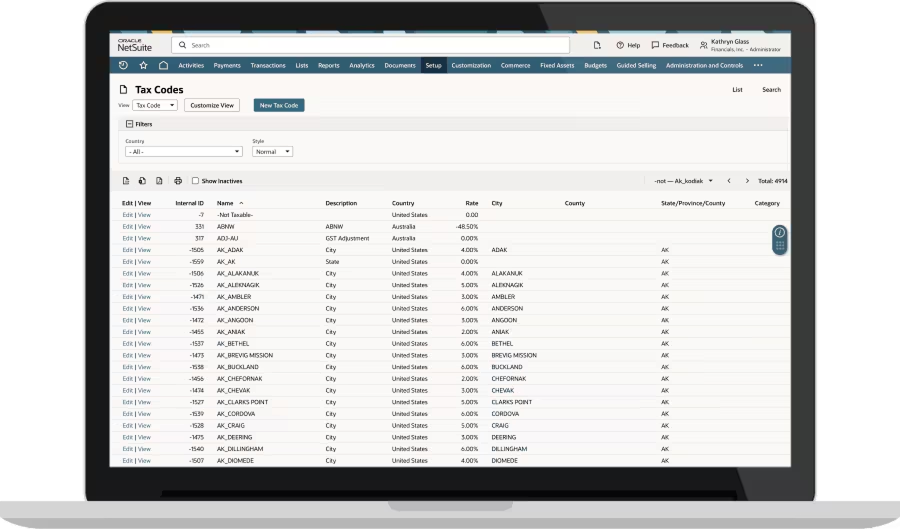
Marketing expenses cover a wide range of costs that require careful accounting treatment, proper tax categorization, and disciplined record-keeping. As marketing channels continue to evolve and expand, expense tracking provides the foundation for demonstrating that every dollar is well-spent.
Marketing Expenses FAQs
Are marketing expenses deductible?
Yes, marketing expenses are generally tax deductible as ordinary and necessary business expenses under IRS guidelines. Political advertising and lobbying expenses are examples of costs that cannot be deducted.
Is marketing an allowable expense?
Yes, marketing is an allowable expense that reduces taxable income. To qualify, expenses must be clearly documented and show a direct connection to promoting the business.