
Companies in the hospitality industry lean heavily on their supply chains to profitably deliver a consistent customer experience. And whether they’re in the hotel, restaurant, or resort business, all hospitality companies face similar, recurring supply chain adversities. For example, businesses must weigh the intersection of volatile customer demand and perishable food, where unpredictable guest counts and short product shelf lives make inventory planning and waste reduction especially difficult. This article lays out tips and best practices for managing a healthy hospitality supply chain.
What Is Supply Chain Management in the Hospitality Industry?
Supply chain management in the hospitality industry refers to the coordination of all processes involved in procuring, storing, and disposing of the goods and services necessary to operate a hotel, restaurant, or resort. This involves overseeing the entire lifecycle of every aspect of hospitality—furniture, fixtures, food and beverages, linens, and guest amenities—to control costs and cash flow, preserve consistent quality, and deliver satisfactory service in competitive markets.
Hospitality supply chain and procurement managers oversee complex networks of vendors and internal teams working together to meet both customer expectations and business objectives. Increasingly, they’re employing advanced digital technologies and processes, such as inventory sensors and AI-powered forecasting, for real-time visibility into their operations, making sure that the right amount of goods is on hand, in the right place and at the right time, to run their businesses smoothly.
Key Takeaways
- Hospitality supply chains face unique pressures from market volatility, logistical disruptions, and the daily challenges of handling perishable goods.
- Effective management involves a strategic blend of strong supplier relationships, data-driven inventory control, and contingency planning to build resilience.
- Technologies, such as AI, Internet of Things (IoT), and integrated ERP systems, are becoming increasingly vital for gaining real-time visibility and turning the supply chain into a competitive advantage.
Supply Chain Management in the Hospitality Industry Explained
In recent years, supply chain management has become an increasingly higher strategic priority for hospitality businesses. Many in the industry are buffeted by unpredictable drops in customer demand coupled with higher costs associated with spikes in demand. As in other industries, supply chains in hospitality are encountering delays, fluctuating prices, product shortages, and other disruptions because of extreme weather events, strained transport networks, tariffs, and trade barriers.
For example, hotels and resorts worldwide were hit in late 2025 with canceled US flights, disaffected international tourists, and a decrease in Americans’ intentions to travel. In the restaurant business, meanwhile, August 2025 represented the seventh consecutive month in which US establishments reported a net decline in customer traffic, according to the National Restaurant Association. And across the hospitality industry, turmoil surrounding changing tariff levels has impacted supply chains for new hotel construction, imported food, furniture, linens, and other essentials.
Supply chain managers need to continually adjust to new realities like these to maintain consistent standards and stay on budget. To do so, they combine long-term strategic planning with agile day-to-day tactics. For instance, strategies for supplier diversification and relationship management create the playbook for daily decision-making so that sourcing can be quickly redirected among national, regional, and local suppliers of an item to handle sudden price spikes or product shortages.
Core Functions of Hospitality Supply Chain Management
With greater responsibility for helping their companies optimize operations, customer service, and profitability, hospitality supply chain managers are focusing on improving the following core functions:
- Tracking and forecasting demand: Supply chain managers aim to project requirements for goods and services by harvesting demand data from hotel property management systems, restaurant point-of-sale (POS) terminals, historical records, market intelligence, and other sources. Demand forecasting is a top supply chain priority, since over- or understocking inventory can tie up working capital, increase waste, and impact service quality.
- Sourcing and procurement: Sourcing influences everything from an establishment’s cost structure to its brand reputation. Supply chain and procurement managers carefully identify, vet, and select suppliers, then nurture these relationships to get the best service at the best price. At the same time, they keep alternative suppliers on deck in case their primary vendors’ availability, reliability, or quality slips.
- Supplier coordination: Collaboration is the watchword for hospitality supply chains, which must efficiently handle a wide range of products and services, including food, furniture, linens, and outsourced laundry and maintenance. Brands with many locations strive for consistency in all these categories, raising the bar on information sharing with suppliers in areas such as demand forecasting and inventory monitoring.
- Inventory management: Effective inventory management can be the difference-maker between rooms that are ready on time and sluggish turnover, a fully stocked kitchen and “86’ed” menu items, or satisfied cruise customers and a sunscreen shortage at sea. It involves closely tracking, ordering, storing, and replenishing supplies.
- Logistics and storage: Supply chain managers oversee the transportation and warehousing of goods—for example, at a central facility for multiple locations. This often starts with inbound logistics that monitor suppliers’ delivery schedules and refrigeration of perishables while en route. Upon arrival, items are inspected and transferred to specialized storage environments. There, strict environmental controls and inventory rotation methods, such as first in, first out, prevent spoilage before goods are distributed to kitchens, housekeeping, or other points of use.
Benefits of Hospitality Supply Chain Management
Hotels are looking to cut costs as market forecasters downgrade their growth projections for 2025-2026. The supply chain is one of the biggest cost centers in hotel operating budgets—second only to labor—so optimizing it can help protect hotels’ financial performance until the market improves. In fact, some hospitality executives have reduced food and beverage costs by 5% to 15% by redesigning procurement to rationalize the variety of goods purchased and to source those products more efficiently, according to Boston Consulting Group. At the same time, the supply chain is a value center, pivotal to delivering seamless customer service and gaining competitive advantage. Here are some of the biggest benefits of an effective, efficient supply chain:
- Improved cash flow: Holding excess inventory ties up working capital that could be put to better use elsewhere in the business. Supply chain managers who exercise greater accuracy in forecasting demand and replenishing inventory can improve cash flow.
- Less waste and spoilage: Food waste harms hospitality businesses because it drains profits, raises disposal costs, and potentially leads to regulatory issues; it also damages a brand’s reputation for social and environmental responsibility. Close monitoring of stock levels, expiration dates, and usage patterns helps minimize overordering to prevent ingredients from spoiling.
- Increased supply chain resilience: All industries are working to make their supply chains more resilient against ongoing disruptions. Supply chain managers carefully vet suppliers for reliability, nurture collaborative supplier relationships for joint problem-solving, and keep alternative vendors on reserve as part of their contingency planning. This combination of efforts makes sure hotel operations and guest services can be maintained when disruptions occur.
- Better supply chain responsiveness: In addition to supplier relationship management and diversification, hospitality supply chain managers seek to maximize their visibility into their own operations and the markets they serve. With real-time access to data on inventory levels, supplier lead times, delivery statuses, and customer demand, managers can quickly change direction in response to shifting trends in guest preferences, price volatility, or other market dynamics.
- Reduced risks: Running a resilient, responsive supply chain goes a long way toward mitigating risks in hospitality supply chains. Yet, supply chain managers must also keep food safety and guest satisfaction top of mind, as well as operational efficiency and effectiveness. This requires a risk management strategy that includes contractual commitments from suppliers for quality control and adherence to delivery schedules, product specifications, and other standard operating procedures.
Challenges Unique to Hospitality Supply Chain Management
Hotel rooms are only as profitable as their ability to turn over rapidly. Restaurant menu items can be nixed for want of a single ingredient. The end product of the hospitality business is customer satisfaction—itself a highly perishable commodity. All this and more create some unique challenges for hospitality supply chain managers, including the following:
- Seasonal swings in demand: Seasonality affects everything from the number of holiday travelers and corporate events at hotels and restaurants to the types of produce purchased for the kitchen. Supply chain managers must carefully handle these relatively predictable, yet still complex fluctuations in ordering and receiving deliveries, since peak seasons can cause their suppliers to run out of stock, charge higher prices, or fall behind in shipments. At the same time, managers should be careful not to understock during peak demand or overstock during slow periods, especially when managing inventories of perishable items.
- High volume of perishable products: The industry’s heavy reliance on perishable food and beverage items creates a significant, daily challenge that has been compounded recently by supply chain disruptions stemming from changing customs administration, port congestion, and other ongoing problems. Maintaining food safety and quality requires transporting and storing perishable items in ideal conditions. Any failures in this regard can result in a direct financial hit to a primary cost center, as well as customer dissatisfaction and reputational damage.
- Coordinating distribution across multiple locations: Hotel chains, restaurant groups, franchises, and other multilocation hospitality businesses all prize brand consistency across their properties—whether that pertains to the firmness of their mattresses or the signature ingredients in their kitchens. This adds stress on supply chain managers to centralize oversight of complex, often global distribution networks to secure widely available products of uniformly high quality.
- Supplier reliability: Even a minor supplier setback can ripple through kitchen operations and housekeeping schedules, leading to service delays and eroded customer satisfaction. Nevertheless, hospitality supply chain managers tend to have little insight into their suppliers’ own operations, which creates blind spots regarding the timing of deliveries and the quality of the countless goods and services used in their business.
Best Practices for Successful Hospitality Supply Chain Management
Tackling hospitality supply chain challenges like those outlined above takes a combination of time-tested tactics like first-in, first-out inventory management and access to the latest available technologies. The following are seven leading best practices for successful hospitality supply chain management:
- Optimize inventory management: Hospitality supply chain managers have moved beyond simple inventory stock-counting to a more automated, data-driven approach. They’re increasingly guided by dynamic “par” levels as minimum inventory thresholds, which can be adjusted to sync with booking forecasts, seasonal demand, and other real-time data. Some managers have deployed sensors in storerooms that send alerts—or even automatically reorder—when stock falls short.
- Strengthen supplier partnerships: Successful hospitality businesses emphasize supplier relationship management, going beyond transactional interactions to build close collaborations with individual suppliers, foodservice distributors, and other supply chain partners. Managers share demand forecasts and operational plans so their suppliers can anticipate and reliably fulfill their needs. With deeper partnerships come benefits, such as dedicated support, priority fulfillment, preferential pricing, early warning of any emerging supplier issues, and joint problem-solving in the event of a disruption.
- Create supplier contingency plans: Should a trusted supplier begin to stumble because of financial strains or other issues, prudent supply chain managers will already have backup suppliers identified and prequalified to deliver in their stead. Contingency planning may also involve keeping just-in-case stocks of nonperishable items and maintaining menu flexibility to enable creative substitutions during shortages.
- Incorporate sustainable sourcing: Sustainability remains on hospitality companies’ agendas, despite reduced regulatory pressure. In 2025, the vast majority of travelers worldwide continued to prefer more sustainable hotel options, according to Booking.com. Ethical sourcing, food traceability, and local partnerships can all help reduce transport emissions while contributing to a sustainability story that can be marketed to eco-conscious guests.
- Standardize procurement and receiving procedures: Clear, uniformly applied protocols for procurement and receiving yield greater operational control. When receiving shipments, for example, standard operating procedures include inspecting incoming deliveries against the purchase order for quantity and quality, especially for perishable goods.
- Analyze supply chain performance: Tracking and analyzing key performance indicators (KPIs), such as inventory turnover rates and supplier lead times, can assist in anticipating problems, identifying areas for improvement, and optimizing operations. In the hospitality business, food cost percentage and beverage cost percentage are two of the most important KPIs, measuring costs against revenue to pinpoint procurement inefficiencies and waste.
- Make the most of technology: The list of technologies that can feed into hospitality supply chain management is long: property management systems for hotel guest counts and demand planning, POS terminals for restaurant tallies, procurement and supply chain management software, and inventory management software, to name a few—all ideally integrated into a business’s ERP system. Tools like these can deliver real-time visibility across the supply chain, analyzing data for better decision-making, and automate key functions.
The Role of Technology in Hospitality Supply Chain Management
Hotel leadership turns to technology in supply chain management primarily to increase profitability and improve the guest experience, according to Hospitality Technology’s “The State of Hospitality Tech 2025.” On average, though, survey respondents rated their tech maturity at only 5.3 on a scale of 10, with larger hotel groups ranking themselves higher than their smaller peers. Restaurants share similar goals, in the related “2025 Restaurant Technology Study,” though many are frustrated because of outdated POS systems, fragmented digital ordering platforms, and siloed back-office software. For the hospitality industry as a whole, managing, integrating, and optimizing systems remains a work in progress. In this context, point solutions for supply chain management include the following:
- Artificial intelligence (AI): Notably, 8 in 10 restaurant executives say they intend to spend more on AI in 2025, according to Deloitte. More than half of those surveyed already use the technology for inventory management, including forecasting, collection and analysis of data via sensors, and predictive analytics to minimize waste and optimize disposal processes. Other AI uses in hospitality supply chains include generating RFPs for vendor selection, drafting contracts, analyzing supplier performance data, and tracking market prices to suggest the best times for purchases.
- Internet of Things (IoT): The previously mentioned restaurant study reported that more than half of survey respondents are using or planning to use IoT in 2025, with inventory management cited as a top application. For instance, smart sensors in refrigerators can track temperatures and issue alerts to prevent spoilage. Other applications include smart shelves in storerooms that automatically detect low stock levels and trigger reordering, and GPS trackers on delivery vehicles that provide real-time visibility into deliveries.
- Automation: Automated purchase-order processing, invoice matching, and inventory updates can speed up these functions while reducing errors. When managing food and beverages, for instance, automation can link an establishment’s POS system to inventory for real-time updates on ingredients and perishables as dishes sell.
- Robotics: Larger operations are the first to employ robotics in supply chain management. Some, for example, use drones equipped with scanners to survey large storerooms to obtain more frequent, accurate stock counts. Amid labor shortages, autonomous carts can perform simple hotel tasks, such as transporting stacks of clean linens from a central receiving area to various storage points in a sprawling property.
- ERP software: ERP systems that incorporate supply chain management software can centralize business data, breaking down information silos found within procurement, inventory, and other core functions, such as financial management and front-of-house operations. The resulting visibility and analytical capabilities support decision-making, risk management, and automation. A simple example is mapping food sales against perishable inventory to trigger reordering alerts.
Optimize Supply Chain Costs With NetSuite
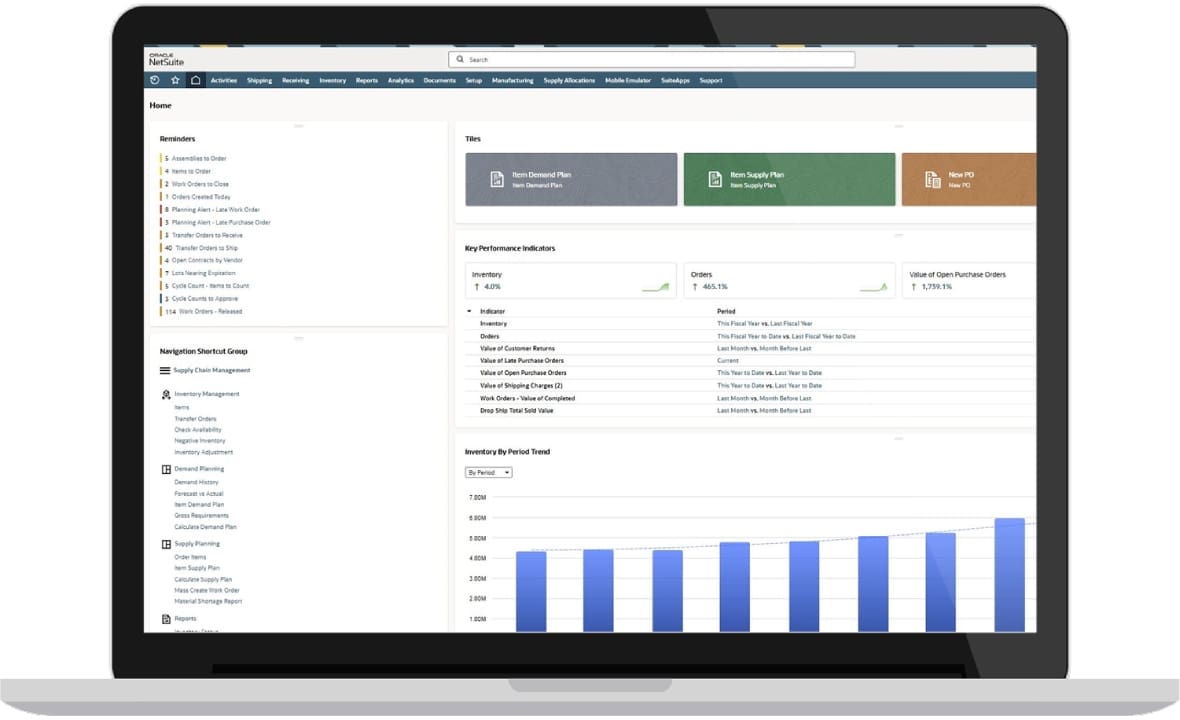
NetSuite Hospitality ERP is a cloud-based solution designed specifically for the hospitality industry. It supports timely decision-making to manage supply chains, tap into the most cost-effective options available, and respond to emerging guest trends and preferences. Bookings, purchases, and other key data flow into a single, real-time database that provides clear visibility into occupancy, revenue per room, costs, profitability, and performance across all locations. Armed with this information, managers can streamline, automate, and fortify their supply chains. At the same time, they can closely monitor the status of food and supplies in storage and collaborate with vendors in real time regarding goods in the pipeline. These capabilities can transform supply chains from a cost center into a value generator for any hospitality business.
NetSuite Hospitality ERP for Supply Chain Management
Running a smooth supply chain is essential for hotels, restaurants, and other hospitality establishments to main both profitability and customer satisfaction. Unique challenges, such as unpredictable customer demand and high volumes of perishable food, require careful planning and the ability to react quickly. Especially in today’s uncertain market, becoming more adept at forecasting, purchasing, and managing inventory is a rising priority among hotels, restaurants, and resorts hoping to cut costs, improve cash flow, and reduce waste. Amid ongoing supply chain disruptions, building strong supplier relationships helps businesses uphold quality standards, handle disruptions, and consistently give guests the experience they came for. Ultimately, leveraging technology to gain real-time visibility and automate processes is becoming one of the keys for making supply chain management a competitive advantage.
Supply Chain Management in the Hospitality Industry FAQs
Why is supply chain management important in the hospitality industry?
Supply chain management directly impacts both profitability and the guest experience. Efficient management helps control major costs, including food and supplies; allows for consistent quality across locations; and builds resilience against disruptions. A well-run supply chain is pivotal to delivering the seamless service guests expect while maintaining financial health in a competitive market.
What are the key components of supply chain in the hospitality industry?
Key functions coordinate the entire lifecycle of goods and services necessary for a business to operate. These include demand tracking and forecasting, strategic sourcing and procurement, supplier coordination, inventory management, and transportation and warehousing, especially of perishable goods.
What is a common challenge in the hospitality supply chain related to fluctuating demand?
A common challenge is managing seasonal swings and unpredictable daily guest counts, especially related to perishable inventory like food. Overstocking during slow periods ties up cash and can lead to waste, while understocking during peak times can result in nixed menu items and customer dissatisfaction. Balancing inventory levels to meet fluctuating demand without costly spoilage requires careful forecasting and agile supply chain management.