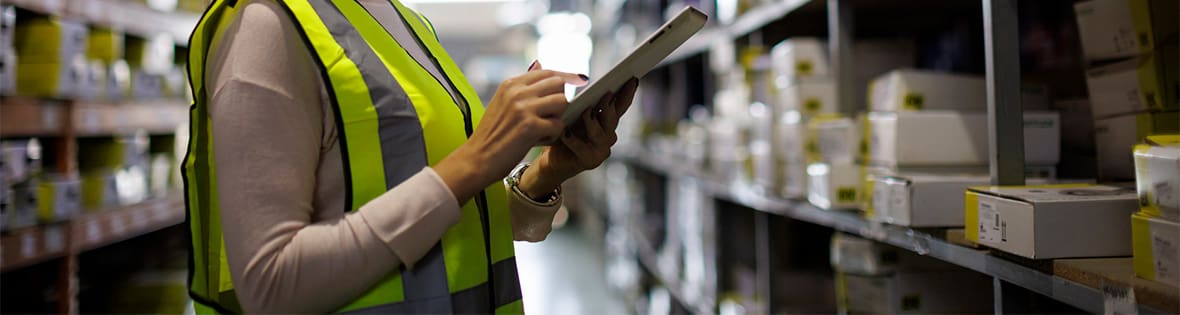
Whether you’re an aircraft manufacturer or a major construction company, there’s a significant volume and variety of materials necessary to keep production and projects on track, from small but critical nuts and bolts to semiconductors and steel. Keeping tabs on where all of these items are—whether somewhere in the supply chain, in a warehouse, or aboard a truck on the way to a construction site—is vital.
That’s where materials tracking comes in. With the right people, processes, data, and technology tools, companies can track and document hundreds or thousands of material items throughout their lifecycle, starting at the point of purchase and continuing until they’re actually used. Investing in a well-conceived materials tracking strategy offers a number of benefits that keep production moving and projects completed on time and on budget. For example, when done right, materials tracking controls costs through tighter inventory control and reduced waste. It supports accurate forecasting and provides an audit trail to reinforce quality control, supplier relations, and regulatory compliance.
What Is Materials Tracking?
Materials tracking refers to the process of monitoring and recording the movement, location, quantity, and status of materials as they move from procurement and delivery through usage or consumption. Tracking materials throughout their lifecycle is an important and complex process, particularly in sectors like manufacturing and construction, which must keep tabs on hundreds or thousands of material types across various locations.
Effective materials tracking is essential to make sure production is uninterrupted and projects stay on course. Increased (and even real-time) visibility into the location and status of materials prevents delays and lost or misplaced items. Modern materials tracking methods can also keep stakeholders, including suppliers, manufacturers, contractors, and logistics managers, on the same page for better coordination. Investing in strong materials tracking processes and systems can also support inventory optimization, allowing companies to avoid costly stockouts or overstocking.
Key Takeaways
- Manufacturers and construction companies must monitor and record the movement, location, quantity, and status of necessary materials from purchase to consumption.
- Accurate materials tracking can control costs, minimize loss and theft, and improve forecasting.
- Inaccurate or outdated data, user adoption issues, and supply chain complexity can complicate materials tracking.
- Investing in the right tools and processes facilitates better inventory management and uninterrupted production.
- Emerging technologies can elevate materials tracking from a tactical ploy to a strategic function that increases adaptability and sustainability.
Materials Tracking Explained
Materials tracking is the comprehensive practice of monitoring, documenting, and optimizing the movement and usage of materials throughout their lifecycle, from initial purchase and receiving to storage and ultimate usage. An effective materials tracking process involves assigning each type of item a unique identifier that can be easily scanned and tracked—say, by using barcodes, RFID tags, or QR codes—as materials move through various stages, providing up-to-the-minute visibility into their location. A materials tracking system then logs each item as it moves through its lifecycle. In this way, a company knows where its materials are at any given point in time and has an accurate audit trail of material movement, complete with time and user stamps.
Developing an effective materials tracking practice begins with the evaluation of current processes, noting any existing bottlenecks and goals for tracking. Then companies may choose to invest in and implement a combination of hardware (barcode printers and scanners, RFID readers, etc.) and an enterprise software platform to centralize materials tracking data. Modern ERP systems, for instance, offer automated inventory updates, reorder alerts, and advanced analytics to help business leaders improve material flow, reduce dwell times, ease bottlenecks, and minimize manual labor and errors. And because an ERP system logs all material movement and quality assurance activities, it creates a clear audit trail that can be used for performance analytics, dispute resolution, and regulatory compliance purposes.
Transferring this kind of data-driven approach to materials tracking gives companies end-to-end visibility into—and control over—their materials, increasing the efficiency and cost-effectiveness of their operations.
Why Does Accurate Materials Tracking Matter?
Effective materials tracking provides real-time visibility and increased control over inventory items that are essential to day-to-day operations for manufacturers and construction firms. Good practices enable these businesses to optimize their supply chain operations, increase efficiency, and cut back on errors. When companies know exactly where materials are, they can prevent costly problems, such as stockouts of critical items, expensive overstocking, or misplaced items. This kind of intelligence improves a company’s ability to respond to supply chain disruptions or changes in customer demand. After all, 9 in 10 respondents to McKinsey’s Global Supply Chain Leader Survey say they encountered supply chain challenges in 2024.
Implementing accurate materials tracking creates a degree of transparency necessary for data-driven decision-making regarding key materials and how resources are allocated. Here are three specific ways that materials tracking has a positive impact on businesses:
- It saves costs: Optimized inventory and less waste translates to lower operational costs. Reliable tracking of materials can prevent unnecessary purchases of additional items, thereby reducing expenses associated with excess storage and minimizing potential losses from inventory spoilage or obsolescence—all of which can add up to significant savings.
- It identifies potential loss and theft: Accurate materials tracking mitigates the risk of lost or misplaced materials. Automated materials tracking systems make it much easier for companies to uncover discrepancies, notice when items are missing, and minimize inventory shrinkage that may result from poor materials management or outright theft. Increased visibility and accountability protects inventory investments and minimizes financial losses.
- It improves forecasting: By collecting more detailed and accurate materials tracking data, companies can perform advanced analytics to detect usage patterns and trends. This can help lay a foundation for more accurate demand planning and smarter purchasing decisions. With this insight, companies can optimize their stock levels, lessen the likelihood of costly overstocking and stockouts, and develop better strategies for procurement and materials management.
Materials Tracking Methods and Technology
There are a variety of systems, tools, and methods that companies can employ to monitor, record, and manage the movement and status of materials throughout their supply chains or within their facilities. Each technology and approach offers distinct advantages and limitations in terms of accuracy, cost, scalability, and appropriateness for a business’s operational needs, so it’s important to investigate the available options. Some of the more common materials tracking technologies and methods include:
- Barcode scanning: This approach involves scanning the barcodes that are affixed to materials by means of either handheld or stationary devices. In this way, a company can easily record the movement of materials and automatically update its inventory records or system. Barcode scanning has been widely adopted due to its cost-effectiveness and ease of implementation and use. However, it typically requires a line of sight into each item and manual scanning of each barcode.
- RFID: This technology uses radio waves to automatically identify and track tags that are attached to materials. Unlike barcodes, an RFID system allows for the scanning of multiple items at the same time and doesn’t require line of sight. This approach enables real-time updates and greater degrees of accuracy. However, RFID technology is more costly and more complex to implement than barcode scanning.
- QR tracking codes: Most consumers are familiar with QR codes, a take on two-dimensional barcodes that store more information than their traditional counterparts. When attached to materials, QR codes can be scanned with smartphones or QR scanners. QR codes provide quick access to detailed information about each batch of materials. Like barcodes, they’re easy to implement and use but require manual scanning.
- GPS tracking: Companies can use GPS technology to track the location of shipments and materials, especially during their transport. GPS systems can provide visibility across long distances, which is particularly helpful when monitoring high-value or time-sensitive materials in transit. However, using GPS is less applicable for tracking materials in a warehouse or other facility.
- Inventory management software: This software integrates data from the tracking technologies described above to provide centralized, up-to-date visibility into materials inventory, thus bolstering collaboration across functions, teams, and locations. Inventory management software takes the pain out of materials tracking by automating data entry and thereby minimizing human error. These scalable systems also provide analytics capabilities used to underpin data-driven demand forecasting and decision-making.
- Manual tracking: This old-school materials tracking method usually involves paper-based logs or spreadsheets for the manual recording of material movements. This low-cost and simple approach may work for small operations, but even then, it can be labor-intensive, error-prone, and hard to scale as a business grows, making it a less-than-ideal option for high-volume or complex operations.
Challenges of Materials Tracking
Understanding and addressing the challenges of materials tracking is important because such obstacles can interfere with a business’s ability to maintain accurate inventory records, keep the right materials on hand, support efficient operations, and comply with regulations. Companies with global or highly regulated supply chains—like those in the food or pharmaceutical sectors—must meet stringent data and traceability requirements, for example.
Recognizing potential challenges helps businesses choose appropriate materials tracking solutions, allocate resources effectively, and prevent disruptions or compliance issues. Overcoming these hurdles typically requires key stakeholder buy-in, investment in technology, and process changes. The nature and intensity of these issues may vary with company size, industry, supply chain complexity, and technologies in use. Here are five of the most prevalent materials tracking challenges facing companies today:
-
Data Accuracy
Accurate data is the lifeblood of effective materials tracking. However, manual data entry, inconsistent or unintegrated data sources, and unreliable tracking devices can stand in the way. Inaccurate or incomplete data can result in discrepancies in inventory records, lost materials, and ineffectual decision-making. As the volume and complexity of the materials to be tracked grows, so does the difficulty of guaranteeing data integrity. Robust validation processes and automation can play important roles in reducing errors, increasing accuracy, and maintaining reliable materials tracking and records. Investing in a centralized ERP platform helps make sure that everyone is working from the same data.
-
User Adoption
New materials tracking processes and tools can only go so far if employees or partners refuse to use them. Lack of adoption by employees or supply chain partners prevents the successful implementation of materials tracking systems. There are all sorts of reasons for user resistance—concerns about job security, comfort with established workflows, and lack of effective training, to name a few. Involving users early on in the development of the materials tracking process and investing in ongoing communication and training are essential to overcoming opposition to new processes and technologies. If users aren’t on board, even the most advanced technologies will fail to deliver their anticipated benefits. Taking advantage of inventory and supply chain management modules within existing ERP systems may be wise, as users are likely already familiar with these platforms.
-
Supply Chain Complexity
Today’s supply chains often stretch across hundreds of suppliers, multiple geographies, and varied regulatory environments, making end-to-end materials tracking a highly challenging endeavor. In fact, the vast majority (87%) of US purchasing and supply chain management executives say their companies import materials, according to a recent ISM supply chain planning forecast. Various parties may use different or incompatible systems, leading to data fragmentation and limited visibility. The resulting supply chain complexity can increase the occurrence of inaccurate data, errors, missing materials, delays, and compliance failures—this is a particular challenge for companies that track materials with wide-ranging origins or handling requirements. It’s critical for businesses and their suppliers to invest in compatible systems and collaborative processes to tame some of this complexity. ERP systems with purpose-built inventory management and supplier management capabilities can help companies gather common, accurate data into a central system.
-
Real-Time Visibility
Achieving real-time inventory visibility and tracking of material movements isn’t easy; siloed data sources, legacy systems, and limited integration with suppliers and other partners can thwart these efforts. Delays in data updates or lack of synchronization can lead to outdated material location information, missed shipments, and difficulty responding quickly to disruptions or opportunities. Accurate tracking requires reliable data streams from supply chain partners and integrated digital platforms to track, record, and analyze this data as it’s received. Investing in modern inventory management software can increase visibility into the movement of materials.
-
Equipment Maintenance
Barcode scanners, RFID tags, Internet of Things (IoT) sensors, and similar tracking technologies require regular maintenance and calibration to function correctly. Aging devices, equipment failure, and environmental factors, such as temperature and moisture, can cause data loss or inaccuracies that result in loss of trust in the data and the process. Ongoing maintenance is essential to maintain the reliability of tracking systems and prevent disruptions.
How to Get Started With Materials Tracking
Starting a new materials tracking program requires thorough planning, process changes, and technology adoption. It’s not a trivial undertaking, but it can pay significant dividends in the form of enhanced material inventory accuracy, cost reductions, increased supply chain efficiency, and fewer operational disruptions.
Adopting a structured approach from the start helps companies develop and implement processes and systems best suited to their specific needs, in addition to avoiding common pitfalls and creating a platform that can scale and adapt along with the business. A proven approach to implementation can also help companies get buy-in from key stakeholders. Follow these six steps to create a foundation for reliable, real-time materials tracking and better, data-driven decision-making:
- Audit your materials and inventory procedures: As a first step, create a full list of all materials used in your company’s operations, along with key details, such as quantities, specifications, suppliers, and storage locations. Assess current inventory management procedures to identify inefficiencies, redundancies, or gaps. Such an audit establishes a clear baseline of current operations and helps make sure only necessary and accurate data will be included in the materials tracking system. This removes outdated or unused materials from inventory records to improve future materials tracking efforts.
- Weigh the different tracking methods against your current procedures: After your audit of existing materials and inventory procedures, it’s time to assess available tracking methods, be they barcodes, RFID technology, QR codes, or manual records. Evaluate each of these options for their strengths, weaknesses, costs, and compatibility with the company’s existing and planned processes. Important factors to consider will be the volume and value of materials to be tracked, accuracy requirements, and the type of environment in which materials will be handled. Understanding and examining these options in relation to specific operational needs allows decision-makers to choose the best method(s) for their purposes.
- Choose a materials tracking method and build your infrastructure: Once you’ve chosen your tracking method(s), turn your attention to establishing the necessary infrastructure. This may include buying labels, scanners, software, or networking equipment. This phase may also involve organizing physical storage areas and rethinking workflows to support the new materials tracking system. Develop and document standard operating procedures for receiving, moving, and issuing materials to maintain consistent and accurate tracking. Another to-do task at this stage is making sure materials are easily identifiable and accessible.
- Begin tagging and tracking your materials: Next, the work of labeling items or batches can begin, including attaching barcodes, QR codes, or RFID tags. Then, recording material movements throughout the supply chain can commence. Use scanners or mobile devices to track and record items’ locations and other information into an inventory database whenever they’re produced, moved, or received. This keeps inventory records up to date, prevents errors and losses, and establishes a foundation for ongoing materials tracking.
- Train your employees: Anyone involved in materials tracking or inventory management must understand the new processes and technologies. Providing comprehensive and ongoing training on the tools, procedures, and importance of accurate data entry is critical to encourage adoption, help workers adapt to the new approach, and realize the anticipated benefits. Just as important as training is soliciting and addressing user feedback and concerns.
- Review and run occasional physical counts: While automation can provide significant benefits when it comes to materials tracking, conducting regular physical inventory audits remains a best practice. In so doing, the company can confirm that its inventory records match the actual materials on hand. Use digital tools, such as barcode scanners, to speed up the counting process and quickly pinpoint any discrepancies. Performing these audits catches mistakes, prevents losses, and confirms and maintains the integrity of the company’s materials tracking system. These reviews can also identify opportunities to address emerging issues and refine procedures accordingly.
Future of Materials Tracking
Emerging technologies, such as IoT sensors, blockchain, digital twins, AI, and advanced networks, are transforming materials tracking, promising unmatched accuracy, efficiency, and transparency throughout the supply chain.
IoT-enabled sensors and smart devices continuously track materials from origin to destination, resulting in precise quantities and on-time deliveries. Edge computing and low-latency networks provide near-instant data transmission that facilitates real-time coordination between devices and warehouse systems, supporting faster, more informed decision-making.
Blockchain technology, meanwhile, secures every transaction by providing tamper-proof records that establish trust and traceability in material movement. Digital twins—that is, virtual replicas of assets or entire supply chains—allow companies to simulate, test, and optimize operations in a risk-free environment. Notably, 92% of manufacturing executives report piloting or deploying at least one metaverse-related use case, such as digital twins or augmented reality/virtual reality, typically with six initiatives in progress per company, according to a Deloitte and Manufacturing Leadership Council study on the industrial metaverse.
AI takes these advancements even further, delivering predictive analytics for demand forecasting, proactive inventory management, and continuous process optimization. Automation on the warehouse floor is accelerating, too. Autonomous mobile robots and automated guided vehicles are streamlining material movement, operating around the clock to boost throughput and reduce errors.
Ultimately, the future of materials tracking will prove to be intelligent, autonomous, and seamlessly connected—empowering organizations to adapt quickly to disruptions, optimize performance, and capitalize on new opportunities as markets evolve.
Smarter Materials Tracking With NetSuite ERP
NetSuite’s ERP software for building materials manufacturers and wholesale distributors is a single, cloud-based solution that includes inventory management, demand planning, procurement, and supply chain management, aimed at helping companies increase transparency and better support their operations. The inventory management module offers the ability to dynamically manage item-reorder points and set preferred stock levels based on average lead times, seasonal and historical demand, and days’ supply on hand. Thanks to real-time alerts, companies can reduce lag time and avoid stockouts. The system’s supply chain control tower provides centralized visibility into materials, wherever they may be, helping planners, buyers, and schedulers make data-driven decisions, communicate and collaborate with customers and suppliers, and balance the amount of materials inventory on hand.
Materials tracking is a fact of life for companies in the manufacturing and construction sectors, but that doesn’t mean it’s easy. Nevertheless, those companies that invest in the right tools, processes, and training for their operational needs can overcome the common hurdles to effective materials tracking. And with the adoption of advanced technologies, including AI, digital twins, blockchain, and smart devices, companies can advance their materials tracking capabilities to become more adaptable, sustainable, and profitable.
Materials Tracking FAQs
How do you track raw materials?
Companies can track raw materials using GPS systems to monitor materials that are in transit from a supplier. They can also employ barcode, QR code, or RFID scanning to monitor movements of materials from the point at which they’re purchased until they’re used. Updating inventory management systems with real-time materials tracking data can help businesses optimize inventory management and keep production and projects on track.
What is raw material traceability?
Raw material traceability refers to tracking and recording the origin or source of a raw material, as well as its movement/history through various stages of production, including how it’s processed and where in a final product it was used. Often, unique identifiers, such as lot or serial numbers or barcodes, can be used to track material items or batches throughout their lifecycle.
How do you categorize raw materials?
Raw materials are typically categorized as either direct materials (that is, used as key components in a finished product, such as steel in car manufacturing) or indirect materials (those used in the production process but not part of the final product, like lubricants or cleaning supplies). Additionally, raw materials can be grouped by type—such as agricultural (cotton, timber), mineral (iron ore, copper), or chemical (petrochemicals)—to align with sourcing, handling, and supply chain needs.
What is a raw materials record?
A raw materials record is a digital or paper document listing the type and quantity of raw materials received and entered into inventory. These records track the flow of materials in and out of a business for better inventory management, cost control, and production planning.