Whether a fashion company is dropping a limited-edition sneaker or a new swimsuit collection, success depends on getting the right products to customers at the right time. Trends move quickly, meaning that styles sometimes become outdated before they even reach stores. At the heart of this race is the fashion supply chain—when it runs smoothly, brands can stay ahead. But global disruptions, shifting consumer demands, and rising sustainability expectations are reshaping the way brands produce, move, and deliver goods. To keep up, fashion companies need supply chains that are as tailored to customer needs as their own latest collections.
What Is the Fashion Supply Chain?
The fashion supply chain refers to the full journey a garment or accessory takes—from sourcing raw materials through design, manufacturing, distribution, and final sale. It’s a vast, interconnected network that often spans continents and involves farmers, textile mills, factories, logistics providers, and retailers.
Key Takeaways
- Improving supply chain visibility allows fashion companies to track product journeys in real time from raw material sourcing to final delivery.
- With frequently changing trends, global tensions, and material shortages, the fashion industry faces constant uncertainty—making strong risk mitigation essential.
- A growing number of fashion brands are adopting circular models focused on recycling, repairing, and repurposing materials to cut waste and preserve resources.
- Software streamlines regulatory compliance throughout the supply chain by integrating requirements, sustainability tracking, and audit tools into everyday workflows.
The Fashion Supply Chain Explained
A smooth-running supply chain relies on tight coordination among a global web of suppliers, manufacturers, logistics providers, and retailers. In fashion, this interplay is complicated by volatile raw material sourcing, limited visibility, and frequent disruptions caused by everything from geopolitical events and natural disasters to labor shortages and transportation bottlenecks.
Retail is among the sectors most exposed to supply chain risk, with global incidents more than doubling since 2020—and rising by another 22% between 2024 and 2025, according to RepRisk. Meanwhile, the fashion sector alone accounts for 5% of the nearly 17,000 unique global supply chain risk incidents that have occurred over the past five years.
Why is this industry vulnerable? For one thing, many fashion businesses still lack visibility beyond their first-tier suppliers, leaving tier 2 material providers and upstream partners difficult to monitor. This gap heightens the risk of material shortages and compliance failures, all at a time when regulators, investors, and consumers demand more transparency and measurable sustainability progress. In response, many companies are diversifying suppliers, nearshoring production, and investing in technology to tighten supply chain management.
Why Is the Fashion Supply Chain Important?
The fashion supply chain supports a global industry valued at $1.84 trillion in 2025, according to Statista, making it one of the world’s largest economic sectors. It’s also a major source of global employment, supporting at least 72 million people involved in producing garments, footwear, leather, and textiles. With the apparel market expected to generate $235 per person worldwide in 2025, the infrastructure that moves materials, manages production, and distributes finished apparel is fundamental to the stability and growth of the global fashion industry.
Phases in the Fashion Supply Chain
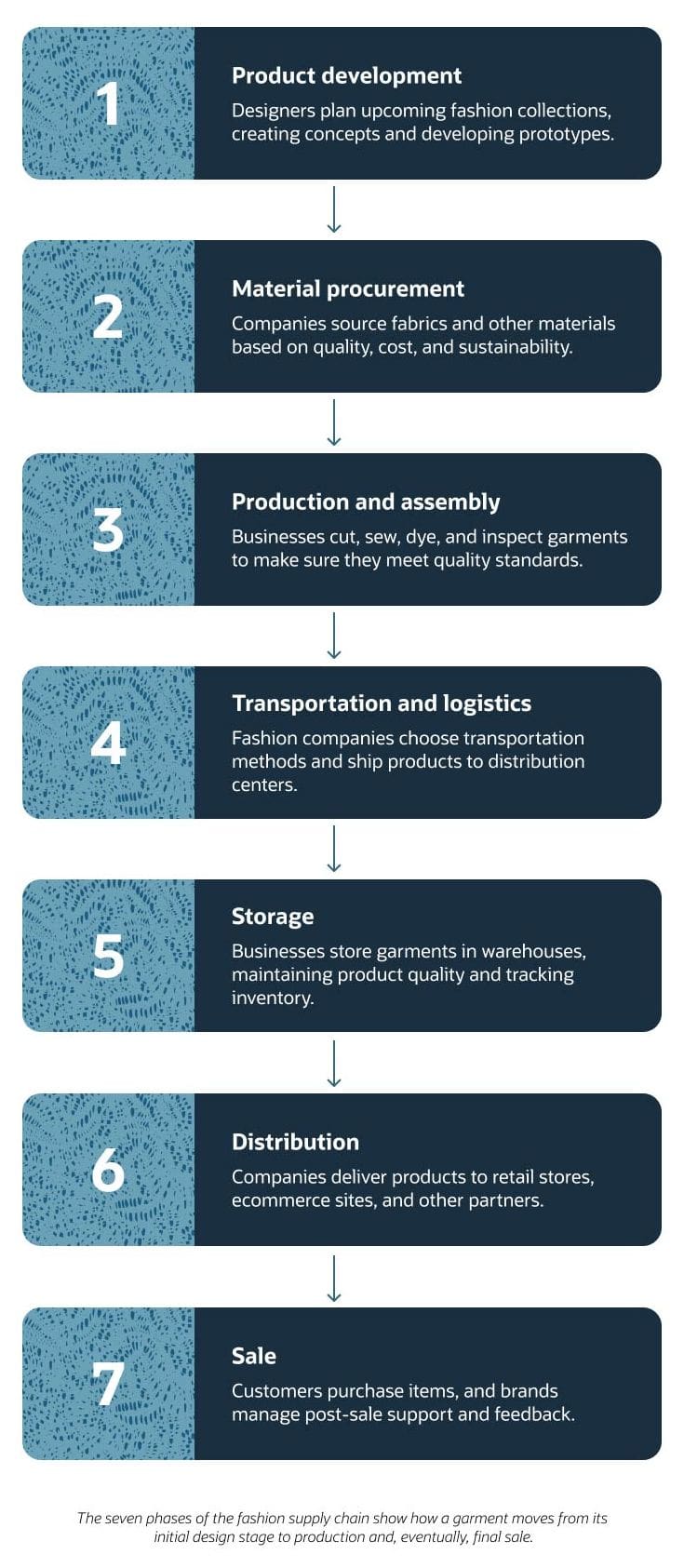
Behind every garment is a multistage system that transforms a creative concept into a rack-ready product. Here’s a look at the main phases, each requiring careful coordination, collaboration, and logistical agility to meet the fast-moving demands of the market:
- Product development: Designers translate ideas into sketches and prototypes that balance aesthetics, functionality, and cost. A detailed bill of materials is created for every component needed for production.
- Material procurement: Teams source fabrics, trims, buttons, zippers, and other materials based on quality, cost, and sustainability. This phase often involves negotiating contracts with multiple suppliers across the globe and developing long-term relationships with those that are most reliable in supplying raw materials.
- Production and assembly: Designs and materials come together through cutting, sewing, dyeing, and finishing. Quality checks are conducted at each step to verify that products are free of defects and meet specifications.
- Transportation and logistics: Finished goods move from factories to distribution centers or warehouses via sea, air, or road, with the goal of minimizing costs and delivery times. Effective logistics planning also carefully manages necessary documentation, customs, and regulatory requirements.
- Storage: Proper storage keeps products in good condition, maintains accessibility, and supports timely order fulfillment. Fashion warehouses often use garment-specific systems, such as hanging racks for delicate items, and climate controls to prevent mold, fading, or fabric distortion.
- Distribution: Finished products are allocated and delivered to retail stores, ecommerce platforms, and wholesale partners. Inventory must be well-managed to maintain sufficient stock levels, meet packaging requirements, and process orders efficiently.
- Sale: The final phase connects products with customers through in-store, online, or hybrid shopping experiences. It includes order fulfillment and delivery, which play a major role in meeting customer expectations for speed and accuracy. Beyond the initial purchase, brands focus on post-sale support—handling returns, exchanges, and loyalty programs, for instance—to strengthen customer satisfaction and encourage repeat business.
Phases in the Fashion Supply Chain
Advantages of Fashion Supply Chain Management
Effective supply chain management offers a number of benefits for fashion businesses that collectively strengthen their operational performance, financial stability, and reputation with customers. By overseeing its complex network of partners, companies are able to deliver products efficiently and sustainably. They’re also in a better position to foresee—and mitigate—potential risks and disruptions. Fashion supply chain management includes these benefits:
- Increases supply chain visibility: A 2025 QIMA survey found that only 13% of businesses reported having full visibility into their sourcing networks, including raw materials. Greater transparency helps fashion companies monitor every stage of production, identify bottlenecks, and address issues before they escalate. Improved supply chain visibility also supports traceability, which is essential for regulatory compliance and upholding ethical standards.
- Improves decision-making: Accurate, timely data from supply chain management systems provides insights into inventory levels, supplier performance, market demand, and operational efficiency. Businesses can more accurately forecast demand, optimize production schedules, and swiftly adjust supply strategies in response to changing conditions.
- Optimizes costs: Tight supply chain management enhances overall supply chain efficiency by reducing unnecessary expenses, such as overstock, rework, or expedited-shipping fees—all while improving forecasting capabilities to minimize overproduction. Strong supplier relationships, a core tenet supply chain management best practice, can further help cut costs by supporting bulk purchasing strategies and more favorable terms.
- Enhances risk management: In a 2025 survey by Avery Dennison, 30% of senior fashion retail supply chain leaders said their supply chain was “highly problematic with regular disruptions,” and only 22% called it “efficient and responsive.” The inherent volatility of the fashion industry makes risk mitigation crucial. Effective management helps diversify suppliers, identify threats early, and activate contingency plans.
- Builds customer satisfaction: Well-managed supply chains improve product quality, delivery speed, sustainability, and transparency—key factors in meeting modern customer expectations. As consumers place more weight on ethics and sustainability, visibility into how goods are sourced and produced helps brands earn trust and loyalty.
Challenges in Fashion Supply Chain Management
Rapid production cycles, price-sensitive consumers, and sustainability pressures make fashion’s already complex supply chain particularly vulnerable to disruptions. Some of the most pressing challenges include:
- Meeting rapid shifts in demand: Fashion trends can change overnight. Managing this volatility requires agile supply chains that can ramp production up or down while avoiding excess inventory or stockouts.
- External headwinds: Geopolitical tensions, inflation, and climate-related disruptions can threaten supply stability. These uncertainties can disrupt lead times, add cost and complexity, and squeeze already-thin margins.
- Maintaining ethical and sustainable practices: Consumers and regulators increasingly demand transparency around labor conditions, carbon impact, and product traceability. The tension lies in scaling sustainability practices without pricing products out of reach—especially as ethical issues can lead to reputational fallout, consumer backlash, and compliance penalties.
- Risk management: Supply chain risks in the fashion industry are diverse, covering such obstacles as supplier insolvency, labor strikes, cyberattacks, and reputational damage linked to unethical practices. A comprehensive risk management framework, supported by supplier scorecards, audits, and predictive data, can suppress vulnerabilities.
- Transportation costs: Fluctuating fuel prices and freight constraints continue to drive up global shipping expenses. Fashion brands need to balance cost-effective sea freight with faster, but more expensive air freight to protect margins and keep seasonal products on schedule.
Tips for Optimizing Your Fashion Supply Chain
Among rising costs, regular supply disruptions, regulatory pressures, and increased consumer expectations for sustainability, it’s important that businesses take steps to strengthen their supply chains. The following tips explore key strategies that fashion brands are adopting to improve operations and maintain resilience:
-
Tighten Your Relationship With Your Suppliers
One-off, transactional supplier relationships may offer short-term savings but can lead to inconsistent quality, limited flexibility, and greater exposure to long-term risks. Without trust and commitment, suppliers are less likely to prioritize your needs or share critical information, leaving your brand vulnerable to potential delays and hidden costs.
The key is to build stronger, strategic relationships with core suppliers that consistently deliver on time and within budget. This means a fashion company might consolidate its supplier base, moving from dozens of transactional partners to a smaller set of trusted, high-performing suppliers. A 2025 industry survey found that 71% of fashion brands consider supplier consolidation a medium-to-high priority over the next five years, emphasizing long-term volume commitments, shared strategic three- to five-year plans, and collaboration.
-
Leverage Advanced Analytics
Fashion companies can’t afford to misjudge consumer behavior and overproduce on styles, which would force markdowns. Advanced analytics can be used to build predictive models that more accurately forecast which SKUs will underperform, thus reducing raw material waste, storage costs, and discounted sell-offs.
Artificial intelligence, machine learning, and other advanced tools contribute to more precise decision-making and early identification of risk. For instance, a business might use demand forecasting models that draw on real-time sales, weather patterns, and social media data to match production volumes to expected demand. Analytics can help optimize supplier lead times by analyzing historical performance and adjusting buffer stock only where needed.
According to a joint MMGNET and The Interline report, 94% of fashion professionals believe technology will be essential or quite important to the industry’s future progress, with 80% having already invested in AI projects (or will invest by the end of 2025).
-
Develop Visibility and Traceability
Many businesses still lack transparency into their extended upstream operations, blinding them to potential risks and compliance issues. Scrutinizing the supply chain is integral to building customer trust and avoiding reputation damage.
Technologies like blockchain and Internet of Things (IoT) sensors allow companies to track raw materials and verify labor data of each garment by creating a transparent, real-time record of every production step. This digital ledger provides proof of material origin and whether fair labor practices were followed, supporting both ethical compliance and brand credibility.
-
Utilize Inventory Management Strategies
Without accurate tracking and forecasting, fashion companies risk tying up capital in unsold inventory or missing sales opportunities due to having insufficient stock.
A smart inventory management strategy helps fashion companies maintain optimal stock levels, reducing both carrying costs and lost sales. For instance, some companies may find value in conducting ABC inventory analysis, which categorizes items by value, demand, and risk. Or they may want to use a just-in-time inventory strategy, which minimizes holding costs by receiving materials and producing garments only as needed.
It’s important to use real-time tracking, demand forecasting, and automated replenishment tools, all of which make it possible to respond quickly to changing consumer preferences and seasonal trends. For example, by using point-of-sale data and trend forecasting, a company might decide to shift inventory between stores or ecommerce channels before it becomes dead stock, saving money and improving sales.
-
Optimize Transportation Routes
Poor transportation planning—like sending partially filled trucks or overrelying on air—can inflate shipping costs and impact delivery timelines. Since transportation is a significant cost and environmental factor in fashion supply chains, route optimization is essential.
AI-powered logistics software can plan efficient routes, consolidate shipments, reduce transit times, and even dynamically adjust delivery schedules to avoid disruptions. Sustainability benefits come from using greener transport modes, such as electric vehicles, shifting freight from air to sea or rail, and maximizing load capacity to increase fuel efficiency.
-
Integrate Ethical and Sustainable Practices
Sustainability and ethical responsibility have become critical to long-term success, yet many fashion companies still struggle with issues that can harm their reputation. The RepRisk report found that over the past five years, social risks—including human rights violations and poor working conditions—have accounted for about two-thirds of all global fashion industry incidents.
Fashion companies that integrate sustainable materials, waste reduction processes, and fair labor practices throughout their supply chains appeal to ethically conscious consumers. These initiatives also generate efficiencies, such as energy savings from optimized production or reduced costs from minimizing textile waste. Circular supply chain models lower sourcing costs by reusing and recycling textiles, while integrating AI-driven route optimization cuts freight emissions and fuel consumption.
-
Audit Your Supply Chain for Risks
In global, multitiered supply chains, problems at a single level—such as water violations at a dye house or use of child labor in a tier 2 factory—can cause major reputational damage, legal fines, even production shutdowns. Regular audits help identify and mitigate potential risks before they escalate.
These audits evaluate suppliers on a number of fronts: reliability, compliance with labor and environmental standards, and geographical vulnerability, for example. Site inspections and performance data analysis can also reveal inefficiencies and weak points early, giving companies time to diversify suppliers and keep production consistent.
Fashion executives will likely want to conduct physical site inspections when possible and analyze performance data to detect weaknesses. By uncovering potential problem areas early, companies can take corrective action, such as diversifying suppliers or enhancing transparency, to safeguard their reputation and decrease the likelihood of costly disruptions or penalties from lack of compliance.
-
Automate Where Possible
Manual processes in inventory, production planning, and order fulfillment can be slow, error-prone, and costly—especially as order volumes increase and supply chains grow more complex. Without automation, fashion teams may struggle to keep up with data entry, shipment tracking, or demand fluctuation.
Supply chain automation simplifies procurement, fulfillment, inventory tracking, and logistics. For instance, automated procurement platforms can instantly generate purchase orders based on real-time inventory levels and supplier lead times. Teams can, in turn, respond more quickly to demand shifts—a game-changer as consumer expectations for fast, accurate delivery continue to rise.
-
Understand Your Regulatory Obligations
As global regulations tighten with regard to labor, product labeling, environmental impact, and traceability, fashion brands must stay a step ahead or risk steep penalties. Countries increasingly require detailed disclosures about where and how garments are made, including verification that materials weren’t sourced from regions linked to forced labor, and that environmental standards were upheld throughout the production process.
Navigating this legal landscape means monitoring legislation throughout all of the markets a company operates in and aligning operations to meet evolving rules. Many companies now embed compliance directly into their sourcing and production processes by using tools that provide end-to-end transparency, real-time reporting, and audit-ready documentation.
-
Ensure That You Have the Right Software
Without the right tools, fashion companies can’t keep up with fast-moving inventory, seasonal changes, or regulatory demands, leading to delays and costly errors. An integrated, fashion-specific supply chain management software platform is critical for achieving end-to-end visibility, operational efficiency, and rapid responsiveness. These platforms consolidate procurement, production planning, inventory control, supplier management, and logistics in one cohesive system that updates in real time to support data-driven decision-making.
For instance, companies using cloud-based apparel ERP solutions can instantly coordinate inventory reallocation among warehouses in response to demand shifts, triggering the necessary transfers without manual intervention. Modern software also simplifies compliance by embedding regulatory rules, sustainability tracking, and audit functionalities directly into workflows.
Future Trends of the Fashion Supply Chain
The fashion supply chain is at a critical juncture. Geopolitical tensions, rising costs, and stricter sustainability regulations are pushing companies away from a traditional cost-first model toward one centered around resilience, transparency, and responsibility.
To reduce vulnerability, many brands are moving away from reliance on single regions and are intentionally spreading sourcing over multiple countries. A 2025 US Fashion Industry Association survey found that 60% of large companies reported sourcing from 10 or more countries in 2025, a significant increase from the 45% to 55% range reported in 2022 and 2023. Many fashion companies are moving production closer to home by nearshoring or reshoring. By controlling more of their supply chain locally, companies can quickly pivot to respond to hot trends, react to demand changes, and avoid international shipping delays, trade uncertainties, and geopolitical risks. An Accenture survey of senior executives shows that 85% plan to produce and sell most of their products in the same region by 2026, almost double the 43% who planned to do so in 2023.
At the same time, brands are building circular models that emphasize recycling, repairing, and repurposing materials and garments to reduce waste and conserve resources. A 2025 Kearney report found that more than 70% of fashion brands have strategically committed to circularity and are beginning to implement it. Circularity goes hand in hand with increasing sustainability commitments. The US Fashion Industry Association survey, for instance, reveals that 53% of companies say they’re investing in technology to improve supply chain traceability or provide isotopic testing, a process used to verify the geographic origin of raw materials. Half say they are providing sustainability and social compliance training for their employees and suppliers, and nearly three-quarters plan to increase their use of various sustainable fibers in the clothing they produce over the next three years.
Technology is underpinning these shifts. AI, blockchain, and IoT sensors are giving fashion companies real-time, end-to-end visibility across their supply chains. These tools track materials, flag potential bottlenecks, and support faster, more informed decisions that improve sustainability and responsiveness.
How Supply Chain Management Software Helps Apparel Businesses
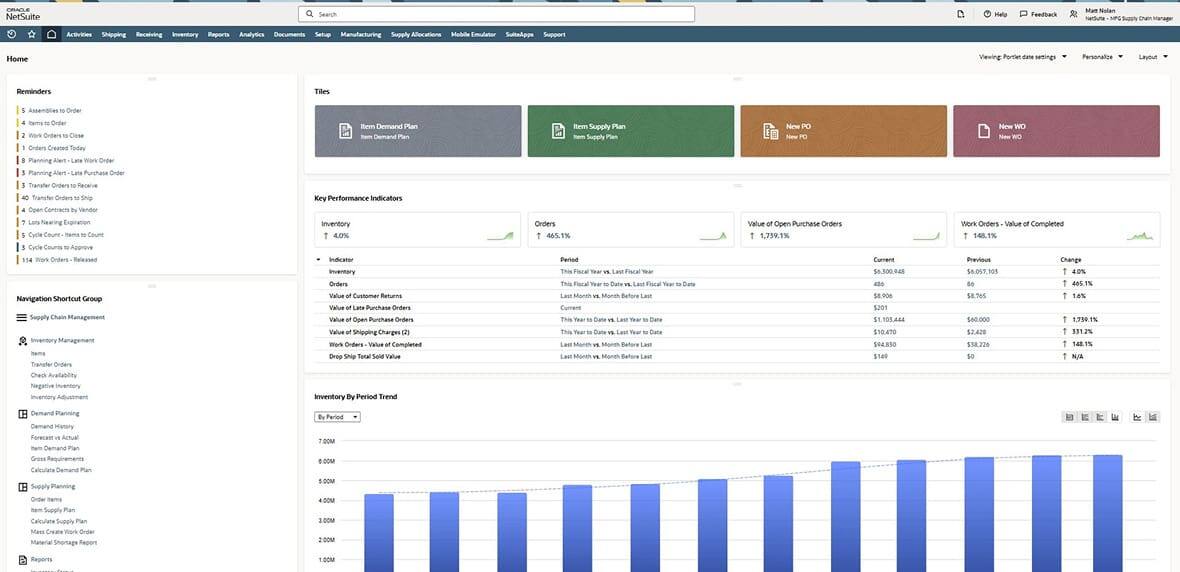
As consumer expectations rise and product cycles accelerate, fashion companies must learn to actively orchestrate suppliers, inventory, production, and fulfillment through real-time data and sophisticated automation. NetSuite Supply Chain Management helps apparel businesses take control of every step in a product’s lifecycle, from sourcing raw materials to delivering finished goods. With intelligent coordination of suppliers, production schedules, and logistics, fashion businesses can make sure the right materials are in the right place at the right time—and tracking them along every step of the way. Built-in procurement tools keep vendor communication seamless and purchasing on track, while integrated demand planning and AI-powered forecasting help fine-tune inventory levels and anticipate shifts in consumer demand. The end result? Fewer hiccups and delays, smoother production runs, and a supply chain that helps companies meet customer expectations.
NetSuite Supply Chain Management
The fashion industry relies as much on speed and precision as it does on creativity, and the supply chain is the critical engine that turns ideas into products and products into profits. Yet, without visibility and agility, even the best designs risk getting stuck in transit—and becoming yesterday’s trend. What sets leading fashion businesses apart is their ability to treat the supply chain as a source of strength. By building resilient supplier networks, optimizing transportation routes, and investing in software to help manage the complexities of the supply chain, fashion companies can reduce their exposure to potential disruptions and respond more quickly than the competition. After all, the best, most successful look is the one that arrives on trend.
Fashion Supply Chain FAQs
What are the different types of supply chains in the fashion industry?
Fast-fashion supply chains prioritize speed and cost efficiency, relying on their use of low-price materials to rapidly move new products to store shelves. Luxury supply chains focus on craftsmanship, quality, and exclusivity, which often call for longer lead times. Sustainable or circular models emphasize environmental and social responsibility through recycled materials and closed-loop production. Nearshoring and reshoring bring production closer to the point of sale to reduce lead times. Many fashion businesses use a combination of these approaches to strike a balance among speed, cost, quality, and sustainability.
What are the impacts of supply chain disruptions in the fashion industry?
Disruptions in the fashion supply chain often result in delayed product launches, stockouts, overstocking, or increased costs. Missing seasonal windows or trend cycles can lead to lost sales, excess inventory, and markdowns, while sourcing delays can inflate costs.
How does the fast-fashion supply chain work?
The fast-fashion supply chain focuses on quickly turning new trends into affordable, mass-produced clothing, often within a few weeks. Companies typically rely on vertically integrated or tightly coordinated supplier networks, nearshore manufacturing, and real-time data to make quick decisions about what to produce.
When is a fashion business ready to implement supply chain management software?
A fashion business is ready for supply chain management software when its operations become too complex to manage with spreadsheets. Common signs include frequent stockouts or overstocks, trouble tracking inventory across multiple channels, or managing too many SKUs and suppliers manually. Companies expanding into new markets or scaling quickly tend to benefit most, since they gain the real-time data, automation, and overall control needed to manage growth and reduce risk.