
Most fashion brands have already woven significant technology solutions into the fabric of their businesses. Indeed, 80% of fashion professionals say they use industry-specific tech tools weekly, and more than 90% consider technology essential or quite important for effective business operations, according to a 2025 report from MMGNET and The Interline.
Yet true digital transformation is not limited to adopting software. Making meaningful business change demands a fundamental shift in the way fashion brands operate—by revamping workflows, increasing automation, and consistently making data-driven decisions. These efforts have to be backstopped with sufficient training and change management to drive adoption of new systems and ways of working. Fashion leaders who understand what digital transformation comprises, the advantages, and the barriers they are likely to encounter will be better equipped to oversee these efforts and help their organizations realize the benefits.
What Is Digital Transformation in the Fashion Industry?
Digital transformation in the fashion industry refers to the implementation of technology to reinvent the way fashion companies source materials, design products, run their operations, and engage with customers. Digital transformation initiatives range from using AI to predict customer demand to deploying business software to boost supply chain visibility and traceability.
Ultimately, however, digital transformation in fashion involves more than digitizing existing processes. It requires reimagining workflows and business models to transform the way apparel companies deliver value.
Key Takeaways
- Digital transformation in fashion requires organizations to couple their technology investments in capabilities like AI and 3D modeling with process reengineering.
- These efforts can increase efficiency, speed up product cycles, and exert greater cost control.
- Digital transformation can also boost customer satisfaction, loyalty, and growth through personalization and omnichannel experiences.
- Fashion brands seeking these benefits must overcome common barriers to transformation, such as legacy systems and digital talent shortages.
Digital Transformation in the Fashion Industry Explained
In some ways, the fashion industry is no different from any other sector when it comes to the benefits that digital transformation efforts—whether migrating systems to the cloud or embedding agentic AI into daily workflows—can confer. However, apparel brands can benefit in singular ways from these efforts. For a sector that depends on creativity and must contend with the fickle nature of fashion trends and customer loyalty, the benefits of greater agility, speedier and more targeted product development, and data-driven go-to-market strategies can be particularly valuable.
Leading apparel brands combine creativity and emerging technology to stay a step ahead of customer demand and the competition. For example, fashion companies can use predictive analytics to improve forecasting in the face of fast-changing retail apparel trends. They can also deploy analytics and 3D modeling to roll out innovations, such as personalization engines and virtual fitting rooms that enhance the customer experience and reduce the number of costly returns.
Digital transformation is also disrupting fashion business models for the better. Omnichannel retailing, direct-to-consumer (D2C) strategies, and digital channel product releases are now viable, thanks to integrated digital infrastructure. Similarly, advanced data analytics and AI capabilities allow apparel brands to deliver customized products and personalized customer experiences at scale.
Behind the scenes, digital investments targeting cost management and manufacturing efficiency can have an even bigger impact on profit margins. Business software such as ERP, which unifies procurement, inventory, manufacturing, and sales data, provides the foundation for fashion companies to modernize production and logistics planning and reduce waste. ERP platforms also allow apparel brands to measure the impact of their digital investments.
At the same time, however, digital transformation introduces new challenges and exacerbates old ones for the fashion world. The rise in ecommerce has been a growth engine for tech-savvy fashion brands, but it has also led to an escalation in return rates and the growing challenge of managing reverse logistics. As brands race to meet demand for customized products and fast-fashion trends, they’re also under increasing pressure to shrink their environmental footprint. Addressing these challenges demands further digital investments in data-driven approaches to improve production planning and implement circular business models.
Why Does Digital Transformation Matter for Apparel Businesses?
Apparel businesses face significant challenges in maintaining their margins and competitive positions, including geopolitical uncertainty and the hyper-competitiveness of the industry. Tariffs and trade policy were the top challenge cited by fashion executives, according to a 2025 study by the United States Fashion Industry Association (USFIA), followed by inflation and economic outlook. Approximately 70% of respondents reported that higher tariffs were increasing sourcing costs and squeezing profit margins, leading them to pass on higher prices to consumers. With online shopping experiences making it easier than ever for buyers to switch brands, apparel businesses need every advantage they can get to control costs and maintain customer loyalty.
Digital transformation can help on multiple fronts, such as by accelerating product development, improving customer experiences, or enhancing supply chain visibility. A digital transformation initiative implementing generative AI to enhance product discovery, for example, could help shoppers find what they’re looking for, which 80% of customers say current online searches fail to do, according to a 2023 survey from Nosto and CensusWide. With nearly three-quarters (74%) of consumers walking away from purchases because they were overwhelmed by options, according to a 2024 Accenture report, these helpful tools can secure sales and solidify loyalty. Meanwhile, by investing in digital supply chain technologies that boost visibility and control, apparel brands can proactively maintain competitive pricing and protect margins, even amid economic and trade policy uncertainty.
What Are the Advantages of Digital Transformation in the Fashion Industry?
When apparel brands lean into digital transformation, their efforts can strengthen every aspect of their business. Technology-enabled improvements, such as product design and warehouse management, can replace manual processes with novel (and more profitable) ways of operating.
Following are some of the most important advantages that digital investments offer the fashion industry:
- Enhanced decision-making: Improved tech capabilities enable fashion companies to measure and analyze more facets of operational performance and customer demand, providing the data-derived intelligence companies need to respond quickly to shifts in the marketplace. Consumer behavior analysis can inform marketing campaigns, for example, while data on customer preferences, past purchases, and engagement patterns can be used to target shoppers more precisely. These choices can improve marketing effectiveness and drive growth.
- Improved inventory efficiency: AI-powered analytics result in more accurate demand forecasting to underpin smarter inventory management. This is a huge win in an industry that collectively produced 2.5 billion to 5 billion items of excess stock (worth between $70 billion and $140 billion in sales) in 2023, according to the “State of Fashion 2025” report by The Business of Fashion and McKinsey.
- Better customer experience: Smart fashion brands use digital capabilities to elevate the customer experience through improved personalization, faster service, and more convenient ways to shop. AI-powered recommendation engines and virtual stylists present customers with tailored suggestions to help them discover products that suit their tastes and fit their body types. Digital investments smooth the path for faster order fulfilment and seamless omnichannel experiences across brick-and-mortar, online, and mobile shopping options.
- Increased business agility: Investments in new digital systems and more efficient processes can also help apparel brands stay nimble, whether they are reacting to supply chain disruptions or a hot, new cultural phenomenon that’s changing style preferences. Cloud-based collaboration tools can assist global teams working on rapid design iterations, unify business platforms so production teams can reduce manufacturing lead times, and help inventory managers establish demand-driven inventory practices.
Examples of Digital Transformation in the Fashion Industry
Digital transformation can introduce innovative processes and intelligent automation throughout the fashion value chain, from sourcing and supply chain management to shopping experiences and logistics. Below are some examples of how apparel companies are deploying digital solutions to enhance customer experiences, boost sales and loyalty, increase agility, and improve operational efficiency:
-
Virtual Try-ons
Powered by augmented reality, AI, and 3D modeling, virtual try-ons are revolutionizing online shopping. Customers use this technology to render realistic, real-time visualizations of what items would look like on their own bodies.
Some of the earliest adopters of this technology include eyewear, shoe, and accessory companies, as well as beauty and cosmetic firms. Adoption is still growing, with some clothing companies jumping on the trend. Retail giants Walmart and Amazon have been investing heavily in virtual try-on technology in the areas of apparel and beauty.
-
Material Sourcing
Effective procurement of materials—including fabrics, yarns, and trims—can make or break an apparel company’s competitiveness and profitability. Digital transformation increases sourcing agility and transparency. It also supports sustainability initiatives. Advanced technology, such as blockchain and AI used in conjunction with established platforms like supply chain management software, is crucial for tracking material in real time and for assessing supplier performance with regard to quality and eco-friendliness.
Digital transformation also allows fashion brands to adopt and manage multisourcing strategies to achieve enhanced productivity and greater supply chain resilience. Diversifying suppliers helps contain costs through increased competitiveness and more efficient regional trade flows.
-
Digital Supply Chain
Apparel companies can combine Internet of Things (IoT) sensors, data analytics, blockchain, and cloud-based software to obtain greater visibility into and control over their complex supply chains. In the past, when a fabric supplier failed to deliver, it could throw a whole assembly line off schedule, with ripple effects impacting inventory management and order fulfillment. With the ability to track and analyze supplier performance, inventory, and logistics in real time, brands can quickly adapt to changing conditions. Digital supply chain capabilities also mean that fashion companies can collaborate with suppliers to shorten lead times and bring down costs. In fact, companies with next-generation digital supply chains achieved 23% greater profitability than others, according to a 2024 Accenture report.
-
Personalization
Digital transformation makes personalization possible for fashion manufacturing and retail. This is embodied by customized products, personalized shopping experiences, targeted marketing, and individualized loyalty programs. Integrated enterprise software and data, advanced analytics, and AI-enabled online shopping experiences make this wide range of opportunities possible. Fashion brands that harness not just past transactions but also behavioral data, such as favorites, clicks, and conversions, can tailor their offerings to individual shoppers.
-
Predictive Analytics
For fashion companies contending with fast-moving trends that impact design and inventory planning, predictive modeling can be a game-changer. Advanced analytics capabilities apply AI to process huge, diverse data sets that include transactions, social media posts, customer sentiment data, and market trends. Predictive analytics can then inform everything from product design and production decisions to marketing to inventory choices.
As an example, Nike’s investment in greater supply chain visibility and predictive analytics helped the athletic brand manage the 2024 disruptions that followed the geopolitical tensions in regions where it had key manufacturing and logistics operations. For its part, fast-fashion giant H&M employs more than 200 data scientists to develop AI algorithms that pull information from search engines, blogs, and social media to help decide where and when to restock certain items and make retail product placement decisions.
Predictive Analytics Use Cases in the Fashion Industry
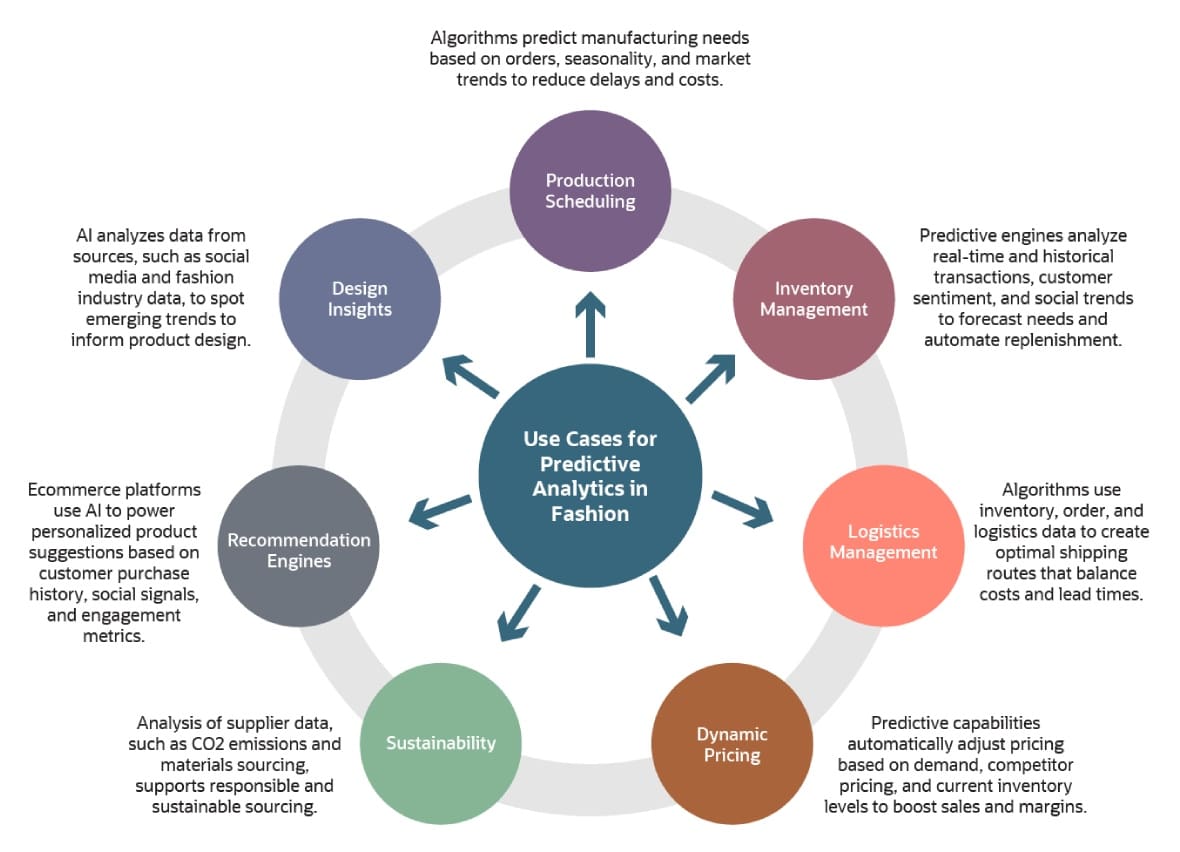
AI-powered analytics bolsters decision-making across a wide range of use cases, including logistics management, inventory management, and production scheduling. -
Digital Modeling
Digital modeling uses detailed, three-dimensional virtual models of apparel and accessories, developed using design software and AI. Digital models replicate the look and feel of garments, allowing designers to virtually prototype and test their creations. Eliminating the need to create physical samples results in faster design cycles, lower sampling costs, and less waste.
Digital models can be used in customer-facing applications to create immersive and personalized online experiences, such as giving shoppers the ability to explore apparel representing many virtual models and featuring different body types and skin tones.
-
Social Commerce
The fashion industry has been a leader in the adoption of social commerce—that is, the ability to sell products through social media. Platform-native shopping tools, such as Instagram Shopping and TikTok Shop, integrated payment gateways, and influencer marketing software, enable customers to snap up items promoted in their social media feeds, opening up new sources of revenue for fashion brands. Social commerce not only drives sales, it also offers new ways to raise brand awareness. Some apparel companies collaborate with influencers to promote new lines and products, and generate buzz.
-
Virtual Assistants
AI-powered virtual assistant systems integrated into online shopping channels use a range of AI technologies, such as large language models and deep neural networks, to answer complex questions for customers and provide customer support. Some companies create concierge experiences by pairing chatbots with personalized product recommendations, using inventory management and CRM data. As natural language processing advances, virtual assistants will become more context-aware, capable of helping customers make purchases, and able to solve customer issues with minimal human intervention.
-
Automated Warehouse
Investments in a range of warehouse automation technologies can lower operational costs and improve customer service. Advanced warehouse management systems can limit reliance on manual labor by automating scheduling, accelerating workflows, and—when combined with tools like RFID tracking—managing SKUs at scale. Apparel companies can also use technology to design warehouse floor plans for more efficient flow and better space utilization. Forward-looking fashion companies are incorporating autonomous robots and automated storage and retrieval systems to automate picking, packing, and shipping and improve warehouse safety.
-
Smart Manufacturing
A whopping 95% of manufacturers globally are using or assessing smart manufacturing technology, according to a 2024 survey by Rockwell Automation. Apparel and accessories manufacturers can combine IoT, AI-powered analytics, and robotics to build automated and adaptable production environments. Digital twins can help them take smart manufacturing further by creating virtual replicas of production lines and supply chains for scenario planning and predictive maintenance.
Traditionally, garment manufacturing fell into one of two camps: labor-intensive, bespoke production of luxury items or automated mass production of cookie-cutter products. Investments in data-driven, smart manufacturing operations allow for a middle ground: rapid design iteration and small-batch production that facilitates control of both cost and quality.
-
Omnichannel Experiences
Digital transformation lays the foundation for a seamless customer journey that integrates physical and digital touchpoints. Most customers shop via different channels, depending on the situation. Often, a single purchase transits through multiple channels. A teenager looking for that perfect prom dress may idly scan social media for inspiration, go to a store to try on the garment, and eventually send a link to their parents to buy the dress from an online retailer. It’s up to apparel brands to create a consistent omnichannel experience that stretches from discovery to purchase to eventual fulfillment. This may involve deploying systems to support personalized marketing, real-time inventory synchronization, customer chat, and unified checkout and returns.
Mastering Omnichannel Experiences in Fashion
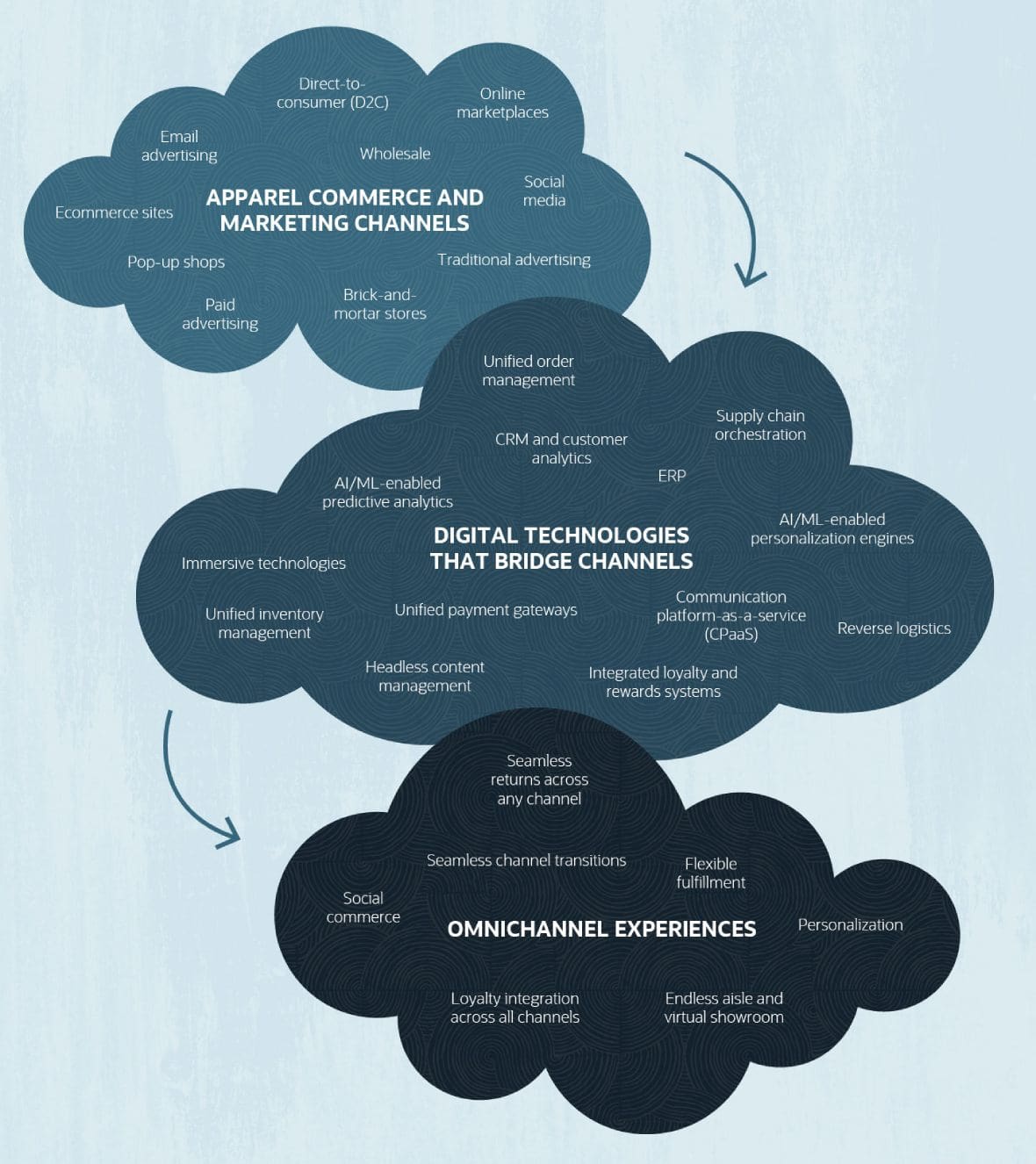
Meeting customer expectations for seamless experiences as they traverse multiple channels—sometimes for a single purchase—requires apparel companies to invest in new digital technologies and processes. -
Enterprise Resource Planning (ERP)
ERP serves as the foundation for various digital initiatives. These centralized systems unify data and workflows across business processes, including product development, inventory management, production, sales, finance, supply chain management, and customer service. They also play a central role in profitability and sustainable growth. Apparel ERP software makes it possible to optimize inventory levels, monitor and manage supplier performance, automate warehouse functions, plan the most efficient logistics routes, and deliver consistent customer experiences.
Barriers to Digital Adoption in the Fashion Industry
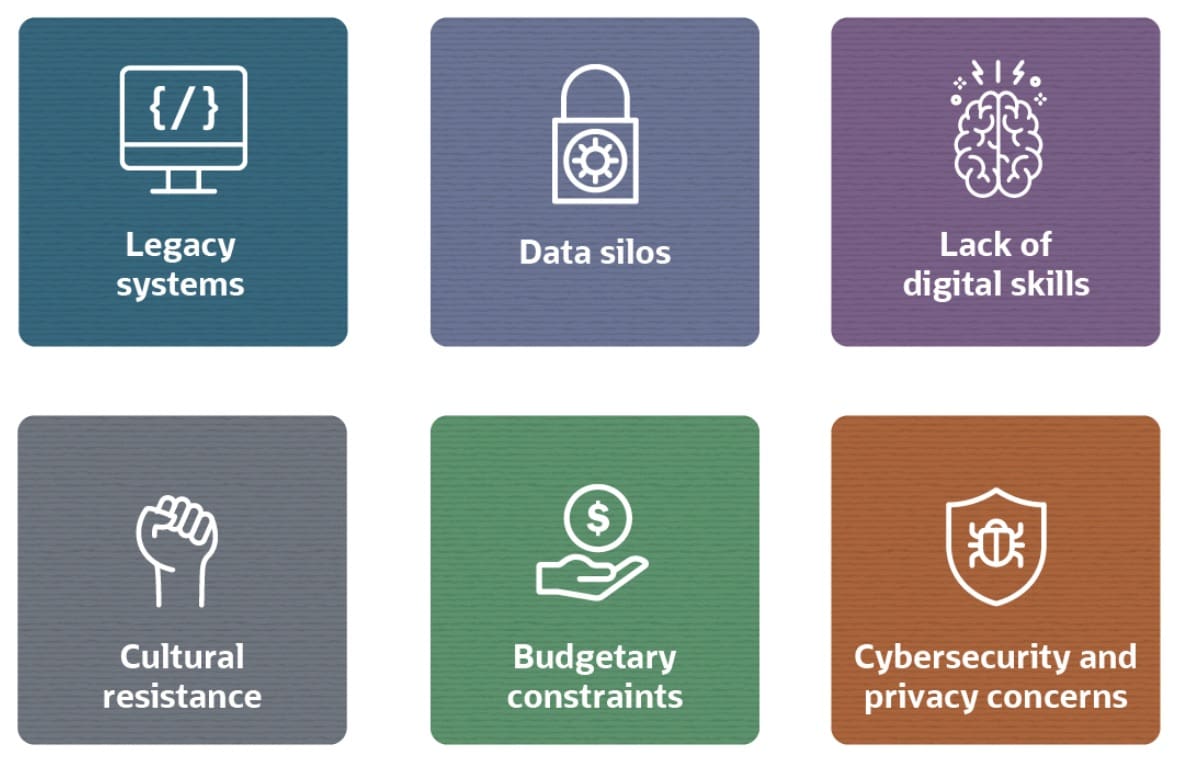
The benefits of digital transformation are clear, but some hurdles stand in the way of achieving the full value of these change efforts.
One of the biggest challenges is the collection of aging and disconnected IT systems, upon which many long-standing apparel brands still rely. Digital transformation—including the implementation of technologies like 3D modeling and AI-powered design or analytics—requires a foundation of sophisticated hardware, software, and interoperability among platforms. Also, integration with pre-existing systems, such as supply chain software, can require costly system modernization or infrastructure upgrades.
Additionally, many fashion companies seeking to deploy more advanced technologies using customer and transactional data must consider the privacy and data security implications of these efforts. Investing in cybersecurity and data protection is key. In addition, they must consider regulations, such as Europe’s GDPR, that require companies to invest in data governance frameworks. Apparel companies implementing AI-enabled systems will also need to guard against algorithmic bias and other risks. They can implement responsible AI frameworks that introduce practices for designing, developing, and deploying AI systems safely and ethically.
Apparel companies may face resistance to new technologies and ways of working from their teams. The fashion industry has a long history of manual product development and established business models, so companies will need to make a strong case for digital transformation to their employees. Many fashion brands struggle to recruit staff with the necessary digital skills to drive meaningful change. Some best practices include investing in change management and exploring alternative sources of digital know-how, such as working with experienced third parties.
The initial costs of adopting advanced technologies like AI and automation can be a major barrier, too. A multinational retailer or long-standing luxury brand may have the resources to experiment with virtual try-on technology or agentic AI assistants, while smaller companies might find it more difficult to prioritize the investment. These expenses include both the costs of the tools themselves and the supporting infrastructure, ongoing maintenance, and cybersecurity investments. It’s essential that apparel companies develop solid business cases that incorporate the total cost of ownership for their digital investments, rather than thoughtlessly hopping on the latest technology trend.
Barriers to Digital Progress in Fashion
NetSuite ERP Supports Growing Apparel Businesses
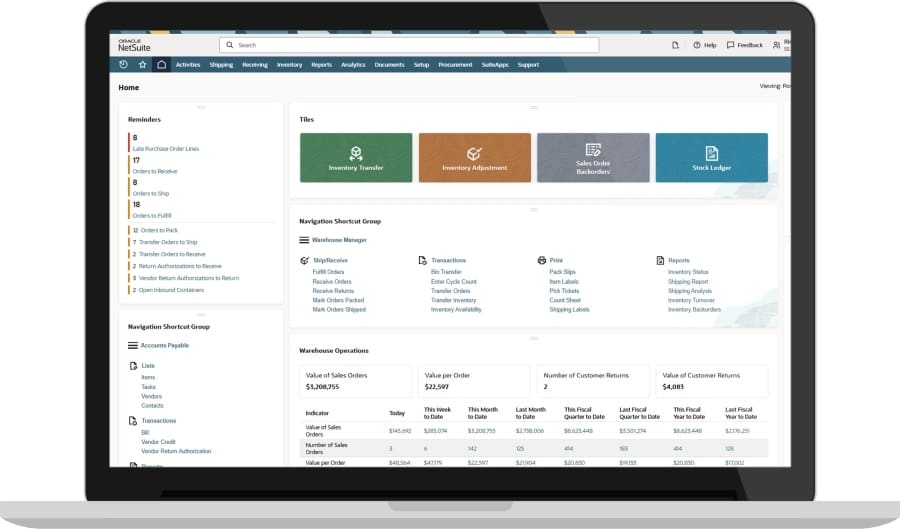
An ERP platform provides a solid foundation for digital transformation. NetSuite Apparel ERP brings together financial, production, inventory, and sales management capabilities and is tailor-made for the fashion industry. NetSuite’s cloud-based platform offers ease of deployment for smaller apparel makers, as well as robust functionality to support the complex operations of larger fashion companies. Apparel brands can use NetSuite’s advanced analytics and automated workflows to simplify seasonal planning, make smarter sourcing decisions, speed up order-to-cash cycles, and enhance inventory management. Its integrated CRM systems allow apparel companies to increase customer lifetime value by bringing together marketing, sales, and customer service data; they can also track wholesale accounts, retailer contracts, and D2C customer journeys from first contact through repeat purchases. And NetSuite’s ecommerce functionality allows fashion brands to deliver consistent shopper experiences across channels—website, mobile apps, marketplaces, retail stores—thanks to real-time inventory, pricing, and order information.
NetSuite Apparel ERP
Emerging brands and global fashion giants alike are applying technology to help them reimagine the way they design and manufacture products, manage inventory, and deliver the customer experience. By integrating technology, such as AI, 3D modeling, and predictive analytics, across business functions, apparel companies can fundamentally change how they operate and deliver value in this highly competitive and quickly moving sector.
Fashion Digital Transformation FAQs
What are the current technology trends in the fashion industry?
Some of the current tech trends in the fashion industry include digital supply chain capabilities, virtual try-on technology, social commerce, and personalized shopping experiences. AI and data analytics are also driving fundamental changes in the industry, from design and production to the customer experience.
What are the three R’s of digital transformation?
The three R’s of digital transformation are “reimagine, roadmap, and results.” Company leaders can reimagine how the business can evolve and create value, develop a clear roadmap based on that vision, and then execute on the plan to realize results and make changes as needed.
What’s a real-world example of digital transformation in the fashion industry?
Luxury fashion brand Gucci offers a real-world example of how digital transformation can bolster performance. Facing a significant drop in revenues, the 100-year-old brand has invested heavily in data-driven analytics to personalize digital marketing and guide product development, partnered with niche social media influencers, deployed a natural language chatbot to boost customer service and sales, and used predictive analytics to quickly spot slow-moving items and route them to specialized channels that protect the company’s brand image.