
For many years, marketing rolled out in spurts: the launch of a new campaign, the complete redesign of a website, a seasonal promotion—and then months would pass before the next initiative began. Today, the majority of marketing agencies are operating in a vastly different world. There’s no offseason for search engine optimization (SEO), paid advertising, social media, and email marketing, and clients expect their marketing partners to keep pace with ever-evolving customer journeys. One-off projects may have value for seasonal initiatives, but they’ll almost always fall short in channels where momentum and compounding gains matter most. Retainer agreements for marketing services create a completely different model: a recurring commitment with scope defined up front, built on the certitude that background work continues during the hiatus between big campaigns. A sustainable partnership requires agencies and clients to look closely at how retainer arrangements are structured, what they support day to day, and when they are the right fit.
What Is a Marketing Agency Retainer?
A marketing agency retainer is a recurring agreement for which a client pays a fixed fee, most often billed monthly or quarterly, to secure an agency’s ongoing services. Rather than paying for isolated projects or hourly work, clients with retainers gain ready access to the agency’s expertise and capacity, which often entails being assigned a dedicated team and receiving frequent progress reports.
Key Takeaways
- Marketing agency retainers replace one-off projects with a recurring agreement that gives clients ongoing access to an agency’s services, expertise, and capacity.
- For agencies, retainers cultivate client retention, promote efficient resource allocation, and save time that would otherwise be spent pitching and scoping new projects.
- As the relationship matures, agencies deliver more precise guidance, with stronger execution, effectively increasing the value of each retainer dollar.
- Retainer-based agreements tend to perform best in markets that must demonstrate consistent results over time, such as social media, content marketing, and email marketing.
Marketing Agency Retainers Explained
As channels multiplied and customer journeys became more complex, marketing shifted from one-off projects to an always-on discipline, giving rise to the popularity of marketing agency retainers. Instead of planning one big campaign around a single launch and then going quiet, marketers now have to manage search rankings, various approaches for different social channels, and the creation and publishing of new content on a weekly or even daily basis. Ongoing retainers with marketing agencies give clients a defined level of service for a fixed fee that fits their annual goals and budget—as well as access to a team that knows their history and context. Agencies, for their part, achieve the predictability they need to retain the right specialists and build stable account teams, instead of shifting staff to cover fluctuating scope every time a new project brief lands.
Taken a step further, hybrid arrangements—where agencies bill a baseline monthly fee and then charge separately for out-of-scope work—have become increasingly popular as an alternative to the fixed-fee structure underpinning most retainer agreements.
Agency Retainer vs. Hourly Rates
An hourly arrangement links an agency’s invoices directly to time spent. Rates may be clear, but total spend rarely is, especially if clients’ marketing needs vary from week to week. This model tends to suit short-term projects in which the agency’s role is focused on execution, such as a one-time audit or a small design update.
Although flexible, the hourly rate structure is volatile; it’s harder for clients to predict costs and for agencies to forecast income and workload. For projects that rely on long-term effort—such as SEO and social media initiatives—retainers are a better fit because they replace hourly billing with a steadier flow of collaboration. Retainers give agencies and clients greater control over their financial allocation within a framework that strengthens communication. This allows teams to focus on results and roadmaps, instead of justifying every hour spent on a project.
Agency Retainer vs. Project-based Billing
Project-based billing centers on finite deliverables: a website rebuild, a brand refresh, a defined ad campaign. In a project-based billing model, the agency and client agree on a specific task, price, and timeline. While this exposes the client to less risk—because it can “try out” an agency on a contained engagement before committing long-term—for agencies, project-based billing creates revenue spikes and gaps, even though it also contributes to a more well-rounded portfolio.
The current marketing landscape seldom fits neatly into fixed boundaries, so many agencies prefer to use a combination of the two approaches: retaining clients for ongoing efforts, but using project-based billing for one-time requests, initial strategies, and specific campaigns.
How Do Marketing Agency Retainers Work?
Marketing agency retainers are usually built around a fixed price and a clearly defined scope of work, and operated on a monthly cycle. The retainer agreement spells out how much the client will pay monthly and which marketing channels are in play, as well as what the agency is responsible for and the expected volume of activity—the number of campaigns, assets, or hours of support the engagement includes. Agencies and clients both agree to an established communication pattern for strategy check-ins, timeframes for responses to client inquiries, and the number of allowable revisions and approval steps for deliverables; this results in day-to-day retainer work that follows a structured collaboration workflow, not ad hoc requests from the client. Thorough retainer agreements outline how to handle scope creep, typically by either eliminating lower priority items to remain in scope or quoting extra work separately as an add-on.
This structure makes the “always on” nature of a marketing retainer tangible and provides both agency and client with a clear understanding of the likely actions and outcomes for a typical month, resulting in a sustainable, transparent partnership.
Types of Marketing Agency Retainers
While the core concept of a long-term partnership remains the same, retainer agreements can be structured in different ways to match how a client runs its marketing function. The right model depends on budget predictability, how variable the workload is month to month, and how much flexibility the client needs to shift priorities. Some clients prefer a locked-in scope with consistent monthly costs; others need room to scale up or down based on campaign cycles or seasonal demand. Understanding the different retainer types helps agencies and clients choose an arrangement that suits them both—and avoids mismatched expectations down the line.
Fixed-Price Retainers
Considered the standard retainer model, a fixed-price retainer stipulates that the client will pay a flat monthly fee for a predetermined set of services or number of hours of support. This structure emphasizes predictability, as all costs and core services are laid out in advance, making it easier to develop long-term marketing plans and goals, allocate resources, and appoint staff for dedicated account teams. Some agreements are output-based—citing a predetermined number of articles, newsletters, or social media posts per month, for example—while others are time-based, granting the client access to a given number of hours each month that can be flexed throughout tasks, as long as they fall within the agreed-upon scope.
For example, a B2B software company might sign a fixed-price retainer with a content marketing agency for $8,000 per month. In exchange, the agency delivers four blog posts, one gated whitepaper, and a monthly newsletter—same scope, same cost, every month. The client knows exactly what it’s getting and can plan its editorial calendar accordingly; the agency can staff a dedicated writer and strategist to the account without worrying about utilization gaps.
Pay-as-You-Go Retainers
Falling somewhere between fixed and ad hoc models, pay-as-you-go retainer agreements still define the scope of work and pricing, but pay is based on actual usage rather than a previously established package. This kind of hybrid model helps maintain the benefits of a long-term partnership, yet accommodates changes in workload. For the agency, the model allows for a level of predictable revenue and avoids one-time engagements; for the client, it enables flexibility while providing the comfort of a collaborative relationship with a partner that knows their brand and objectives.
For instance, a consumer goods company with seasonal sales peaks might use a pay-as-you-go retainer with a social media agency. The agreement predefines hourly rates and defines the types of work covered—paid ad management, influencer coordination, creative production—but the monthly spend fluctuates with need. During the holiday rush, the client might tap the agency for 60 hours of support; in the slower summer months, that might drop to 15. The client pays only for what they use, but the agency remains on call and up to speed on the brand, ready to ramp up when the next campaign hits.
Benefits of Marketing Retainers
Retainers reshape how agencies and clients work together—not just financially, but operationally. While both parties gain from the predictability and continuity the arrangement creates, the specific benefits differ depending on which side of the agreement you’re on.
Benefits for Agencies
Beyond the stability that predictable and recurring revenue brings, marketing retainers benefit the economics and relationships of agency work in tangible ways:
- Better client retention: When a company signs a retainer agreement, it’s committing to an ongoing relationship with the agency, which naturally serves as a client retention tool and extends the client’s lifetime value. A long-term relationship gives the agency time to learn the specifics of the client’s business, adapt to its changing needs, and deliver stronger results. Over time, that familiarity and continuity translate into stronger loyalty and, potentially, a higher budget.
- Improved resource allocation: With retainers, agencies can estimate how much work is coming in each month, so planning head count and workloads becomes far more straightforward. Teams can be assigned to accounts with a clear sense of capacity instead of being traded from project to project at short notice, thereby reducing burnout and improving employee utilization. The predictable income also opens doors for long-term investments in tools, training, and more.
- Service prioritization: Retainer-based clients are central to an agency’s schedule, allowing agencies to be more deliberate about where they expend their energy and to respond faster to requests and potential campaign issues. When a meaningful share of revenue comes from a stable group of clients, leaders can prioritize those accounts, instead of constantly chasing the next project. This minimizes the administrative overhead associated with frequently pitching and scoping small projects and frees time for staff to think strategically, experiment, and build relationships with key clients.
Benefits for Clients
For clients, having a marketing agency on retainer allows marketing support to be viewed as a function of operations, similar to HR, finance, or IT, rather than as a series of individual purchases. Specific benefits include:
- Increased value over time: When an agency works with a client on a month-by-month basis, developing an improved grasp of the client’s target market, competitive environment, and internal processes comes naturally. As the relationship grows, the agency’s recommendations tend to become more precise and its performance more efficient, as ideas and techniques are based on actual experience and documented data. That institutional knowledge—which would otherwise be achieved only with an in-house marketing department—means less time explaining background and more time refining and executing strategy, effectively raising the value of the retainer.
- Consistent invoices: Retainers replace inconsistent project bills with a monthly fixed invoice that makes budget forecasting dependable. As long as work stays within scope, busy periods and quiet months will average out the same, granting clients control over their marketing spend and enabling them to gauge ROI over time. Consistent invoices also save on labor, as there are no disparate values for accounting teams to track and confirm, or separate campaign estimates for management to approve.
- Easier planning: With a retainer in place, clients are clear on the level of agency support they have, which allows them to plan their marketing initiatives and product launches within that capacity. Internal teams can collaborate with the agency’s dedicated team to build annual or quarterly roadmaps that correspond with available resources, making goals more measurable and realistic. Proper planning and accurate forecasting cut down on last-minute strategy recalibrating, saving time and energy for other business priorities.
How Do You Determine Your Retainer Fee?
Determining a retainer fee is a process shaped by research and the combined effort of agency leaders. The end result should be a workable figure that covers agency costs, adds an adequate profit margin, and matches industry rate parameters for similar work, while still being reasonable in the eyes of the prospective client. Agencies can follow these five steps to help determine their retainer fee:
- Define the scope of work: Negotiations should determine exactly what the agreement includes, such as content marketing formats, paid and organic social channels, reporting procedures, and revision rounds. Exclusions—and how to deal with scope creep—should also be spelled out.
- Estimate how many hours it will take per month to complete work: With a defined scope and a team in place, agencies should then calculate a realistic amount of time per month that each member—strategist, writer, designer, account manager—will commit to the account to achieve the desired results. Many agencies add a buffer for first-month setup or inevitable surprises so they’re not underpriced from day one. Each team member’s hourly rate should be multiplied by the number of billable hours they’ll dedicate monthly to the account, and those totals should be added together to determine the full team cost.
- Identify overhead costs and other potential expenses: Beyond payment of team salaries, a percentage of retainer fees covers agency overhead costs, such as software subscriptions, office space, equipment, and other operational expenses. These costs are typically treated as reimbursable line items and aren’t factored into the baseline retainer figure.
- Factor in your profit margin: According to Promethean Research’s 2025 “Digital Agency Industry Report,” the current average net profit margin for agencies is 16%; that percentage is somewhat higher for smaller and specialized agencies. Agencies should consider gross margin targets of about 50% or greater to create sustainable business models, depending on agency size.
- Compare against industry benchmarks: As a last step, agencies should evaluate how the calculated retainer fee compares with current market rates for a similar scope. Decision-makers should factor region, specialization, client size and complexity, and contract length, along with the agency’s own positioning and maturity, into the comparison.
When Should You Use a Marketing Retainer?
Retainer agreements for marketing services typically work best when a client views marketing as an ongoing function governing a consistent stream of activities, rather than as distinct one-time efforts. In channels like SEO, blog content, email, and social media, results depend on steady effort and continuous improvement, and campaigns rarely reach a clear endpoint. If the work resembles a rolling calendar instead of a fixed checklist, a retainer is usually the more practical structure.
Retainer agreements typically benefit agencies that provide strategic support for their clients’ long-term goals and objectives, as opposed to those that tackle individual, specific deliverables. Working with myriad channels, platforms, or regions requires constant monitoring and coordination, which doesn’t translate well to project-based work. Retainers also bring internal stability for an agency; they allow better planning around staffing and specialized teams, reduce the pressure inherent in marketing and pitching to new clients, lower ramp-up time for campaign execution, and generate guaranteed monthly income.
Invoicing and Retainers Made Easy With NetSuite Accounting Software
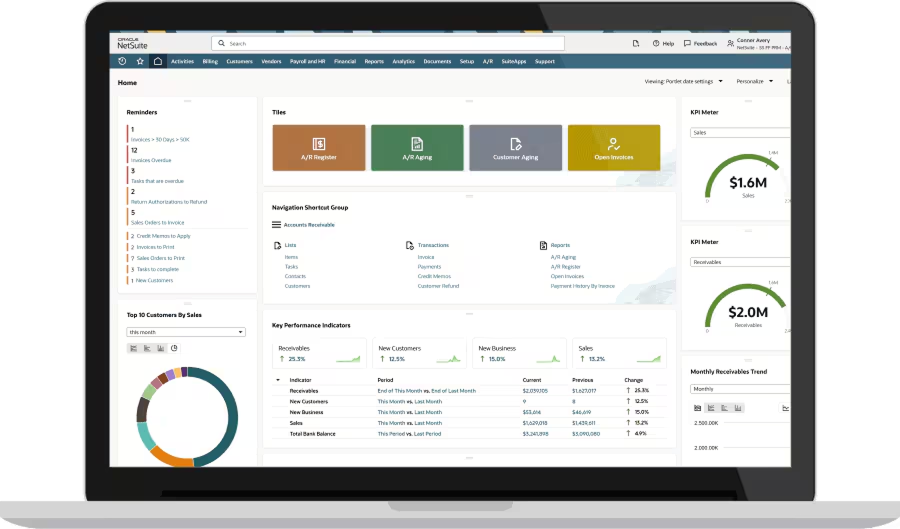
To be successful, marketing agency retainers must accommodate recurring invoices, contract terms, change orders, and ongoing time tracking—quickly rendering spreadsheets and disconnected systems impractical or downright inoperable. NetSuite Accounting Software for Advertising & Marketing Agencies brings those workflows into a single environment, allowing retainer fees, media spend, and project costs to flow directly into the general ledger. The software also generates accurate invoicing, monthly or quarterly, even when retainers are combined with usage-based or project-based charges. These capabilities allow agency managers and decision-makers to assess each retainer’s performance and to evaluate delivery and overhead costs against profit margins.
Simplify Invoicing With NetSuite
As marketing becomes more complex, agencies offering retainers can provide a viable alternative for clients looking to take advantage of consistent support but don’t want—or can’t afford—an internal marketing department. The cooperative structure of the agreement coordinates agency and client efforts, and the ongoing operating model supports planning and accountability over time and replaces multiple disconnected engagements. When managed effectively, retainers allow the focus to shift from individual deliverables and single transactional activities to long-term performance and sustainable value for agencies and clients alike.
Marketing Agency Retainers FAQs
How much is the average marketing retainer fee?
Marketing retainer fees vary according to a company’s needs, size, services required, type of agency used, and length of contract, making industrywide averages less useful than understanding the specifics of each engagement. Work that includes multiple channels or incorporates specialty disciplines into a campaign usually costs more than work that’s limited to production.
What are the disadvantages of a retainer fee?
The fixed nature of a retainer fee can lead to misalignment between agency and client during the calendar year. Clients may perceive the value of their monthly retainer fees as too high in slower months, when less work is being done; meanwhile, in busier months, agencies may be forced to take on more work than their monthly retainer stipulates. Establishing a clear scope and performing regular check-ins help both sides stay aligned as needs shift.
What should be included in a marketing retainer contract?
A marketing retainer contract should establish the scope of services, key deliverables, frequency and format of communication, timelines for future and ongoing work, and strategy reviews. It should also cover the fee structure, payment schedule, terms and procedures for handling out-of-scope work, contract duration, termination clauses, and ownership of creative assets.
When should agencies avoid using a marketing retainer?
Agencies should consider avoiding retainers when their marketing work is inherently short-term or project-based—such as launching a new website, doing a full brand refresh, or completing a defined campaign with a clear end date. Nor are retainers ideal for new relationships where the scope of the work and client expectations are still being defined, or when the client’s needs are reactive and subject to dramatic month-to-month changes.