
Hoteliers are constantly scrambling to adjust to sharp shifts in customer demand. One month, hotels are fully booked and struggling to hire extra housekeeping staff, and the next, half their floors are empty and front desks are far too quiet. And just when managers think they’re hitting a rhythm with handling the current state of demand, seasonality leads to a huge swing in bookings—again. This guide breaks down the three types of hotel seasons—peak, shoulder, and off—as well as the main causes of seasonality. It also provides eight strategies for staying ahead of demand fluctuations, from better forecasting to packaging deals with local businesses, so hoteliers can effectively manage the moving parts of this volatile industry and keep revenue flowing.
What Is Seasonality in the Hotel Industry?
Seasonality in the hotel industry refers to recurring patterns in guest demand for rooms stemming from the time of year, such as school vacations, and other factors, like local events. These cycles directly influence a hotel’s occupancy rates, pricing strategies, and staffing levels.
For hotel managers, anticipating these fluctuations are critical to maintaining high service quality and healthy revenue. Peak seasons may justify rate increases and expanded service offerings, for instance, whereas slower periods often require creative promotions, cost-cutting measures, and strategic application of staff downtime. Smarter forecasting is key, allowing managers to align staffing levels, inventory, and marketing efforts with expected demand to maximize revenue during busy periods and minimize waste during quieter times.
Key Takeaways
- Some of the main reasons for hotel seasonality include weather, local events, school vacations, and business-related travel.
- Whether a hotel has ample bookings or not, the business must manage certain fixed costs, including mortgages, insurance, and utilities, making profitability challenging during the offseason.
- Partnering with local businesses, such as restaurants, tour companies, and entertainment venues, to create bundled package deals is an effective way to boost occupancy during slow periods.
- Dynamic pricing tools allow hotels to adjust room rates in real time based on demand, booking trends, and market activity, so they can charge optimal prices on every room, every night of the year.
Seasonality in the Hotel Industry Explained
Overall, hotel revenue in the United States stood at nearly $112 billion in 2024, up $33 billion since 2017, according to Statista. And revenue is expected to increase another $52 billion through 2030. Yet, annual hotel revenue figures don’t quite tell the whole story, since seasonality sparks major shifts in guest demand and occupancy that create swings in monthly sales, corresponding to the time of year. Here’s a closer look at each of the three main hotel seasons.
Peak Season
Hoteliers live for peak season—also known as high season or busy season—that sweet period when occupancy rates and revenue are at their highest. Peak season typically occurs when a particular market has favorable weather, a bustling event calendar, and, in some cases, multiple demand drivers, such as corporate conventions combined with tourist hotspots. In July 2025, for example, the average occupancy rate for hotels in the United States was 68%, but some sought-after markets saw much higher demand, with New York City experiencing the highest occupancy level at 85%, according to CoStar. With demand up, hotels tend to push their rates to their highest levels, occasionally three to five times higher than they charge during slower periods.
Shoulder Season
The shoulder season—the in-between period that bridges peak and offseason periods—often occurs in spring and fall when travel is moderate. Why? The kids are in school, fewer events that attract tourists are planned, and the weather may not be inspiring vacation planning. During shoulder season, hotels see stable but slightly lower occupancy compared to peak season. For instance, average US hotel occupancy in April 2025 was about 65%, according to CoStar data. Occupancy may vary significantly depending on the day of the week during the shoulder months; for instance, hotels may struggle to reach 50% occupancy on a Thursday but may still sell out on a Saturday.
Offseason
Offseason—the time of year when fewer people are traveling—marks the slowest period for hotels. During this quieter season, which tends to occur in the winter months for many hotels, the weather is too cold, the local event calendar dries up, and even die-hard travelers tend to stay home. For instance, average US hotel occupancy was about 53% in January 2025, according to CoStar. Some markets fared even worse, with St. Louis and Minneapolis experiencing about 43% average occupancy that month. Even in destinations with consistently warm weather, like Hawaii and Florida, hotels experience offseasons because tourism depends not just on weather, but also on school calendars, business schedules, and events. These slower periods, often in the spring and fall, see reduced demand, lower prices, and fewer crowds. The offseason is the toughest time for a hotel to slog through, and many struggle to generate revenue until business picks up again.
What Causes Hotel Seasonality?
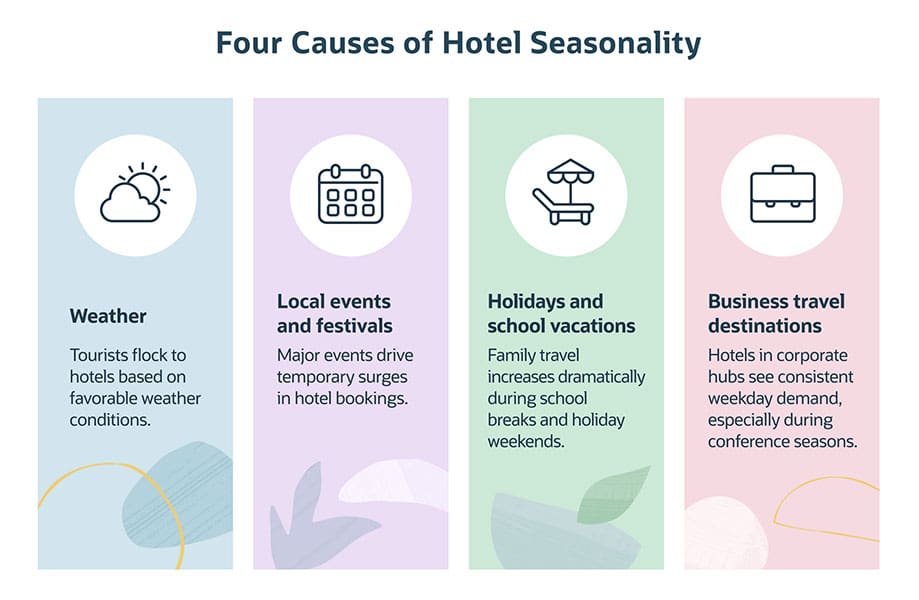
Anyone working in the hotel business for a full year has felt the highs of fully booked weeks during busy season and the lows of empty rooms in the offseason. Driven by everything from shifting weather patterns to local events and school calendars, these fluctuations can make or break a hotel’s quarterly revenue goals. Preparing for the ups and downs of seasonality starts with understanding what drives demand so hotel managers can plan ahead by adjusting their pricing, marketing, and staffing strategies. Some of the main causes of hotel seasonality include:
- Weather: Mother Nature can be a powerful business partner for hoteliers—or a tough adversary. For beachfront resorts and popular tourist destinations, summer is a gold mine. After all, warm sunshine sells. In fact, data from Europe shows that nearly one in three overnight stays at tourist accommodations occurred in just two months: July and August, according to Eurostat. And the number of nights spent during those peak summer months was nearly four times higher than in the off-peak month of January. Meanwhile, a hotel in the mountains is more likely to thrive at the opposite time of year—during ski season—yet that location may still depend on favorable conditions (the more snow, the better) to boost occupancy. Areas prone to harsh weather at certain times of the year, such as hurricanes, extreme heat and cold, or monsoons, typically see demand take a dive.
- Local events and festivals: Hotels located near stadiums, convention centers, and other cultural hot spots see intense demand spikes courtesy of festivals, university graduations, city marathons, popular concerts, and other events. For example, Rio Carnival, a huge celebration in Brazil that runs for a week every February, draws millions of people, pushing average nightly hotel rates in 2025 to $306, an 80% increase over the area’s first-quarter average of $170, according to Lighthouse. And prices soared as high as $509 on the busiest night—a nearly 200% increase. Other crowd-heavy annual events, such as the Super Bowl, Coachella, Mardi Gras, and the Cannes Film Festival, create healthy booking boosts for local hotels.
- Holidays and school vacations: When school lets out, families tend to take advantage of the free time to hit the road—and they need a place to stay. School breaks are some of the most reliable demand drivers for leisure-focused hotels, especially those located near beaches, amusement parks, and national parks. Holidays are another popular time to travel, particularly during long weekends tied to Labor Day, the Fourth of July, Thanksgiving, and Christmas.
- Business travel destinations: Seasonality isn’t just associated with leisure travel. In many cities, business travel fuels consistent midweek demand, especially Monday through Thursday. Hotels in business hubs like Boston, New York, and San Francisco often see high demand in the spring and fall as business executives travel to conferences and trade shows.
The Impacts of Hotel Seasonality
While the alternating lucrative and dry periods hotels experience may be predictable, the impacts are still tough to manage, as rapid shifts in demand are felt at every level of a hotel’s performance. Some of the most significant challenges include:
- Drastic shifts in revenue and occupancy: When peak season hits and travelers are paying a premium to enjoy sunny weather, occupancy surges. Packed rooms boost revenue for a hotel’s other offerings, as well, including restaurants, spas, and gift shops. But just a month or two later, occupancy may drop to half as much, along with the price per room. That revenue valley can be brutal to get through—and if a hotel doesn’t use proper hotel revenue management techniques to anticipate these drought periods, it may experience serious cash flow problems.
- Demand for staffing and resources: Hotel staffing entails a tricky tightrope walk across the seasons. Peak periods call for an all-hands-on-deck mentality to staff the front desk, spa, and restaurants, as well as clean and maintain rooms. But during off-peak times, remaining fully staffed becomes an expense a hotel may not be able to justify. Still, reducing hours or laying off employees is a morale-killer, so hotels should consider retaining core staff but be transparent with temporary hires brought on to help out during busy seasons.
- Maintaining profitability during the offseason: Remaining profitable when customer demand is low is difficult, especially since certain fixed costs, such as mortgages, insurance, and utilities, keep coming whether or not the hotel is booked. And every room left idle represents a cost sink. While hotels often count on the revenue boosts of peak periods to get them through the slower times, many look closely at reducing certain costs, such as energy usage, food and beverage inventory, and service offerings, to reduce expenses and maintain a healthy ROI.
8 Strategies for Addressing Hotel Seasonality
The slow season doesn’t have to put a huge damper on a hotel’s performance if the property is handled proactively and strategically. By leaning into smart forecasting and advance planning, hoteliers can manage the peaks and valleys of guest demand. Here are eight effective strategies to help hotel managers keep their heads above water, even when occupancy lags:
- Enhance forecasting trend modeling: Sophisticated trend modeling tools combine historical data with real-time insights to anticipate guest demand with greater precision, integrating search data, regional weather forecasts, event calendars, and competitor pricing to determine optimal rates and promotions. A ski resort in Vermont might layer local school calendars and long-range weather forecasts into its revenue management system, allowing it to spot late-season snowstorms and adjust rates accordingly to bring in more revenue.
- Offer service or amenity bundles: Bundling services or amenities, especially during low-demand periods, can be an effective way to increase a hotel’s perceived value without reducing rates significantly. Popular hotel packages may include spa treatments, dining credits, guided tours, or early check-ins and late checkouts. The key is to create packages that resonate with seasonal travelers’ needs, such as romantic getaways during the winter or wellness retreats after the holidays. For example, a boutique hotel in the Berkshires might create a midweek package during the winter lull, building a two-night stay with yoga classes, wine tastings, and a dining voucher.
- Schedule improvements and renovations during the offseason: The slower months present an ideal opportunity to invest in the property without disrupting hordes of guests. If a hotel plans to embark on a lobby redesign or guest room upgrades, scheduling the work when occupancy is low is a great way to take advantage of building a company’s long-term investment and reputation.
- Consider dynamic pricing: If a hotel’s rates look the same in January as they do in July, the establishment is leaving money on the table—or potentially scaring away guests during the slow season. Rather than relying on static rate structures, hotels can use automated revenue management systems with built-in dynamic pricing tools to adjust room rates in real time based on demand, booking trends, and market activity. The result: optimized prices on every room, every night of the year. A hotel might drop prices during a quiet period in March just enough to drive a 20% uptick in weekend bookings, and push prices up 40% during high-demand periods.
- Establish strong supplier relationships: With demand fluctuating, hotels need to count on flexible supply chains that allow them to adjust orders, delivery schedules, and payment terms to accommodate their changing needs. Developing strong relationships with food, beverage, linen, and amenity suppliers prevents overstocking during slow months or being caught short on supplies during sudden spikes. A coastal resort might look for flexible weekly deliveries of local seafood and produce that can be easily ramped up or down depending on hotel occupancy levels, for instance.
- Diversify offerings: Hotels that rely too heavily on one type of traveler—or one season—are especially vulnerable to dips in demand. Diversification can help by adding new experiences, targeting new customer segments, and exploring new uses for underused hotel spaces, especially during the offseason—perhaps appealing to local residents by offering bookings for wedding packages, conferences, coworking spaces, and day passes to use the pools and spas.
- Optimize your ads: Marketers need to watch their ad spending and refine their approach to attract business during slow months by adjusting their messaging, the timing of promotions, and their audience targeting. The key is making sure the property is reaching the right audience with the right message at the right time of year. For instance, a beach resort in the south may target snow-weary northern travelers in January with warm-weather getaway ads, while a mountain lodge might shift its focus to corporate retreat planners during the fall shoulder season.
- Create partnerships and local connections: Partnering with nearby businesses is an effective—and often overlooked—way to boost visibility during slow periods. Collaborations can include co-branded packages and cross-promotions, such as bundling stays with local restaurants, tour companies, or entertainment venues. Consider a city hotel that partners with a local theater and high-end restaurant to offer a date night package in slower winter months, providing discounted tickets, a fancy meal, and a night’s stay, all promoted by each business to their respective clients.
How Does Technology Help Mitigate Seasonality?
As hotels feel increased pressure to move faster, operate leaner, and generate more revenue per room to navigate the ups and downs of seasonality, proactive, data-driven strategies have become essential. As a result, more and more businesses are adopting technology to help stay on top of seasonal shifts. In fact, the hotel and hospitality management software market has grown from $7.06 billion in 2024 to $7.57 billion in 2025—and it’s expected to reach $10 billion by 2030, according to Research and Markets estimates.
After all, the tools are a game-changer. Enhanced forecasting and analytics platforms help properties analyze historical booking patterns and gather data on local events, weather trends, and competitors’ pricing to more accurately predict demand shifts. Market intelligence tools offer real-time insights into key factors, including local occupancy trends, booking pace, and event-driven demand, allowing hotel owners to adjust rates ahead of high-demand periods and refine ad strategies to accommodate market shifts. Meanwhile, dynamic pricing software and revenue management systems use algorithms and AI to automatically update rates based on live demand and audience segmentation, so hotels can price competitively without setting rates too low.
In the first half of 2025, nearly 9 out of 10 hotels reported using some form of AI-powered or automated technology—and the impact on revenue per available room (RevPAR) was remarkable, according to Starfleet Research. Properties using real-time dynamic pricing strategies say they’ve seen RevPAR lifts of 12% to 18% over comparable hotels that relied on manual-basis decision-making.
Monitor and Manage Seasonal Shifts With NetSuite Planning and Budgeting
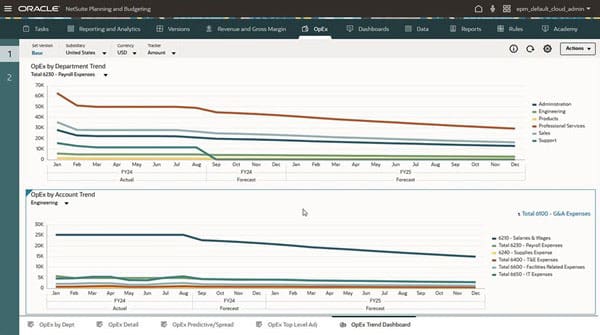
Even the most seasoned hotel operators may find it difficult to manage volatile shifts in demand. Bookings may seem strong one minute, but then a large business gathering falls through and, suddenly, hundreds of rooms are canceled at once. Or a theater event brings a surprising spike in demand, catching a low-staffed hotel off guard. The challenge lies in responding quickly to both predictable and unexpected fluctuations. That’s where NetSuite Planning and Budgeting comes in, with the capability to monitor and analyze forecasts to uncover trends and allow hotels to respond accordingly. By centralizing financial, operational, and forecast data in one platform, hoteliers get a real-time view of performance and gain the agility to model, test, and adjust plans on the fly. Meanwhile, NetSuite Hospitality ERP unifies data from finance, property management, reservations, inventory, and more into one system designed specifically for hotels, resorts, and other venues. By connecting the full operational picture from guest bookings to back-of-house purchasing, hotel owners can gain visibility into occupancy, revenue, and profitability across their properties, keeping managers up to date, even if seasonality changes the picture without warning.
Seasonality can’t be avoided in the hospitality landscape, but demand fluctuations don’t have to dictate a hotel’s bottom-line performance. With the right strategies and tools, hotel operators can move from reacting to demand shifts to actively shaping how they respond. Whether hoteliers use real-time data to forecast demand more accurately or find creative ways to attract guests during the slower months of the year, remaining agile and proactive lets property owners stay competitive, profitable, and ready to serve customers, no matter the season.
Seasonality in the Hotel Industry FAQs
What challenges does seasonality pose for hotels?
Seasonality creates swings in demand that impact nearly every area of a hotel’s performance. Peak season puts pressure on hotels to maximize occupancy and revenue while maintaining high levels of service, whereas the offseason finds hotels contending with rising per-room costs and reduced cash flow. These fluctuations make it difficult for hotels to plan staffing, optimize pricing, and forecast revenue accurately.
How does seasonality affect hotel operations?
Hotels must constantly adjust their staff scheduling, inventory levels, marketing campaigns, and maintenance operations to align with expected occupancy changes. Without accurate forecasting and flexible planning systems, these adjustments could lead to higher-than-necessary costs and guest service issues.
How do hotel operations managers handle demand during peak season?
When reservations are rolling in at a healthy pace during peak season, operations managers must focus on keeping service quality high by hiring seasonal staff, streamlining check-in processes, and optimizing room turnover. Revenue management strategies can help with dynamic pricing and upselling to capitalize on intense demand, and real-time data can help managers to monitor occupancy, forecast inventory needs, and adjust operations quickly to avoid booking or service issues.