
Rising labor costs, mounting regulatory requirements, volatile commodity prices, and intensifying competition all contribute to the pressure on hotels and restaurants to reduce their spending—without driving away loyal guests and risking negative reviews. In the hospitality industry, the difference between thriving and struggling often comes down to how well companies can balance costs amid fluctuating—and often unpredictable—customer volume.
By aligning labor and inventory with demand and investing in preventive maintenance, hospitality businesses that prioritize cost control can expand their margins to maintain—and even enhance—the services they provide to their guests.
What Is Hospitality Cost Control?
Hospitality cost control is the framework used by hotels, restaurants, and resorts to manage expenses and maximize profitability while maintaining service quality. Cost control processes track, analyze, and adjust expenditures in several categories, such as labor, food and beverages, utilities, maintenance, and supplies.
Hospitality cost control calls for more than trying to trim expenses—it involves strategically allocating resources and implementing automation to create a more efficient operation. Digital cost control solutions combine real-time data analysis, predictive modeling, and automated workflows to help managers strike a balance between financial performance and guest satisfaction.
Key Takeaways
- Hospitality cost control strikes a balance between cutting expenses and maintaining service quality to strengthen margins and create sustainable advantages.
- Organizing expenses by type, such as food and beverage, labor, insurance, and maintenance, helps businesses identify savings opportunities without compromising critical operations.
- Implementing technologies like automated reordering and predictive analytics allows businesses to replace manual processes with visibility that informs financial strategies and decisions.
- Cost control strategies should address multiple areas simultaneously to generate companywide savings that businesses can reinvest.
- Common areas for reinvestment include guest experiences, facility improvements, technology, and employee development.
Hospitality Cost Control Explained
Hospitality businesses need a systematic approach for financial management to maintain margins in the face of escalating labor expenses, volatile food prices, and rising utility rates. Heightened profitability gives hospitality providers more funds to reinvest into guest experiences, facility improvements, and staff development, creating competitive advantages that compound over time and help businesses stay on top of evolving customer demands.
Unlike industries with more predictable expense patterns—manufacturing, for example—hotels and restaurants face rapidly fluctuating day-to-day demand, perishable inventory, and high service-level expectations, regardless of occupancy levels. Hospitality businesses must juggle multiple priorities when controlling their costs—reducing waste, optimizing staff schedules, and investing in long-term efficiency improvements—without letting customers feel like the business is cutting corners. This balancing act demands clear protocols and a companywide commitment to financial discipline.
Why Does Cost Control Matter for Hospitality Businesses?
Cost control matters because it helps hospitality businesses overcome the thin margins and intense competition that cut into profits. In fact, revenue generation and profitability are the biggest day-to-day challenges facing hotels in 2025, according to a recent survey by Hotel Operations. Without disciplined cost management, even high-occupancy properties or popular restaurants can struggle to generate meaningful financial gains. Low profitability directly impacts companies’ ability to reinvest in the business, offer competitive pricing, weather market downturns, and build a sustainable customer base.
Runaway costs and low liquidity create cascading problems—deferred maintenance creates unexpected equipment failures that disrupt guests and trigger emergency repairs, understaffing eats into service quality, and reactive decisions prevent strategic investments that would have built long-term competitive advantages. By prioritizing cost control practices, businesses can generate savings that allow them to create a more responsive operation, seize new revenue opportunities, and maintain cash reserves for slower seasons.
Types of Hospitality Costs
Establishing distinct cost categories helps companies pin down expenses and make cuts that won’t impact downstream operations. The following categories represent the primary cost guzzlers for hospitality businesses, with each requiring a dedicated monitoring and management approach to maximize savings:
- Food and beverage: Restaurants, bars, room service, and catering operations rely on a steady flow of raw ingredients, beverages, utensils, and supplies. These costs fluctuate with market prices and seasonal availability, requiring careful menu and vendor management for a balance between demand and shelf life to minimize dead stock.
- Labor: Wages, benefits, training, payroll taxes, and other employment costs are often the largest expense category for hospitality businesses. Many companies integrate digital scheduling and productivity management tools that feature demand forecasting to control labor costs without affecting service levels.
- Supplies: Essential goods, including linens, toiletries, cleaning products, and guest amenities, often make up a significant portion of expenses. To control their supply chains and lower their procurement costs, procurement teams can renegotiate vendor contracts for more favorable payment terms or new suppliers that offer early payment or bulk purchase discounts.
- Equipment and furnishings: Kitchen appliances, furniture, fixtures, and technology hardware require both initial investment and ongoing maintenance. Lifecycle planning and preventive care let businesses time their major investments and reduce long-term costs and replacements.
- Maintenance and utilities: Energy, water, waste management, general facility upkeep, and other overhead costs can cut into margins. Ongoing monitoring and efficiency adjustments—often aided by smart technology and automation—support proactive maintenance and conservation that limit both environmental impact and operating expenses.
- Legal and insurance: Compliance costs, liability coverage, workers’ compensation, and regulatory requirements are often fixed costs required by law. Periodic reviews with industry experts help companies balance protection with affordability to stay in line with regulations.
- Technology and software: Property and inventory management systems, point-of-sale devices, guest Wi-Fi, ERP platforms, and industry-specific data analytics software are all becoming increasingly necessary investments for hospitality businesses. Strategic technology deployment offsets these costs through automation and efficiency gains that cut expenses.
Types of Hospitality Costs
| Category | Examples |
|---|---|
| Food and beverage | Ingredients, beverages, utensils, supplies |
| Labor | Wages, benefits, training, payroll taxes |
| Supplies | Linens, toiletries, cleaning products, guest amenities |
| Equipment and furnishings | Kitchen appliances, furniture, fixtures, technology hardware |
| Maintenance and utilities | Energy, water, waste management, facility upkeep |
| Legal and insurance | Compliance fees, liability coverage, workers’ compensation, insurance |
| Technology and software | Management systems, point-of-sale devices, Wi-Fi, ERP software, operational platforms |
Challenges in Controlling Hospitality Costs
The hospitality industry’s service-focused nature requires careful balance—cut costs too deeply and guests start to feel underappreciated; don’t cut enough, margins suffer. With careful planning and regular analysis of customer feedback, businesses can develop realistic financial strategies that bolster the bottom line and anticipate potential roadblocks before they compromise the guest experience. Common cost-control challenges facing the hospitality industry include the following:
- Compliance costs: Evolving regulations concerning food safety, labor laws, pricing transparency, and accessibility requirements create expenses in the areas of monitoring changes and implementing policies to meet new standards. For many companies, these costs are an unavoidable part of doing business and can’t be eliminated.
- Lack of visibility into spending: Fragmented systems and manual processes often conceal detrimental spending patterns. Without integrated, real-time data, analysts may miss redundant purchases, unnecessary costs, complex spending patterns, or budgetary variances.
- Demand volatility: Seasonality, weather, changing customer behaviors, and economic shifts foment unpredictable occupancy demand, which complicates financial planning. Inaccurate demand forecasts can lead to high variable expenses spurred by situations like overstaffed part-time labor that sits idle during slow periods.
- Fixed expenses: Long-term contracts, rent, property taxes, salaries, and debt payments create inflexible costs. These obligations limit the percentage of expenditures that managers can directly control and eat into margins, especially if the revenue sources tied to these fixed costs dry up.
- Poor guidance and documentation: Inconsistent procedures and inadequate training lead to inefficient practices and workarounds. Without clear standards, accountability measures, and automated billing and approval workflows, staff may unknowingly perpetuate wasteful habits that spread and compound over time.
- Too many manual processes: Paper-based systems and repetitious data entry slow work efficiency and increase errors. Delays in procurement, scheduling, inventory allocation, and reporting can prevent employees from focusing on cost-reduction strategies.
13 Cost Control Strategies for Hospitality Businesses
Successfully controlling costs in the hospitality industry requires a comprehensive approach that addresses multiple areas simultaneously. The following 13 strategies tackle the most prevalent cost drivers in the hospitality sector. Businesses should prioritize them based on their specific goals, challenges, available resources, and market position:
1. Audit spending: Analyze spending records for budget variances, anomalies, redundancies, outdated contracts, and inaccurate transactions. Addressing these hidden costs unlocks both immediate savings and long-term cost reductions.
2. Leverage automation and AI: Deploy technology solutions to reduce labor costs and inaccuracies common to routine tasks, including check-in/checkout, room assignments, reservation adjustments, and inventory tracking. AI tools can handle basic guest inquiries and service requests, freeing staff to help customers whose issues are more complex.
3. Increase employee awareness and training: Educate employees on daily costs and provide guidance so they can complete their work more efficiently. Well-trained employees are more productive and less wasteful, and they often contribute valuable cost-saving ideas derived from their front-line experiences.
4. Enhance forecasting: Leverage predictive analytics and business intelligence software to anticipate demand patterns and allocate staff and inventory accordingly. Accurate forecasting prevents spoilage, as well as wasted labor during slow shifts or insufficient staff during peak times.
5. Optimize your marketing strategy: Prioritize channels that deliver the highest returns, tracking and investing in the areas that attract the most profitable guests. Targeted ad campaigns can pare overall acquisition costs relative to revenue by enticing guests more likely to stay longer or spend more on ancillary revenue streams.
6. Monitor waste and spoilage: Implement tracking systems for food waste, damaged linens, and discarded supplies, and adjust purchasing, storage, and handling procedures to keep losses at a minimum. These strategies lower costs and foster a more sustainable and eco-friendly operation. And for good reason: Customers increasingly expect sustainability initiatives from the hotels they stay at. In fact, 43% of travelers say they “believe travel service providers hold the key to addressing environmental factors,” according to Booking.com's 2024 Sustainable Travel report.
7. Negotiate with suppliers: Review vendor contracts to identify consolidation opportunities and unlock volume discounts. Strong supplier relationships help businesses acquire better pricing and payment terms, as well as preferential treatment during shortages or price hikes.
8. Optimize staff scheduling: Match staffing levels with demand forecasts using integrated workforce and reservation management tools. Flexible, data-driven scheduling helps businesses minimize overtime costs without sacrificing coverage levels or employee satisfaction.
9. Implement an expense documentation protocol: Establish clear procedures for prioritizing, tracking, approving, and recording all expenditures. Standardized documentation produces a data trail for accountability and analysis, keeping the company audit-ready.
10. Improve employee satisfaction: Invest in employee recognition and career development programs to lessen turnover and discover untapped employee skills. Satisfied employees feel more appreciated, facilitating higher productivity, better guest service, and greater commitment to strategic initiatives.
11. Put an expense approval process in place: Create tiered spending authorizations for each expense category to prevent unauthorized spending and unexpected budget overruns. Explicit spending hierarchies, combined with clear limits, help companies control costs without impeding purchases.
12. Leverage predictive maintenance: Use equipment sensors and predictive analytics to anticipate failures and take steps to dampen their impact. Predictive equipment maintenance eliminates rushed repair costs, extends equipment life to maximize ROI, and prevents unexpected breakdowns that disrupt service.
13. Upgrade technology and software: Replace outdated legacy systems with integrated platforms that automate processes and provide real-time financial visibility across the company. For example, cloud-based ERP software often updates automatically, keeping systems current without requiring manual upgrades or incurring massive downtime.
Identify and Minimize Costs With NetSuite
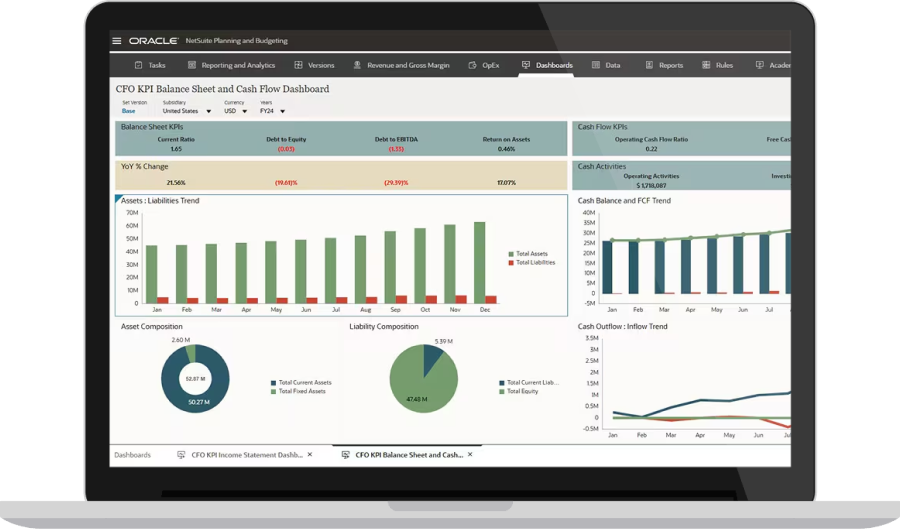
NetSuite financial management solutions consolidate data across departments, properties, and business units into role-specific dashboards that track costs and spend patterns in real time. As part of NetSuite Hospitality ERP, the financial management module’s predictive analytics capabilities help businesses forecast demand and adjust resource and labor allocation accordingly. Additionally, integrated procurement features manage suppliers and automate purchase orders based on current stock levels and expected needs. Built-in reporting tools and KPI analysis let managers identify cost-cutting opportunities and monitor the impact of any new strategies on the guest experience. And for multiproperty operations, NetSuite’s cloud-based software standardizes cost control procedures and adds flexibility for location-specific requirements.
NetSuite Hospitality ERP
Controlling costs in hospitality requires a holistic approach that spans labor management, inventory, energy efficiency, and proactive upkeep. Companies that successfully balance the need to cut expenses with maintaining service quality can gain long-term competitive advantages by generating resources for reinvestment in guest experiences, employee development, expansion, and new technological infrastructure. As rising prices and increased competition continue to squeeze margins, systematic cost control allows hospitality companies to thrive.
Hospitality Cost Control FAQs
How do you reduce costs in the hospitality industry?
Cost reduction strategies in the hospitality industry typically involve making operational improvements, deploying new technology, and allocating resources based on data. Key methods include automating routine tasks, aligning staff scheduling with forecasted demand patterns, negotiating supplier contracts to unlock discounts, and conducting preventive equipment maintenance. Businesses must carefully balance cost-reduction efforts against their impact on service quality.
What is the main goal of cost control in the hospitality industry?
The main goal of hospitality cost control is to maximize profitability while maintaining or enhancing guest experiences. By carefully managing costs, businesses make funds available for property improvements, staff development, technology investments, and guest services.
What are the five rules of cost control?
The rules of cost control vary from business to business, but they typically include the following five best practices:
- Establish clear metrics to measure performance
- Implement specific monitoring and reporting procedures
- Create accountability through defined roles and approvals
- Focus on data-driven decision-making
- Maintain consistent review cycles to adjust strategies