
Depending on how it’s implemented, a pricing model can be a barrier to a long-term professional partnership or its greatest catalyst. As markets grow more competitive and budgets face increased scrutiny, traditional fixed-cost pricing offers predictability but rarely alignment between buyers and sellers. Performance-based pricing bridges this gap by redefining the vendor-client relationship from a simple transaction to a shared mission. But to leverage it effectively, leaders must first understand where it fits—and where it doesn’t—in the broader scope of pricing strategies.
What Is Performance-based Pricing?
Performance-based pricing is a compensation model in which customers pay based on the achievement of predefined, measurable results, rather than traditional fixed rates or access levels. Pricing is tied to specific performance metrics, such as revenue growth, cost savings, lead volume, uptime, or other outcomes that are established up front.
Also referred to as outcome-based pricing, performance-based pricing shifts the focus from inputs or effort to direct business impact and realized value. This approach is seeing a resurgence as advancements in AI-enabled measurement provide the granular attribution necessary to prove value in real time.
Key Takeaways
- Performance-based pricing ties payment directly to measurable outcomes.
- Clear metrics and transparent reporting prevent disputes and misaligned expectations.
- The model works best where attribution is strong and results are easily tracked.
- Performance-based structures create shared risk that fosters collaboration beyond what’s possible through traditional transactional relationships.
- Integrated cloud platforms centralize the updating and governing of pricing models.
Performance-based Pricing Explained
Performance-based pricing starts with a conversation. Buyers and vendors need to agree on clear KPIs early, so both sides work toward the same goals in the overall pricing process. That interaction also creates a true partnership: Vendors have as much skin in the game as buyers because stronger outcomes mean higher pay.
Interest in this model is growing. According to a 2025 Stripe survey, 77% of business leaders agree that customers are increasingly pushing for outcome-based pricing. Vendors are warming to it, too, as advances in AI and analytics make outcome measurement more precise and easier to implement at scale.
Performance-based pricing works best in environments where outcomes are measurable and attribution is clear, which is why it’s a cornerstone of ROI-driven B2B relationships. Other common applications include:
- Marketing: Pricing derived from conversions, qualified leads, or total sales volume.
- Software-as-a-service (SaaS): Fees based on platform utilization, churn reduction, or process automation rate.
- Consulting: Compensation linked to cost savings, organizational efficiency, or growth targets.
- Healthcare: Payments measured by patient health outcomes or efficacy of treatments.
Performance-based arrangements put a premium on careful metric selection, transparent data-sharing, and detailed contract structures that balance accountability with fairness—all while maximizing profitability.
How Does Performance-based Pricing Work?
Performance-based pricing works best when both parties are aligned on expectations and outcomes. Success hinges on establishing a structured framework built on clear goals and fair, measurable terms, typically unfolding across three key steps:
-
Define the Payment Structure
The first step in performance-based pricing is deciding how payment will be tied to outcomes. Options include fixed or milestone-based fees, variable rates that scale with performance, success-based commissions or revenue shares, and hybrid models that pair a modest base fee with outcome-driven incentives. Pricing should aim to reflect the value exchanged yet remain financially sustainable for both parties. Clear contract terms covering financial limits, payment timing, and attribution rules help manage financial exposure and prevent disputes. They also give both sides confidence in forecasting returns.
-
Assign Success Metrics
The next step is to select the metrics that determine success. Both parties should agree on quantifiable, achievable KPIs that tie directly to business value, such as pipeline generated, customer acquisition cost, operational uptime, revenue growth, or project milestone completion. For example, a digital ad agency and an ecommerce company might define success as a 20% reduction in average cost per acquisition over a six-month campaign. Well-defined metrics keep everyone on the same page, setting expectations, guiding day-to-day execution, and heading off mismatched incentives. Most important, metrics should be locked in before work begins and then revisited regularly to make sure performance is measured fairly.
-
Track Performance
Consistently tracking performance keeps the pricing model transparent and accountable. Both parties should have access to timely, reliable data that shows progress against the agreed-upon metrics, typically through shared dashboards or integrated analytics tools. Outcomes should be traceable to the product or service itself. Events should be logged and attributed accurately, whether the data lives within one platform or several. Analytics and AI-powered tools facilitate real-time monitoring and reporting by allowing teams to spot issues early and make quick adjustments. Regular check-ins allow both parties to confirm progress against milestones and verify that payments are released as performance goals are successfully met.
Benefits of Performance-based Pricing
According to the 2025 Stripe survey mentioned earlier, 84% of business leaders identify pricing agility as a critical competitive advantage over the next two years. Performance-based models are an attractive vehicle for that flexibility because they offer several strategic benefits for both clients and vendors:
- Goal alignment between client and vendor: Unlike a fixed-price model, performance-based pricing pushes both sides to talk openly about objectives, constraints, and trade-offs. That level of communication helps clients and vendors genuinely collaborate, rather than simply transact.
- Encourages risk-sharing: Clients reduce exposure and protect budgets by paying only for proven performance; at the same time, vendors assume greater accountability for delivering strong outcomes. A shared risk-reward dynamic promotes fairness and disciplined execution on both sides.
- Enhances long-term partnerships: Aligning pricing with outcomes encourages vendors to act as strategic, invested partners, not transactional providers. This, in turn, fosters the collaboration necessary to build sustained growth for both parties.
Disadvantages of Performance-based Pricing
Despite its appeal, performance-based pricing is not without its challenges. To fully realize its benefits, companies must first navigate the following pitfalls:
- Unpredictability and risk management: For vendors, revenue can swing dramatically when it’s tied to client outcomes subject to external variables beyond their control, such as supply chain disruptions or changes in consumer demand. Market volatility, seasonality, or unexpected performance dips can also make forecasting and budgeting tricky for both sides, creating financial uncertainty. Safeguards like minimum commitments can reduce volatility but also dilute the pure pay-for-results model.
- Defining and tracking success: Choosing the right success outcomes is difficult. Metrics that are too broad are impossible to measure, while overly narrow ones undervalue impact. Attribution adds another layer of difficulty: Results often stem from multiple factors, which can spark disputes over who deserves credit.
- Contractual complexity: Performance-based agreements are almost always more complex than traditional contracts because they require precise definitions of outcomes, defensible measurement standards, and clear attribution rules. Ambiguity surrounding KPIs, payment terms, or responsibility for results can result in disputes and prolonged negotiations—not to mention legal and administrative overhead.
How Performance-based Pricing Compares With Other Pricing Models
There’s no one-size-fits-all approach to pricing. The goal is to find which models deliver the most value for both providers and customers. In practice, many organizations combine elements of multiple models, such as subscription pricing with performance bonuses, to balance predictability and alignment.
Performance-based Pricing vs. Subscription Pricing
Subscription pricing charges fixed, recurring fees—usually monthly or annually—for platform access, regardless of outcomes. Pricing is often flat-rate or tiered, based on usage and features. It offers predictable costs and generally unlimited usage within defined parameters. Subscription pricing is a common model for SaaS companies that offer heavily used, multifunctional tools that rely on a client’s in-house expertise. Performance-based pricing, by contrast, is ideal for point solutions, unproven marketing channels, or scenarios where minimizing up-front spend is important. The “set-it-and-forget-it” nature of subscriptions offers simplicity and budgeting consistency, while performance-based pricing focuses on measurement and efficiency.
Performance-based Pricing vs. Usage-based Pricing
Usage-based pricing, also known as consumption or pay-as-you-go pricing, charges customers based on how much they actually use a product or service, often combining a base rate with variable usage fees. This model offers flexibility and scalability and is well-suited for products with highly variable demand, such as cloud storage or messaging platforms. It lowers barriers to entry and scales with adoption, eliminating the need for contract renegotiations, which can be especially appealing for smaller or fast-growing businesses. The inherent variability, however, can introduce budgeting and forecasting challenges for buyers and vendors alike. Compared to usage-based pricing, performance-based pricing goes a step further by tying costs not just to volume consumed but to results achieved, such as cost savings through better data management or reduced downtime.
Performance-based Pricing vs. Value-based Pricing
Value-based pricing sets prices according to the perceived value a product or service delivers to the customer, regardless of performance outcomes. This approach allows businesses to capture premium pricing, particularly for one-of-a-kind or bespoke offerings, where value is subjective or tied to brand or expertise. However, accurately estimating value requires strong market insight and ongoing customer research. Misjudgment can limit adoption and affect a company’s revenue and reputation. Performance-based pricing shares an outcome-oriented mindset but differs from value-based models in execution by adjusting compensation to reflect measurable results achieved over time.
Performance-based Pricing vs. Cost-plus Pricing
Cost-plus pricing adds a markup to the total cost of a product or service to cover expenses and maintain predictable margins. For example, a manufacturer using this model might calculate that a product costs $8 to produce, then add a 25% markup to sell it for $10. Markups can be fixed, a percentage of costs, or both, but accurately accounting for all direct and indirect costs is essential. Without a deep understanding of its operations, a company risks setting its profit margin too low or too high, which can lead to financial losses or reputational damage due to perceived price gouging. It also prioritizes internal expenses over external price shifts, slowing responsiveness to changing market conditions. Cost-plus pricing is well-suited for stable cost and low-competition environments, as well as government contracts or other complex projects where transparency and cost recovery are important.
Performance-based Pricing vs. Competitor-based Pricing
Competitor-based pricing, sometimes called benchmark pricing, typically sets prices by matching, undercutting, or exceeding what comparable competitors charge. This positions the vendor within the market’s expected range. Competitor-based pricing is one of the simplest pricing approaches, helping companies go to market quickly and avoid obvious over- or underpricing. This model is especially effective in highly competitive markets with price-sensitive customers. A downside is it limits differentiation and tethers pricing decisions to external strategies, rather than to a company’s unique strengths. Though effective in moderation, overusing this tactic can shrink profit margins and undermine long-term brand equity.
Comparing Pricing Models
| Pricing Type | What Prices Are Based On | How Prices Fluctuate |
|---|---|---|
| Performance-based | Measurable outcomes or results achieved | Pricing adjusts based on performance against predefined, measurable goals. Higher compensation is tied to stronger results; prices drop when outcomes fall short. |
| Subscription-based | Access to a product or service over time | Prices remain fixed within a billing period, typically monthly or annually, regardless of usage or performance, with changes occurring when customers upgrade or downgrade plans. |
| Usage-based | Product or service consumption levels | Costs increase or decrease based on actual usage, allowing spend to scale with demand but introducing variability in monthly or annual pricing. |
| Value-based | What customers are willing to pay | Customers are willing to pay more for unique features, premium goods and services, or brand prestige. Lower quality or easily replaceable goods tend to warrant lower prices. |
| Cost-plus | Production costs | After calculating the cost to produce a good or service, businesses add a markup to generate profit and cover indirect business expenses. |
| Competitor-based | What competitors are charging customers | Lowering prices below competitors’ prices can attract customers. Raising prices above competitors’ prices can signify premium goods and services. |
Preserve Your Profit Margins With NetSuite
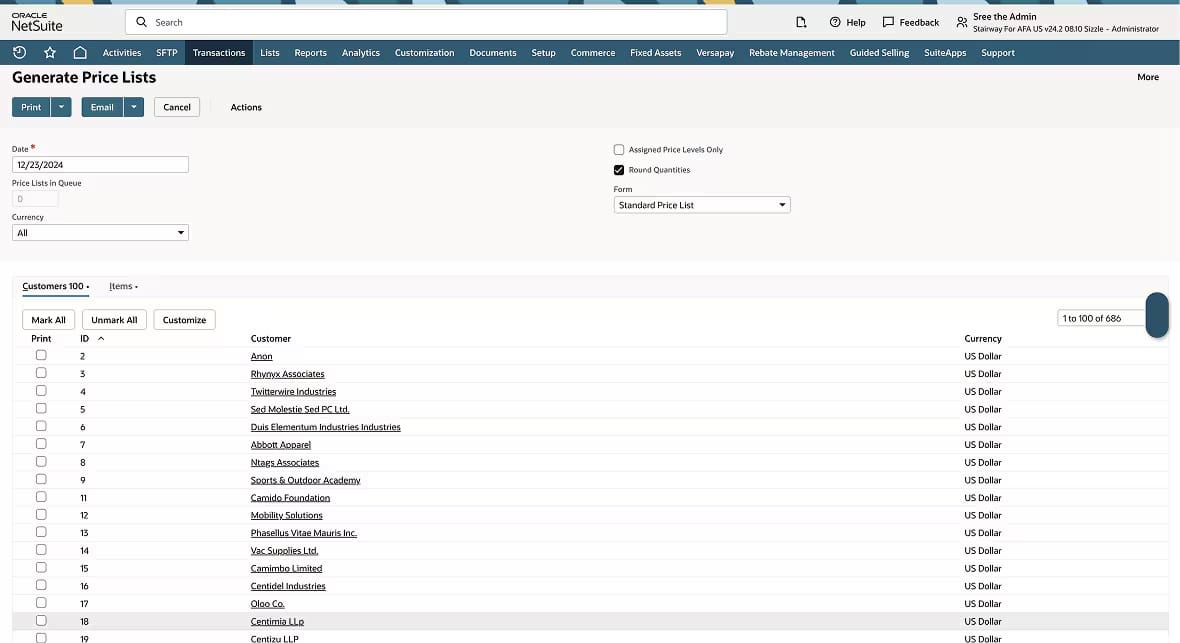
Managing pricing models requires constant visibility into costs, outcomes, and margins as market conditions change. Cloud-based financial software gives organizations the ability to handle these challenges by unifying financial, operational, and customer data. NetSuite ERP provides real-time insights into transactions, profitability, and performance to give leaders a reliable foundation for evaluating pricing strategies. NetSuite’s Pricing Management module defines, updates, and governs pricing models centrally, whether they are performance-based, subscription, usage-based, or cost-plus—all while maintaining margin controls. By integrating pricing with planning, budgeting, and AI-driven analytics, NetSuite helps vendors adapt with confidence. They can align revenue to outcomes and protect profitability without sacrificing flexibility or control.
Performance-based pricing offers a compelling path to stronger goal alignment and accountability. Successful implementation depends on clear metrics, disciplined execution, and transparent data sharing. At its core, this pricing model removes potential disputes about ROI with a cooperative, win-win mentality. When the vendor’s success is tied directly to the client’s growth, everyone is on the same team and focused on the long-term win.
Performance-based Pricing FAQs
Which industries use performance-based pricing?
Performance-based pricing is common in marketing, software-as-a-service firms, consulting, healthcare, logistics, and professional services.
What is an example of performance-based pricing?
With performance-based pricing, a marketing agency might charge its clients based on the number of qualified leads. For example, a client might pay a baseline fee when its lead volume increases by 15%, with additional compensation paid to the agency in excess of predefined performance milestones.
How are performance metrics defined in a performance-based agreement?
Vendors and clients define metrics during negotiations. Metrics are tied directly to business outcomes that a provider can actually influence. They must be specific and measurable, with clear attribution rules, data sources, reporting cadence, and agreed-upon thresholds.