Shifting guest expectations and tighter margins are challenging hotels, travel brands, and events businesses alike. As a result, technology has become central to how these companies operate and compete. Digital transformation, for instance, is reshaping every corner of the hospitality industry—from front desks and kitchens to corporate boardrooms—by changing how services are delivered, decisions are made, and customer relationships are maintained.
Here’s a look at what digital transformation really means for the hospitality industry, the tools and strategies propelling it, and how businesses are translating technology into tangible improvements.
What Is Digital Transformation in the Hospitality Industry?
Digital transformation in the hospitality industry refers to both the adoption of new technologies and the strategic shifts and fresh approaches needed to realize their value. The goal is to improve every aspect of business operations, beginning with booking and check-in and extending to inventory management and revenue forecasting.
In other words, digital transformation means rethinking processes through the eyes of modern technology. It exploits innovations such as AI, the Internet of Things (IoT), cloud computing, and mobile applications to connect data across systems, automate routine tasks, and anticipate guest needs before they’re voiced. For guests, this means faster service, more personalized experiences, and greater convenience. For businesses, it leads to smarter decision-making, less waste, and the agility to meet the market where it’s at.
Key Takeaways
- The hospitality industry is investing in automation and personalization to serve guests better, offset labor challenges, and stay competitive.
- By using advanced technology to increase efficiency, security, and revenue, digital transformation has the potential to benefit every area of hospitality.
- Connected systems bring data together to strengthen forecasting and strategic decision-making.
Digital Transformation in the Hospitality Industry Explained
Digital transformation has been reshaping the hospitality industry since early computer systems replaced manual, paper-based processes in the 1960s. Computerized reservation systems, for example, gave hotels up-to-date room availability for the first time, enabling staff to confirm bookings instantly and limit overbooking errors. The 1980s saw the introduction of point-of-sale systems that increased financial accuracy by creating digital transaction records. And in the 1990s, internet-enabled property management systems (PMS) centralized guest information and accounting data across multiple locations, making records faster to access and easier to update.
At the same time, online travel agencies introduced travelers to self-service booking. As mobile technology matured in the 21st century, hotels added app-based check-ins and digital room keys, offering guests more convenience and control. Today, AI helps automate guest interactions, forecast demand, and set dynamic pricing.
Despite these advances, many hospitality businesses still rely on legacy systems and fragmented data. This limits their ability to analyze performance and deliver consistent, personalized service. Modernizing these outdated systems can disrupt daily operations and often requires costly, specialized expertise. Increasing digitization also necessitates sophisticated security infrastructure to accommodate complex regulatory compliance requirements, such as the Payment Card Industry Data Security Standard, aka PCI DSS, and the EU’s General Data Protection Regulation, or GDPR.
Why Are Hospitality Businesses Turning to Digital Transformation?
Hospitality brands are turning to digital transformation to keep up with guest expectations, which are reaching new heights. Travelers now take for granted features that were once considered perks, such mobile check-in or the ability to manage room settings from an app. The old model of one-size-fits-all service is giving way to a new focus on guests’ individual preferences.
At the same time, rising labor costs and ongoing staffing shortages are pressuring managers to do more with fewer people. Many properties are using automation to cut down on manual errors so they can move valuable staff into guest-facing roles, where they can have more of an impact. And as competition gets tougher, hotels are relying more on analytics and revenue management tools to analyze trends, understand booking behaviors, and adjust pricing on the fly.
Sustainability has become another key motivator. Guests now ask about green initiatives, and investors watch for meaningful reductions in waste and energy use. Technology helps identify new ways to save energy without sacrificing comfort, helping hotels meet these rising expectations.
Taken together, these factors have made digital transformation essential for long-term success. Properties that embrace it report stronger guest loyalty, more efficient teams, and the flexibility to adapt as challenges accrue. In fact, 57% of hotel general managers say they expect automation to improve both the guest experience and their profitability.
Digital Transformation Use Cases in Hospitality
Modernization touches every part of the hospitality industry from internal workflows to guest experiences. Businesses that deploy advanced technologies can improve operations, enhance customer experiences, strengthen security, grow revenue, and generate other measurable results. The following use cases highlight how digital transformation is making a tangible impact on hospitality businesses.
-
Operations:
Running a large hotel once involved a patchwork of separate systems and paper trails. Today, most properties run on connected software, such as an ERP system, that brings together the front desk, housekeeping, maintenance, and back-office functions. With everything in one place, managers can see at a glance which rooms are ready, which need cleaning, and what supplies are running low. Instant visibility into where housekeepers are working and which rooms have emptied allows for more efficient staff assignments and faster guest turnover.
RFID tags, smart weight sensors, and other IoT-connected devices track towels, minibar snacks, and similar items, sending alerts when inventory runs low to prevent frantic, last-minute restocking. Ordering and payments are also smoother, thanks to systems that automate approvals and flag missing invoices.
Team communication apps let staff coordinate in real time to share updates instantly, instead of relying on paper logs or verbal handoffs. Tighter communication also improves staff scheduling, helping managers assign the right people to where they’re needed most. And if something breaks—whether it’s a kitchen appliance or an elevator—sensors flag it immediately so maintenance staff can, with luck, fix it before guests even notice. These advances make the daily rhythm of a hotel run more efficiently to quell chaos behind the scenes.
-
Customer experience:
Digital tools give customers more control over how they interact with hotels. They can bypass the front desk entirely, using their smartphone to check in and even open their room door. App-based chatbots and in-room digital assistants field and respond to requests 24/7, allowing guests to ask for extra pillows or make dinner reservations without speaking to staff. These systems also enhance comfort: Guests can control lights, thermostats, and other room features directly from mobile devices, and submit maintenance or service requests that are automatically routed to the right department for faster follow-up.
In addition, by centralizing and analyzing customer data, hotels can provide relevant and personalized perks, such as leaving a guest’s favorite snack in their room or offering targeted deals for future stays. Such gestures build property and brand loyalty, turning new guests into regulars and regulars into advocates.
-
Security:
Digitization means keeping sensitive data secure becomes a pressing concern. Nearly one-third (31%) of hospitality organizations have experienced a data breach, which can damage brand reputation and lead to costly penalties. To counter cyberthreats, many operators deploy network monitoring systems that flag unusual activity, such as unexpected logins or large data transfers, allowing IT teams to respond before problems can escalate.
Behind the scenes, most new tech rollouts include a line-by-line review of privacy rules—especially when strict compliance requirements are in play. Staff members receive regular security training to recognize phishing attempts and other cyberattacks that could bring the system down. Automated defenses can lock accounts or block suspicious traffic when suspicious activity occurs, limiting potential damage until IT can investigate. Guest payment data and communications pass through layers of encryption, which lessens the risk of card skimming and digital eavesdropping.
-
Sales and revenue:
The data-driven systems born of digital transformation have taken much of the instinctual and seasonal guesswork out of pricing hotel rooms, making it more of a science and less of an art. Managers use dashboards that crunch years of data, tracking everything from local event calendars to weather forecasts, to adjust room rates in real time. If a new local festival is announced or a competitor slashes prices, these systems respond quickly to protect occupancy and margins.
In marketing, teams use automation tools to segment prospects and deliver timely, relevant messages. While checking in on their phones, for example, guests might see upgrade opportunities and special offers tailored to their travel habits, raising the odds of a last-minute splurge. And in sales, staff rely on real-time reports to track reservations, pinpoint weak spots like underperforming booking channels, and tweak campaigns on the basis of immediate feedback, instead of having to wait weeks for performance data.
Connections to travel sites and distribution platforms remain essential. Unified rate and availability tools help data and pricing remain consistent everywhere on the web, preventing rate discrepancies that can undercut direct sales or hurt customer trust. Internal dashboards bring together marketing, sales, and revenue management for better collaboration, helping teams spot demand trends and align promotions.
Impacts of Digital Transformation in the Hospitality Industry
The effects of digital transformation vary from one hospitality subsector to the next. In food and beverage, for example, new technology aims to improve order speed and accuracy, whereas personalization and simplicity are the goals in tourism. The following sections detail how these changes are reshaping different parts of the industry.
Food and Beverage
For many hotel and resort guests, the dining experience now begins on a phone. Instead of waving down a server, patrons simply scan a QR code, browse an interactive menu, and send orders straight to the kitchen. This increases convenience and accuracy, especially on busy nights when staff are bouncing between multiple tables and room service requests. Servers also send orders and special instructions directly from the table to the kitchen via handheld tablets, so cooks instantly know about allergies or celebrations. Meanwhile, the same technology is tuned to recognize returning guests, recall their favorite dishes, and prompt servers to suggest wine or dessert pairings.
In the kitchen, smart systems monitor ingredient levels and issue alerts when it’s time to restock. AI-powered tools analyze prior sales data, current occupancy, and even weather conditions to forecast how much food to prepare for upcoming meals. During a sudden rush, the system can suggest which meals to prep more or less of, helping avoid both shortages and waste. On slower shifts, managers can review performance dashboards to track which menu items are hits and where to trim costs.
Lodging and Hotels
Digital transformation in hotels extends far beyond check-in apps and digital assistants. Many properties have re-engineered entire workflows around connected platforms that unify operations, staff, and guest data. With these systems, front-line employees coordinate cleaning and repairs through shared dashboards that cut response times and paperwork, and housekeepers receive schedules and multilingual instructions through an app. Predictive maintenance tools monitor building systems, alerting engineers before issues disrupt guest stays or drive up energy costs. These automations free team members to focus on customer service over routine administration. In turn, staff training increasingly centers on digital literacy—understanding how to interpret data and anticipate customer needs.
Technology also supports more environmentally friendly and cost-effective building management. Smart controls track lighting, heating, and air-conditioning usage and automatically dial back consumption when rooms are empty. On the business side, integrated property management systems display asset performance, occupancy trends, and maintenance forecasts for multiple regions or brands. With this in-depth visibility, executives can make well-informed decisions about renovations and staffing.
These innovations help hotels expand their business opportunities. With the emergence of open APIs, properties can link directly to local restaurants, events, and transportation partners to offer bundled packages within booking apps. This marks an evolution of hotels from service providers to orchestrators of experiences.
Tourism
Modern travel apps replace static brochures with personalized recommendations based on a traveler’s budget and preferences, derived from past searches and bookings. They combine transportation, lodging, dining, and tours into a single booking experience that circumvents the hassle of using multiple websites. Tourism companies use these apps to send carefully targeted promotions to customers who are actually interested, based on their activity.
While traveling, digital tools enhance the customer experiences with in-app assistants that can book nearby excursions or suggest local restaurants. Digital wallets make it easier for international tourists to pay for attractions, transit, and souvenirs directly from their phones, without the need to carry cash or cards. Real-time weather and event notifications help vacationers adjust plans and discover new or alternative opportunities for adventure. Meanwhile, tourism boards and businesses can monitor feedback to see what caught travelers’ attention or caused friction, and refine offerings and marketing strategies accordingly.
Events
Digital transformation has ushered in new technologies that make events smarter and more adaptable, especially in the post-pandemic era, where many conventions and expos blend in-person and online experiences. Attendees can skip long lines and manual badge inspections with in-app check-ins and QR code scans. These interactions are logged automatically, so organizers can monitor session attendance and make adjustments as needed—such as increasing breakout room capacity or taking extra crowd control measures. AI can bring additional capabilities to event apps by recommending sessions based on attendee profiles and suggesting networking opportunities with other guests.
During the event, chatbots can answer questions and offer directions so guests don’t waste time seeking out staff. Smart cameras and sensors can monitor crowd flow and restricted areas to enhance safety and security. Afterward, survey tools collect and analyze feedback so organizers know what worked, what didn’t, and how to improve things next time. Sponsors and exhibitors also benefit from detailed visitor profiles and interaction histories that allow them to send precise, targeted follow-ups.
Obstacles and Challenges of Implementing Hospitality Digital Transformation
Digital transformation is rarely quick or straightforward. The process requires rethinking long-established ways of working, retraining staff, and rebuilding systems that often run the core of a business. Even with compelling use cases and clear benefits for the hospitality industry, the transition can be costly, time-consuming, and disruptive. From the complexity of implementing and integrating advanced technology to concerns around security and user adoption, the following are some of the most common challenges to watch out for:
- Cost: Up-front spending on software platforms, infrastructure, and integration can strain budgets, especially for small and medium-size operators. Ongoing maintenance adds to the expense, while limited capital can delay rollouts and leave legacy systems in place longer than planned.
- Implementation complexity: It takes careful planning and specialized expertise to integrate or migrate data from outdated, siloed applications to modern platforms. Businesses that deploy new technology in phases can reduce downtime and preserve data accuracy during the transition.
- User adoption: Staff and guests alike may resist new tools that upend existing processes or have unfamiliar interfaces. Role-based training and ongoing support can help encourage the behavioral changes needed for greater adoption. Providing a means for continuous, open feedback—internally and for guests—can hold technology in line with how people actually use it.
- Protecting privacy and security: Because hospitality businesses handle large volumes of guest and payment data, they face heightened risk of breaches and ransomware attacks. Strong security systems, continuous network monitoring, and regular staff training are essential to protect against these threats.
Digital Transformation Trends in the Hospitality Industry
Emerging technologies continue to reshape how the hospitality industry manages operations and serves customers. These modern tools catalyze advances in guest engagement, front-line service, strategic planning, and sustainability. The following trends provide greater convenience for guests and more efficiency for businesses:
- Artificial intelligence (AI): AI in hospitality powers booking chatbots, pricing strategies, and housekeeping scheduling. Properties use it to spot changes in demand, personalize experiences, and improve forecasting through predictive analytics.
- Virtual reality (VR) and augmented reality (AR): VR helps guests and planners preview rooms, suites, and event spaces before booking. AR adds interactive layers through smart devices and mobile apps to enrich onsite experiences.
- Internet of Things (IoT): Sensors monitor occupancy, climate, and equipment health to automate comfort and security. Data from devices supports predictive maintenance and steadier operations.
- Energy management: IoT- and AI-powered devices adjust room lighting and temperature based on usage patterns. Smart dashboards give managers real-time insights that cut waste and lower costs.
- Contactless technology: App-based check-in, digital keys, mobile payments, and voice controls simplify arrivals and make check-in faster and easier. Properties see higher satisfaction when guests can settle in more quickly and predictably.
- Operations automation: Robotic and automated systems take on delivery, cleaning, and inventory tasks, plus other routine requests. Staff can shift toward higher-value services that require face-to-face interactions.
- Enhanced data analytics: Advanced systems turn booking, feedback, and operational key performance indicators (KPIs) into actions. Hospitality teams use data analytics to accurately forecast demand, tailor marketing efforts, optimize pricing, and refine experiences based on proven trends.
Modern Businesses Need a Dependable ERP
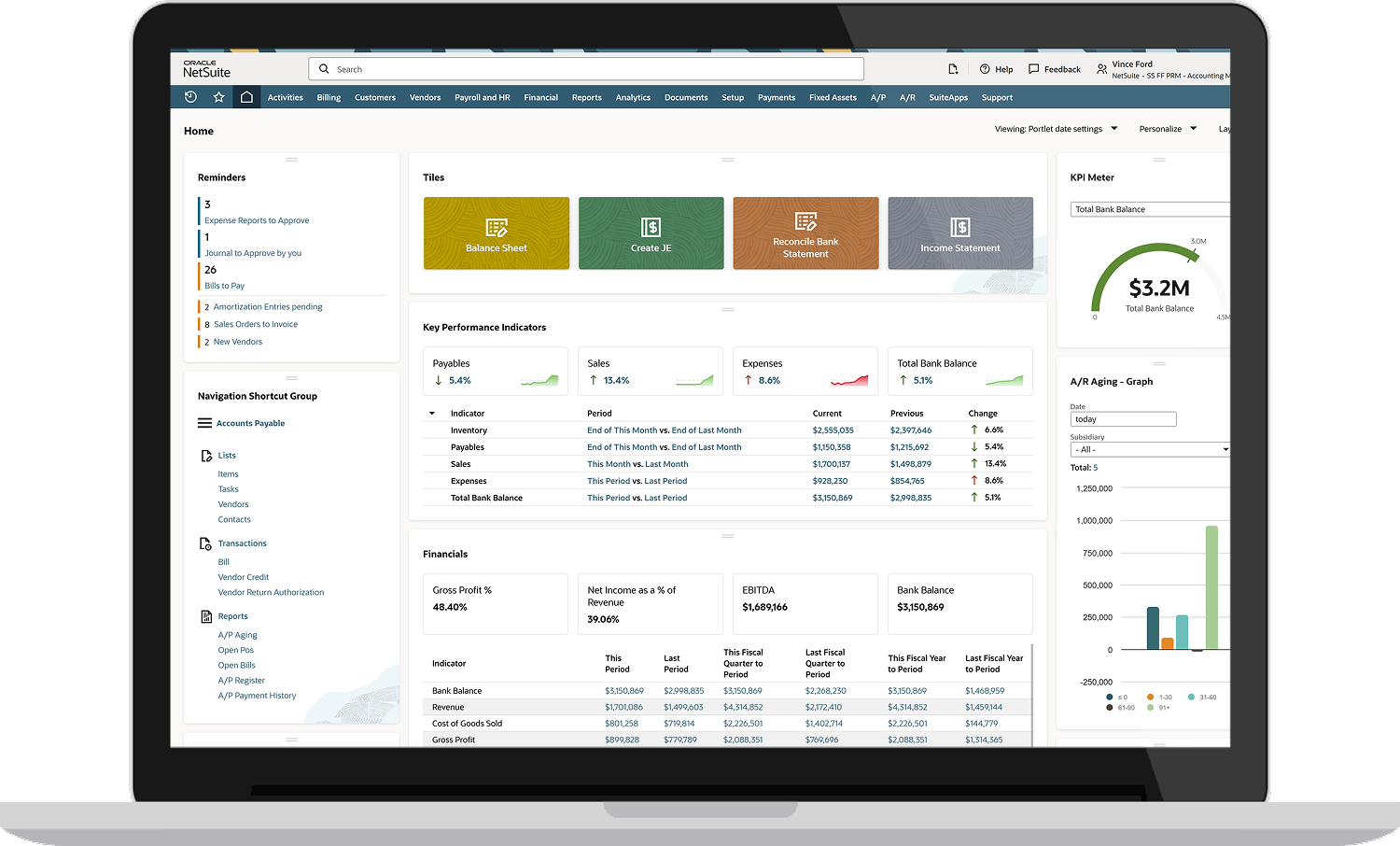
NetSuite Hospitality ERP brings every aspect of a hospitality business—finance, property management, inventory, guest operations—into a unified cloud platform. By replacing manual processes and siloed systems, it provides real-time visibility into occupancy, profitability, and performance across all properties and brands. Automated financials, AI-powered forecasting, and integrated procurement help teams make faster, data-backed decisions in all areas, from staff and pricing adjustments to managing vendors and replenishing stock. NetSuite provides the unified foundation hospitality leaders need to simplify operations, reach informed decisions, improve service consistency, enhance guest satisfaction, and support digital transformation at scale.
Centralize Multiproperty Financial Dashboards With NetSuite
Digital transformation in the hospitality industry is the ongoing process of using technology to connect data, people, and operations in new ways that improve how businesses run and guests are served. It replaces fragmented, manual workflows with connected, automated systems that modernize back-office operations, personalize guest experiences, tighten security, and create fresh opportunities for revenue growth. These advances also introduce obstacles related to cost, integration, and adoption, however—challenges that require deliberate planning and training to overcome. The next wave of transformation—driven by AI, IoT, and analytics—centers on deeper personalization, more sustainable energy use, and operations that anticipate guest needs before they arise.
Digital Transformation in the Hospitality Industry FAQs
How is AI changing the hospitality industry?
AI is changing the hospitality industry by enhancing operational efficiency and guest satisfaction. It automates routine tasks, provides tailored recommendations based on customer preferences, and sharpens forecasting and decision-making.
How does technology enhance customer experience in the hospitality industry?
Technology enhances customer experience in the hospitality industry through convenient features, such as mobile check-in, digital keys, and in-room digital assistants. These capabilities help brands meet rising customer expectations and foster greater loyalty.
What are the latest trends in the hospitality industry?
The latest trends in the hospitality industry include AI-powered recommendations, immersive virtual reality and augmented reality experiences, and energy-efficient smart systems. These and other technologies modernize day-to-day processes while lowering costs and creating opportunities for companies to differentiate themselves in increasingly competitive markets.