
People rely on consumer-packaged goods (CPG) companies to deliver the items they use every day, from the food they eat to household cleaning products and personal care items. This fact of life has historically meant that CPG businesses could expect steady growth and consistent profit margins. But economic conditions have changed, forcing companies to rethink their business strategies.
One of the biggest disruptors affecting CPG businesses is inflation, which has driven up raw material and operating costs and eaten into profit margins. And while these companies could traditionally raise their prices to cover these costs, today’s consumers are more mindful of how they spend their money as the cost of living rises. They also have more choices, thanks to increased competition in the CPG industry and the rise of direct-to-consumer (DTC) brands that have challenged the stronghold of incumbents. CPG company leaders are feeling the pressure, with 51% of respondents to Deloitte’s “2025 Consumer Products Industry Outlook” survey indicating they can no longer rely on simple price hikes to fuel growth.
That said, new developments in the CPG industry present opportunities for businesses that can adapt to change. In this article, we explore 13 trends shaping the CPG industry and look at how companies big and small can thrive by adopting a more customer-centric and cost-efficient approach to their operations, powered by new technologies.
13 CPG Industry Trends to Know in 2026
The high-volume, low-margin sales models of the past are no longer viable for CPG businesses, with today’s consumers choosing to buy from brands that meet their expectations for convenience, quality, relevance, and sustainability, in addition to price. From a swell in popularity of eco-friendly products and personalized marketing to a fast-shifting regulatory environment, here are the trends CPG decision-makers should focus on to achieve sustained success.
-
Sustainability and Eco-Friendly Products
Consumers increasingly prefer to buy from companies that employ sustainable working practices and are as focused on making a positive impact on society and the environment as they are on driving sales. A recent report found that consumer products with sustainability-related claims on their packaging accounted for 56% of all spending growth over a five-year period. The sentiment is shared by business customers, with 60% of B2B buyers saying they’d stop working with suppliers that didn’t meet their sustainability expectations in the next three years.
Sustainability initiatives for CPG businesses range from the use of biodegradable or recyclable packaging to the ethical sourcing of raw materials. Ethical sourcing includes the use of fair labor to obtain and process sustainable goods, as well as conservation efforts that can help a company offset its impact on the environment and local communities. To continue to earn returns from initiatives like these, many CPG companies use advanced analytics to assess the performance of their sustainability programs and continually refine their tactics.
-
Direct-to-Consumer Expansion
Rather than selling their products through third-party retailers or wholesalers, DTC businesses sell directly to their end customers. In most cases, these brands sell their goods exclusively online. By bypassing traditional intermediaries, DTC companies can strengthen their supply chains and optimize production processes based on direct feedback and demand data from consumers. The DTC model also gives CPG companies greater flexibility in how they fulfill orders and shape their customer experience.
More important, consumers are voting for DTC businesses with their wallets. According to Business Research Insights, the DTC market will hit $319.6 billion in 2026, driven by ecommerce and digital retailers. It’s hardly surprising, then, that major CPG companies, such as Unilever and Procter & Gamble, have been diligently acquiring DTC businesses to protect their market position from new competitors.
-
Personalization and AI-Driven Marketing
Standardization has traditionally been common for CPG companies, in both manufacturing and product promotion. Nowadays, however, consumers expect more personalized experiences when engaging with CPG brands, especially given all the personal data they share with brands via digital channels. This personalization takes into account buyers’ needs, preferences, and history. Indeed, 81% of consumers ignore irrelevant marketing messages, and 96% say personalized messages from brands make them “likely to purchase,” according to Attentive’s “2025 Consumer Trends Report: The State of Personalized Marketing.”
Thankfully, CPG businesses now have access to powerful AI and analytics tools that allow them to analyze and draw insight from customer data and tailor their marketing activities at the individual level. For their part, consumers have begun using AI-powered tools, such as ChatGPT, to research products, communicate with brands, and get personalized recommendations suitable to their specific needs. This dynamic has the potential to upend traditional search advertising, which is why more CPG companies are exploring the potential of generative AI technologies to future-proof their marketing.
-
Health and Wellness Focus
Consumers are increasingly interested in organic diets, personalized nutrition, and immunity-boosting products. This trend is driven by multiple factors, including greater public awareness of the effect of proper nutrition on quality of life and the rising popularity of weight-loss medications that have put heart health and obesity in the public spotlight.
In response to these concerns, CPG businesses are rolling out healthier product lines that align with consumers’ lifestyle ambitions, be it a shift to plant-based eating, probiotic foods that improve gut health, or supplements that boost their energy levels. CPG companies are also being more deliberate with their labeling, highlighting the natural and unprocessed ingredients in their products to appeal to today’s health-conscious consumers.
-
Supply Chain Digitization
CPG businesses rely on their supply chains to manufacture goods, manage inventory, and bring products to market. As such, their reputation is directly linked to the speed, cost, quality, and reliability of their supply chain processes—as is their bottom line. With geopolitical instability, inflation, labor strikes, and climate change threatening to disrupt their operations, CPG companies are digitizing their supply chains across the board to improve processes and make their operations more resilient.
One-quarter of executives say supply chain disruption was one of their top three challenges in 2025, which is why many businesses are adopting technologies, including supply chain management software and automation, to make their operations more efficient, transparent, and compliant. They’re also using blockchain technology to create immutable, secure records of transactions that track goods and materials in real time. Meanwhile, investments in AI-powered analytics give CPG brands deeper insight into customer demand, which means they can generate more accurate forecasts and adapt their complex supply chain environments to keep up with fast-changing market conditions.
-
Ecommerce, Social Commerce, and Omnichannel Growth
Today’s consumers see no distinction between physical stores and digital channels, and they expect businesses to deliver an integrated shopping experience across them all. Also known as omnichannel shopping, the smooth integration between online and offline shopping experiences has become nonnegotiable for CPG brands. And the mix of channels that businesses must cater to continues to grow. One of the most popular channels today is influencer marketing, an approach where brands partner with social media influencers to promote their products on digital platforms, including Instagram, TikTok, and YouTube.
To support omnichannel operations, CPG companies can employ unified customer data platforms, which aggregate customer data for holistic insights used to create tailored marketing and consistent messaging. Advanced inventory management systems, meanwhile, provide real-time tracking across stores and online platforms to help keep products available with flexible fulfillment options, such as click-and-collect.
-
Private-Label Growth
With consumers becoming more money-conscious in the face of inflation, many retailers have launched their own private labels as a more affordable alternative to the products they sell from established CPG brands. This approach has clearly paid off. According to McKinsey’s “State of the Consumer 2025” report, 79% of global consumers say they’re “trading down” when shopping, with more than half saying they “look for deals on every purchase.”
Selling through private labels also gives retailers more control over how they develop and price their products, which means they can adapt their strategies to shifting economic conditions, market trends, and customer needs. For instance, if an unfavorable exchange rate threatens to raise the price of imported foods, a grocery retailer might increase production of its locally produced private-label products to give customers a cost-friendly alternative while earning steady revenue for its business.
-
Premiumization and Specialty Goods
For years, the long-held belief in CPG circles was that price is king. But while cost does indeed factor heavily into consumers’ purchasing choices, their decision-making has become more nuanced. In the United States, for instance, Bain & Company’s research found that consumers prefer to spend their money on products they feel offer the best value, be that from an affordable private label or a premium brand selling niche products. The strategies brands adopt to make their products appear more valuable are referred to as “premiumization.”
To position their products as high-end or specialty goods, CPG brands must be able to innovate and differentiate their offerings. Therein lies the challenge. While one-third of CPG executives agree innovation is the key to growth for their business, three-fourths of innovations in the industry fail. To succeed, CPG companies must focus on customer-centric product design that draws on data-driven insights to inform their product development.
-
Data-Driven Sourcing
The cost of sourcing commodities continues to rise, especially for CPG businesses that work with international suppliers and must cover the rising costs of shipping, labor, and duties involved in obtaining the materials they need. To mitigate these forces and protect their margins, CPG companies have begun using automated analytics tools and dashboards that provide them with a global view of input costs, such as raw materials, labor, and foreign exchange rates. With this complete and real-time view, CPG decision-makers can then identify opportunities to cut their costs—by finding alternate sources for their raw materials, for instance, or working with a broader mix of suppliers.
-
Loyalty Programs and Subscriptions
Faced with new competition, CPG companies are deploying loyalty programs and subscription services to promote customer retention and seek recurrent revenue. These programs offer customers incentives for their continued patronage, such as cash back, preferential pricing, and loyalty points they can redeem on future purchases. CPG brands are also digitizing their approach to loyalty by drawing on customer data to customize their rewards to each buyer’s unique needs. According to the “2025 Deloitte Consumer Loyalty Program Survey,” 89% of Gen Z and 87% of millennials are willing to share personal information in exchange for more tailored offers or experiences—compared with 78% of Gen X and 64% of baby boomers. CPG brands can then use this data to build stronger, more personalized relationships with their customers.
Subscription models, which give consumers the option to receive scheduled deliveries of the goods they need on a regular basis, are also gaining traction with CPG businesses. Popular CPG subscription services include HelloFresh, America’s biggest food delivery service, and Birchbox, a New York-based provider of beauty products that operates entirely online. The stability and recurring nature of subscription services give consumers the convenience and peace of mind they crave, while allowing CPG brands to build a solid and dependable revenue stream.
-
Regulatory and Compliance Shifts
Strict food-labeling laws, regulations pertaining to sustainable sourcing and manufacturing, and state-level bans on the use of food additives are all forcing CPG brands to navigate a complex and fast-changing regulatory landscape. The compliance burden is only set to grow as CPG companies adopt digital business models that expose them to cybersecurity attacks, which they must manage in accordance with laws from governing bodies, such as the Securities and Exchange Commission in the United States and the European Union Agency for Cybersecurity in the EU.
-
Technology-Driven Efficiencies
The CPG industry is ripe for transformation, which is why companies are adopting technologies, including data analytics, robotic process automation, and AI, to unlock new efficiencies in the way they work and serve customers. CPG companies can use AI-powered demand forecasting to reduce inventory waste, for example, or automate warehouse operations to cut costs and improve speed to market. According to 2025 analyses by McKinsey, CPG and retail companies using leading digital and AI tools have already demonstrated three times greater total shareholder returns compared to their peers. McKinsey also predicts that by 2035, technology could affect up to 55% of consumer-focused workers’ current tasks across both front line and C-suite activities.
-
Consumer Demand for Convenience
With the rise of online shopping, consumers expect to get what they want quickly and easily. To meet that demand, CPG companies are changing how they develop, package, and deliver their products. Rather than wait for customers to come to them, brands are finding new ways to reduce friction. A food company, for instance, may introduce single-serve meal subscriptions with bulk add-on options, while a beauty distributor might ship product bundles on a recurring schedule—both with the aim of making their products a routine part of their customers’ lives.
Rapid delivery services have also become the norm as consumers expect same-day or next-day fulfillment by default, not as a premium service. CPG companies that make convenience part of their value proposition through internal fulfillment improvements or partnerships with retailers are better positioned to win and retain customers over less agile competitors.
Future of the CPG Industry
The future of CPG companies hinges on their ability to collect, analyze, and activate their data. The rise of AI, in particular, will help businesses make better sense of their data in order to drive innovation, strengthen customer relationships, and improve marketing tactics. According to a 2024 McKinsey survey of CPG leaders, 71% have adopted AI in at least one business function—up from 42% the year before. And with only 35% of global CPG launches in 2024 being genuinely new products (compared to 46% in 2014 and 75% in 1996), according to Mintel’s Global New Product Database, forward-thinking CPG businesses have no shortage of opportunities to pull ahead of their competitors.
A data-driven approach will also make CPG businesses more agile and allow them to pivot quickly in an increasingly unpredictable market. Data transparency provides CPG business leaders with a complete view of their costs and performance so they can be more proactive—be it to cut costs in their supply chain or to optimize their loyalty programs. A centralized view of data also gives CPG companies the information they need to personalize their customer experiences, which will help them stand out from the competition and build loyalty. The growing popularity of ecommerce and DTC business models will work in CPG companies’ favor, as direct relationships with customers will generate larger and more detailed datasets to inform their personalization strategies.
Drive Growth With Real-Time Insights
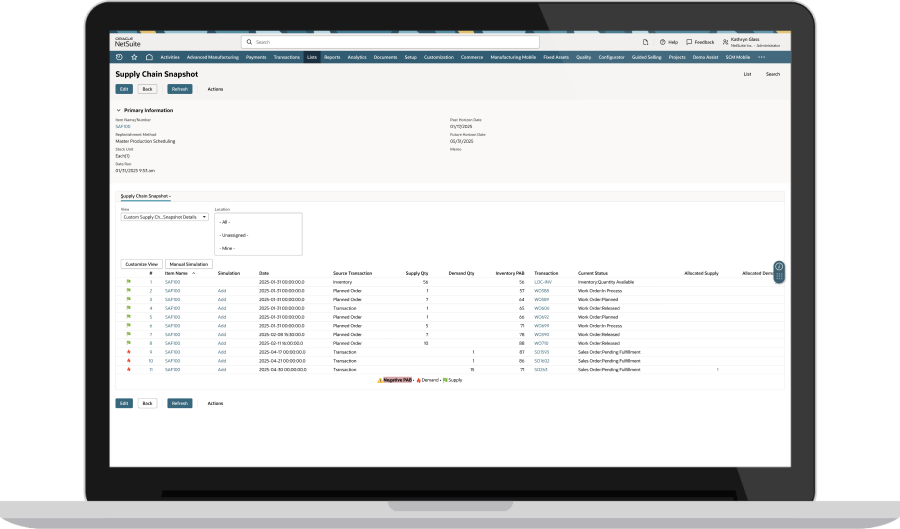
To develop new revenue streams, distribution networks, and strategies to get their products into customers’ hands, CPG companies need a technology infrastructure that can keep up. NetSuite for CPG helps manufacturers gain a 360-degree view of their customers across every sales channel and touchpoint while providing them with a real-time view of the health of their business, all from a unified cloud platform.
Part of NetSuite ERP, NetSuite for CPG also empowers business leaders with role-based dashboards to enhance their decision-making and accelerates back-office procedures, such as financial close and reporting for accounting teams. As an all-in-one, AI-powered business management solution, NetSuite ERP automates core business processes and provides decision-makers with real-time visibility into their accounting, order processing, inventory management, production, supply chain, and warehouse operations, as well as their financial performance. With clear visibility into their data and tighter control over their businesses, CPG companies will be better positioned to capitalize on the trends reshaping their industry.
NetSuite’s ERP Dashboard
The CPG industry is at a crossroads. With costs on the rise, customers looking to spend judiciously, and the market starved for innovation, CPG businesses must find ways to adapt or risk losing market share to more agile competitors. From supply chain optimization to AI-powered personalization, the trends shaping customer expectations today center around the same core principle for CPG companies—leveraging data to make more proactive, strategic, cost-effective decisions that will position their business to innovate and stay one step ahead of change.
CPG Industry Trends FAQs
What are the quickest growing CPG products?
Fast-growing consumer-packaged goods (CPG) products include sustainable goods, as consumers become more conscious of brands’ impact on the environment, and health and wellness items, as people become more focused on self-care and longevity.
What are the three key players in the CPG industry?
The biggest consumer-packaged goods (CPG) companies by market capitalization are most often cited as Procter & Gamble, the Coca-Cola Company, and Nestlé. As of February 2026, their combined market capitalization was nearly $1 trillion.