
As service contracts, subscription models, and billing arrangements become increasingly complicated, businesses face a persistent challenge: Revenue that should reach the coffers never actually comes in. Process inefficiencies and management gaps—things like data entry errors, missed renewal dates, incorrectly applied promotions, and unbilled services—occur over time and profits suffer, especially for companies with high transaction volumes or recurring billing cycles.
Revenue assurance catches this revenue leakage before small drips turn into a downpour of serious losses. By understanding how revenue assurance works and learning to implement such practices, companies can improve the way they capture and collect income to build a more sustainable and profitable revenue cycle.
What Is Revenue Assurance?
Revenue assurance is the process of verifying that a business’s invoices accurately reflect its customers’ delivered services, purchases, and contract terms. Through comprehensive controls and validation processes, revenue assurance confirms that companies are properly capturing, billing, and collecting payments for all transactions.
Billing mistakes often result in clients being undercharged, which creates revenue leakage. This is especially true when there are complex contract terms, such as usage-based pricing, tiered discounts, or minimum spend requirements. Revenue assurance helps prevent these losses by administering recurring audits and manual or automated inspections and verifications that routinely address anomalies between contract wording and billing history.
Key Takeaways
- Revenue assurance validates that billing processes accurately capture and collect payment for all delivered services.
- Companies use this systematic approach to address billing errors and inefficiencies, helping them recover lost income and prevent ongoing revenue leakage.
- Revenue assurance improves financial accuracy, strengthens compliance, cuts losses, increases profitability, and boosts customer satisfaction.
- Revenue assurance initiatives should include clear procedures, organizational accountability, technology solutions, and ongoing auditing and reconciliation.
Revenue Assurance Explained
Revenue assurance originated in the telecom industry, but more companies are adopting the same methods to protect margins and build customer trust as subscription models and ongoing service contracts become standard practice in many industries. In fact, according to SUBTA’s “2024 State of Subscription Commerce Industry Outlook” report, 86% of consumers had active subscriptions in 2024, and subscriptions, memberships, and loyalty programs were valued at $3 trillion—up from $2 trillion just the year before. Revenue assurance aims to maximize profitability in complex billing environments by confirming correct revenue recognition through use of systematic tools, methods, and organizational structures. This approach typically focuses on identifying, preventing, and correcting causes of revenue leakage—billing errors, disorganized or incomplete financial data, fraud, and undelivered services chief among them.
Revenue assurance is about more than accurate billing; it also provides strategic oversight of profits, revenue, charging, and cash flows so companies can capture their full revenue potential for all products and services offered. To achieve this outcome, revenue teams use a variety of methodologies, including process reviews, data validation, error detection, and root cause analysis. Businesses often turn to integrated software solutions to apply the same methods across all operations—budgeting, purchasing, billing, accounts receivable management, and customer service—to accelerate cash flow and reduce friction throughout the revenue cycle.
Why Is Revenue Assurance Important for Preventing Revenue Leakage?
Revenue leakage occurs when businesses lose income because of inefficient or error-prone processes. Even minor mistakes can quickly snowball into substantial losses, particularly for businesses with high daily transaction volumes. Leaks can originate from multiple sources—billing mistakes that result from involving incorrect charges or forgotten line items, mismanaged contracts that overlook scheduled price increases, and pricing errors that continue promotional rates past their introductory periods, to name a few. Revenue assurance addresses these oversights through systematic controls that block the spread of revenue loss.
Besides operational errors, there’s fraud, which generates significant revenue loss. According to the Association for Financial Professionals’ “2025 Payments Fraud and Control Survey,” 79% of businesses have experienced actual or attempted fraud due to business email compromise and fraudulent payments. With only 22% of businesses managing to recover at least 75% of lost funds, proactive revenue assurance becomes essential for catching vulnerabilities early and minimizing the extent of unrecoverable losses. The process works by verifying the accuracy and completeness of transactions, identifying potential exposure points, and resolving billing discrepancies before they reach other accounts or customers.
Advantages of Revenue Assurance
The primary goal of revenue assurance is preventing revenue loss. However, it also brings secondary advantages that create a strong foundation for sustainable growth. Implementing systematic revenue assurance practices can lead to the following measurable financial, operational, and customer-facing benefits:
- Better financial accuracy: Revenue assurance maintains accurate financial records for all transactions, helping businesses prevent reporting errors and identify and resolve discrepancies quickly. Ongoing validation improves companywide data quality, increases confidence in financial analysis, and strengthens business intelligence for more informed strategic planning and decision-making.
- Stronger compliance: Revenue assurance helps finance teams maintain compliance with applicable laws and regulations, including local tax requirements and ASC 606 revenue recognition standards under US Generally Accepted Accounting Principles. In highly regulated industries, including telecom, hospitality, healthcare, and energy, revenue assurance software makes it possible for companies to verify and demonstrate compliance through automated control frameworks and governance, even as rules evolve.
- Fewer losses: Businesses employ revenue assurance practices to identify vulnerabilities that can lead to losses, such as billing fraud or payment misappropriation. If losses do occur, early detection systems identify them while they remain manageable, limiting financial impact and preventing issues from persisting in future billing cycles.
- Increased profitability: Optimizing billing and collection procedures across revenue streams allows businesses to increase margins at every phase of the revenue cycle. Since revenue assurance brings in funds from delivered services, it recoups any cost of goods sold that has already been incurred, increasing gross profit margins and profitability per customer.
- Enhanced customer satisfaction: By verifying that clients receive invoices that correctly align with contracted terms, companies build trust and cut down on complaints and chargebacks. And since billing disputes create negative customer sentiment and drive churn, accurate invoicing also improves retention, increasing customer lifetime value.
What Is the Revenue Assurance Process?
Revenue assurance constitutes a continuous lifecycle rather than a one-time audit at the end of a sale. Revenue teams typically use financial software to collect real-time data from sales, fulfillment, and service touchpoints spanning initial quote to cash in hand. Meanwhile, control and approval workflows establish automated checkpoints that verify accuracy at each stage, and compliance monitoring tools run in the background to track changes and flag potential hiccups before invoices are sent out.
When the software detects a discrepancy, it flags the issue and provides diagnostic information to help staff address the root cause—whether that’s a pricing configuration error, a missed contract renewal, a system integration gap, or something else. When possible, these systems automatically correct errors and reconcile accounts, or, if necessary, they escalate problems to specialists. This cycle repeats for every transaction, and, for systems with built-in AI capabilities or other learning algorithms, each iteration strengthens the system’s ability to detect and prevent similar issues in future transactions.
Revenue Assurance Best Practices
To be effective, revenue assurance requires a combination of standardized processes, organizational buy-in, ongoing monitoring, and the right technology. Successful implementations often focus on four primary best practices:
- Develop clear procedures: All revenue-related activities need explicit steps, whether it be for creating contracts, billing customers, or collecting payments. Clearly document all roles and responsibilities, approval workflows, validation checkpoints, and escalation paths for issues or exceptions.
- Foster an accountable corporate culture: Revenue assurance works best when the entire company is responsible for financial accuracy and revenue protection, not just the finance department. Businesses should implement training that educates all employees—including sales, fulfillment teams, customer service representatives, and service technicians—on how their work affects revenue capture and the specific steps they can take to prevent leakage.
- Audit reconciliation procedures: Conduct regular audits that examine financial transactions, billing processes, payment collections, and reconciliation activities. Quarterly reviews for high-risk areas and comprehensive annual audits allow auditors to assess how well revenue controls are functioning, where additional safeguards may be needed, whether procedures remain aligned with current business operations and regulatory requirements, and where technological investments can enhance revenue capture.
- Make sure you have the right software: Deploy technology solutions that scale along with the business, automate routine tasks, reduce manual errors, and provide real-time revenue visibility. When evaluating options, look for financial software or a unified ERP system that integrates with existing infrastructure to consolidate data into customizable, role-based dashboards with both big-picture and drill-down analysis capabilities.
Minimize Revenue Leakage With Accounting Software
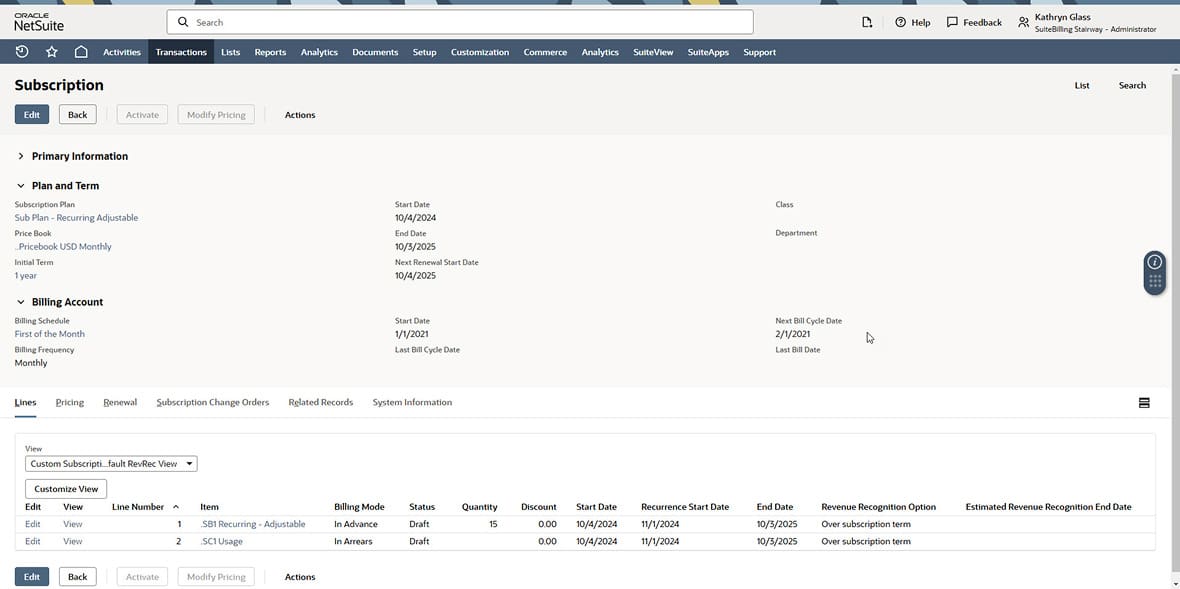
Data silos caused by disconnected systems let billing errors, contract mismatches, and pricing inconsistencies go unnoticed—often until it’s too late to recover the losses. NetSuite cloud accounting software consolidates revenue data and processes into a unified platform, automating controls and delivering comprehensive financial reporting in real time. Built-in automated revenue recognition maintains detailed financial records in line with ASC 606 and International Financial Reporting Standards, while reconciliation capabilities flag discrepancies and alert revenue teams to issues before they proliferate. In addition, NetSuite SuiteBilling integrated billing software validates charges against contract terms and tracks customer accounts throughout the revenue lifecycle. Using NetSuite’s cloud-based platform, finance and revenue assurance teams can access customizable dashboards from any location to analyze trends, identify leakage points, and take corrective action before minor issues escalate.
NetSuite SuiteBilling’s Subscription Management Dashboard
Revenue assurance has grown from its start as a specialized telecom practice into a widespread discipline that minimizes losses for businesses of all types—especially those with complex billing arrangements and high transaction volumes. By systematically validating billing for all delivered services, revenue assurance prevents leakage stemming from billing errors, contract inconsistencies, and process inefficiencies. These improvements extend beyond pure profitability to provide companies with accurate financial records that enhance financial analysis and demonstrate compliance. With the right financial software and well-executed revenue assurance practices, companies can secure their existing revenue streams and increase customer retention.
Revenue Assurance FAQs
What does a revenue assurance team do?
A revenue assurance team identifies, prevents, and corrects revenue leakages by monitoring and validating billing processes. This is often achieved through a combination of audits, data reconciliation, and interdepartmental collaboration. Most teams use specialized tools and analytics software to detect revenue anomalies, analyze root causes, and implement improvements to prevent future losses.
What is the role of a revenue assurance officer?
A revenue assurance officer leads revenue protection initiatives, such as developing and implementing revenue assurance strategies, overseeing audits, reconciling financial data, and analyzing revenue patterns to identify recurring leakage points. The officer works with finance, sales, and operations teams to address issues and report revenue assurance performance to senior leadership.
What is the revenue assurance lifecycle?
The revenue assurance lifecycle encompasses the steps involved in protecting revenue—from creating contracts through receiving cash and analyzing payments for continuous improvement. It includes collecting and validating data, implementing controls, monitoring compliance, identifying risks, detecting/investigating issues, analyzing root causes, remediating accounts, and recovering lost revenue.