Construction companies face constant pressure to keep projects on track. In fact, only half report finishing projects on time, and 87% say their work is under increasing scrutiny, according to a survey by KPMG. As a result, many construction companies are turning to vendor management to help them meet growing demands and improve performance. With the right systems and strategies in place, businesses can increase efficiency, build more reliable vendor networks, and minimize risks.
What Is Construction Vendor Management?
Construction vendor management is the process of overseeing subcontractors and service providers involved in building projects. It covers key tasks, such as vendor selection, contract negotiation, and project evaluation, and supports the quest for high-quality delivery of goods and services that arrive on time and within budget. Construction vendor management software centralizes these activities in one platform and automates onboarding, compliance tracking, performance monitoring, and payment processing.
Key Takeaways
- Construction vendor management is responsible for prequalifying subcontractors and service providers, tracking their performance, monitoring financial indicators, managing contracts, and fostering successful partnerships.
- Effective vendor management improves efficiency, reduces delays, and controls costs throughout a construction project.
- Scorecards, clear communication, and regular feedback help improve project outcomes and reduce the chances of construction projects going awry.
Vendor Management in the Construction Industry Explained
Every stage of a construction project, from procurement to final inspections, depends on external providers successfully achieving predetermined milestones. With vendor management, construction companies select and oversee these subcontractors and service providers so they can avoid delays, curb expenses, and maintain high project standards. It also assists in prequalifying potential vendors, soliciting bids, negotiating contracts, and enforcing legal compliance.
Effective vendor management keeps projects running smoothly, particularly for general contractors that depend on subcontractors for electrical, plumbing, and other specialized work. Because each specialty has unique technical requirements and must coordinate closely with other trades, construction vendor management demands deeper oversight and more careful coordination than many other industries need. A number of construction companies employ vendor managers to serve as the main liaison between their company and these external providers. These professionals evaluate capabilities, track project timelines, oversee contract fulfillment, resolve disputes, and maximize reliability by addressing any concerns that arise.
Vendor management systems (VMSs) make these tasks easier by unifying data, decreasing manual effort, and providing real-time insights that contribute to informed decision-making. Construction-specific VMS solutions focus on the unique challenges related to coordinating subcontractors, suppliers, and other services. Vendor management is a tactical subset of supplier relationship management, which takes a very strategic approach to developing the long-term, collaborative partnerships that support ongoing project success.
What Are the Responsibilities of Vendor Management?
The responsibilities of vendor management in construction vary widely depending on scope. Larger projects often demand extensive oversight, while smaller jobs cover more straightforward processes. Prequalification is a key responsibility across all projects because it helps lower failure rates; it involves verifying that potential providers consistently meet project standards by reviewing their certificates of insurance, licenses, financial records, work histories, and employee profiles.
Monitoring is another critical component as it mitigates risks, especially those associated with complex, long-term projects. In such cases, vendor management tracks whether partners fulfill contractual obligations, follows project timelines, and makes sure quality expectations are met. It also oversees broader financial and operational indicators, such as cash flow and safety records. Keeping an eye on a vendor’s performance on its other projects is equally important because payment disputes or safety incidents on those unrelated jobs can affect the vendor’s overall reliability and financial stability.
Additional responsibilities of construction vendor management include managing contracts, nurturing relationships, and fostering communication. Contract management, for its part, protects a company’s interests by setting clear terms, enforcing agreements, and resolving disputes. Likewise, building productive, professional connections with vendors maintains alignment on shared goals. And regular communication helps identify and resolve project issues early, reducing the likelihood of disruptions. Vendor management also verifies payment accuracy, spots overbilling, and negotiates contract changes in response to evolving project needs. Together, these responsibilities keep projects on track while controlling costs.
Construction Vendor Management Process
Effective vendor lifecycle management in construction calls for a structured process that covers every stage of the relationship, from initial selection through eventual offboarding. Follow this step-by-step approach to maintain high project quality:
- Identify potential vendors: Consult with internal teams to define project requirements, then conduct detailed market research and review industry networks to find companies that meet those needs. Develop thorough vendor profiles—detailing capabilities, certifications, and reputations—to create a strong short list of qualified providers.
- Conduct supplier audit: Assess each potential vendor’s dependability, experience, and financial stability through a formal audit. Use standardized criteria to review and evaluate performance histories. Verify references and confirm compliance with all safety and regulatory requirements.
- Negotiate contracts: Clearly define the scope of work, delivery timelines, and pricing. Determine quality standards and their corresponding key performance indicators (KPIs). Outline payment terms, dispute resolution processes, and termination rights.
- Onboard vendors: Delineate roles and responsibilities, assign points of contact, and share operational requirements. Integrate vendors into the project by providing secure access to necessary systems and resources. Complete all compliance, insurance, and safety documentation before work begins.
- Evaluate performance: Track quality, timeliness, and financial KPIs. Hold regular reviews to share feedback and adjust processes to ameliorate risk management and promote long-term vendor reliability.
- Manage payments and nurture relationships: Oversee payment processes by verifying invoice accuracy and tracking payment schedules. Resolve billing disputes to maintain cash flow and prevent budget overruns. Strengthen relationships and encourage continuous improvement through regular communication and joint strategic planning.
- Offboard vendors, if needed: Safeguard projects and their data by imposing a structured offboarding process whenever a vendor relationship ends. Review contract terms, settle final accounts, revoke system access, and recover all assets. Debrief and document outcomes to justify future procurement decisions.
Advantages of Effective Construction Vendor Management
By building stronger networks and adopting structured management practices, construction companies can improve efficiency, lower expenses, and maintain compliance. The following benefits highlight how effective construction vendor management supports better performance through capable oversight:
- Improved efficiency: A VMS that automates routine tasks reduces administrative workload and decreases manual errors, allowing teams to focus on work of higher value. Centralized processes provide access to real-time data, enabling faster responses to changing project conditions.
- Fewer delays: Standardized communication channels and processes diminish the possibility of mix-ups and missed deadlines. Steady monitoring identifies potential delays before they worsen. Prequalified vendor pools make it easy to adjust sourcing to keep projects on schedule.
- Controlled costs: Construction vendor management controls costs by supporting competitive bidding, improving vendor selection, and establishing clearly detailed contract terms. Centralized ordering and consolidated vendor information create opportunities for securing volume discounts and coordinating purchases across projects. Continuous performance tracking and budget visibility limit overruns and cut down on the need for rework.
- Enhanced compliance: Automatically tracking certifications, insurance, and contract obligations lowers the risk of noncompliance from expired documentation or other factors. Built-in reminders and centralized repositories maintain updated records, further reducing exposure to regulatory fines or legal disputes.
- Increased supplier transparency: Interactive dashboards and real-time metrics provide greater visibility into vendor activity. Monitoring KPIs, such as on-time delivery and project quality, helps identify issues and improve sourcing decisions. Greater transparency leads to better resource planning and stronger collaboration.
- More reliable vendor performance: Scorecards and regular reviews enforce accountability and promote continuous improvement. Construction managers use data from a VMS to identify top performers and phase out underperformers to create a dependable vendor pool. Strong communication, thorough onboarding, and consistent feedback loops further support consistent performance across projects.
Tips for Effective Construction Vendor Management
Productive relationships, clear expectations, and the right tools are essential for successful construction vendor management. The tips outlined below help construction companies improve provider selection so they can start building long-term partnerships:
-
Identify Prequalification Criteria
Effective prequalification starts with clear, standardized criteria that tie back to project goals. Defining these criteria up front allows teams to filter out unsuitable or unstable vendors before moving on to contract negotiations. Focus on factors that directly influence construction project outcomes, such as delivery capabilities, past performance, and pricing. In addition, consider each vendor’s ability and capacity to meet the project’s specific technical requirements and scale. The criteria should also include a risk evaluation—checking finances, legal histories, certifications, insurance, and references—to limit unnecessary exposure to pitfalls.
-
Use Vendor Scorecards
After qualifying and selecting vendors, use scorecards to track performance and impel improvements in a structured, consistent manner. Scorecards should monitor work quality, on-time delivery, safety incidents, and other construction-specific metrics, and should include feedback from site supervisors and project managers for additional context. By regularly updating scorecards, vendor managers can stay on top of trends, intervene early if problems arise, and recognize top performers. Scorecards also promote transparency and accountability and support better long-term planning.
-
Stay on Top of the Timeline
Incorporating vendor milestones directly into the master project schedule helps identify dependencies between vendor tasks and key construction activities. Understanding how a material delivery affects concrete pours or inspections, for example, keeps projects moving ahead according to plan. A construction VMS supports these efforts by automatically tracking significant dates and triggering reminders. Discuss progress in regular meetings and address scheduling concerns before they cause delays. Compare planned milestones with actual delivery dates to highlight recurring bottlenecks, such as frequent permit delays or material shortages, and then work together to select backup suppliers or create alternate schedules, if needed.
-
Communicate Expectations Early
Align with vendors by proactively sharing detailed scope documentation, quality requirements, safety protocols, and delivery schedules. Use service-level agreements to define benchmarks and spell out the consequences of missed targets. To start the project off on the right foot, review potential risks and contingency plans and establish opportunities for providers to raise questions or concerns before work begins. Then, set up daily check-ins or weekly meetings to encourage collaboration throughout the project. This early clarity helps avoid misunderstandings and builds trust.
-
Regularly Offer Vendor Feedback
Create a feedback loop that generates ongoing, consistent results and better outcomes over time. Start by scheduling formal reviews of progress and challenges at key milestones to support continued vendor improvement. Use structured templates and checklists to obtain thorough and consistent feedback and keep detailed records to track trends. Focus all discussions on how to improve, not on assigning blame, and encourage open, two-way communication. When warranted, provide positive reinforcement to maintain motivation and build long-term loyalty.
-
Check In Regularly
Beyond formal reviews, frequent check-ins create additional opportunities to monitor progress and build rapport. Use regular site visits, phone calls, or virtual meetings to discuss productivity and safety, flag emerging issues, and keep vendors on track. Encourage vendors to share problems and challenges so they can be resolved quickly, avoiding expensive disruptions. Document each session’s outcomes, including decisions made and follow-up tasks assigned, to improve accountability and maintain alignment on goals and responsibilities.
-
Make Sure You Have the Right Software
A properly implemented construction VMS leads to more consistent and regulation-compliant projects. By centralizing core vendor management functions on one platform and automating key tasks, such as document collection and deadline reminders, a VMS gives teams greater capacity for strategic decision-making. Automation also reduces manual errors, resulting in fewer delays, and enables real-time dashboards for better project visibility. Integration with project management tools and other business systems improves cross-team coordination, accelerates payment processing, and produces highly accurate, up-to-date reporting.
-
Facilitate Vendor Buy-in
Common goals and clear alignment can result in better collaboration and more dependable vendor performance. To develop buy-in, involve vendors early in the planning process to explain how their work contributes to project success. Encourage their participation in discussions about solving problems and improving processes, and maintain open conversations regarding challenges and needed adjustments. Offer preferred status or repeat business to top vendors to further strengthen partnerships.
How Vendor Management Software Addresses Key Construction Vendor Management Challenges
Construction vendor management software solves common coordination and oversight challenges in large building projects by averting delays, improving compliance, and controlling costs. It also eliminates fragmented records to minimize the chance of missed details, such as expired insurance policies or delayed deliveries. Automated workflows complete document renewals, make compliance checks, arrange payment approvals, and assign other tasks on time, without requiring manual follow-up. Project managers and procurement teams gain up-to-date visibility into vendor quality, responsiveness, and delivery metrics to identify and resolve problems fast. Spend tracking and budget monitoring improves financial oversight, allowing teams to spot potential overruns in time to address them proactively. And automating quotes, job assignments, and invoicing will heighten the efficiency of operations.
A VMS also supports supplier diversity initiatives by tracking vendors owned and operated by historically underrepresented or underserved individuals and groups. Procurement teams can report quickly on diversity spending, identify qualified providers, and meet client diversity requirements. Many systems also include filters or scoring tools based on certification status so teams can incorporate environmental, social, and governance goals into vendor selection.
What Features Construction Companies Should Look for in Vendor Management Software
Strong construction vendor management software must provide centralized access to contracts, certifications, and performance records, as well as real-time tracking. A single source of truth for vendor data keeps teams from having to sort through dispersed files and spreadsheets to find the information they need. And instant visibility into metrics, such on-time delivery, quality, and responsiveness, maintains high project standards. Systems should also monitor spending and compliance.
Flexibility is critical, given the varying size and complexity of construction projects, so look for configurable workflows that can adapt to specific processes and requirements. Integration with ERP and project management software enhances these workflows while optimizing data flow and reducing administrative burdens. A system that aligns with the way teams already work will be easy to use, which drives higher adoption rates. It also results in more consistent data inputs and better reporting to deliver a stronger overall return on investment.
Additional features to consider include lifecycle management, which simplifies relationships from prequalification to offboarding, and contract management, which supports accuracy and accountability. A well-rounded, scalable VMS helps construction companies stay on schedule and within budget.
Build Strong Supplier Relationships With NetSuite Vendor Management
NetSuite gives construction firms the tools they need to manage vendor relationships more efficiently—within a single, cloud-based solution. NetSuite Vendor Management supports the entire lifecycle from onboarding and performance scoring to contract and payment management. Built-in integration with NetSuite ERP means project teams, finance, and procurement can all work from the same data, thus reducing errors, improving decision-making, and honing communication. Configurable workflows, real-time visibility, and comprehensive supplier records empower teams to manage vendors more proactively and build strong, reliable relationships that directly support project success.
Track Supplier Relationship Health With NetSuite
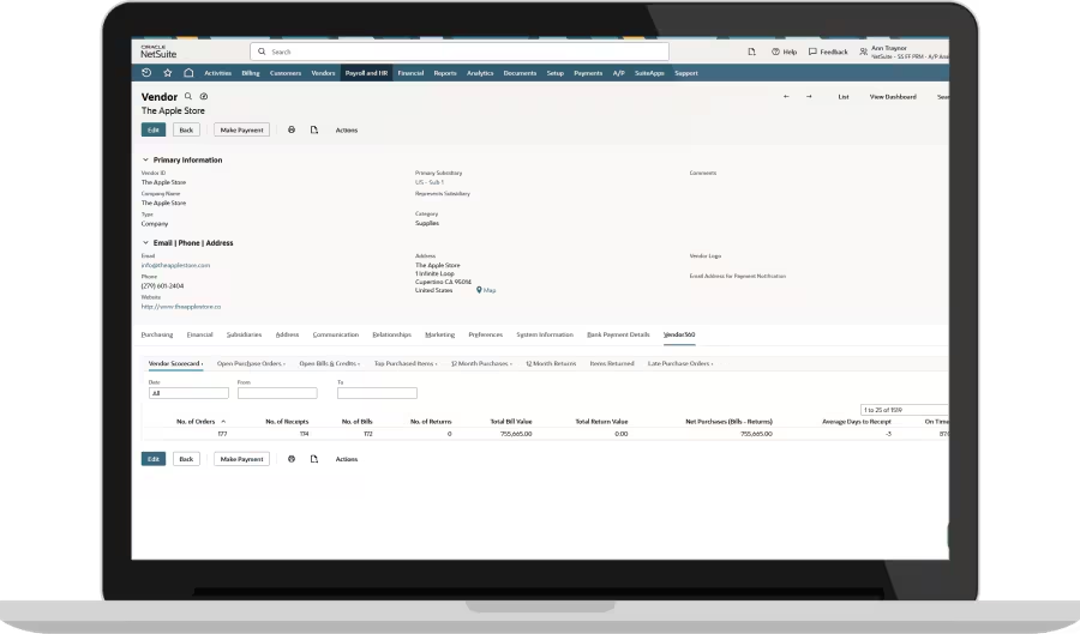
Vendor management systems for construction create a structured approach to sourcing, performance tracking, and relationship oversight. A combination of a single source of truth for vendor data, automation, and advanced analytics keeps projects running smoothly. A VMS provides strong oversight and supports compliance requirements, risk mitigation, and supplier diversity goals. As construction demands increase and reliance on third-party providers expands, vendor management will play an increasingly crucial role in helping construction companies meet client needs and, ultimately, sustain a successful business.
Vendor Management in Construction FAQs
What is a VMS in construction?
A vendor management system (VMS) in construction is a centralized platform that oversees, automates, and analyzes key processes, such as vendor selection, onboarding, compliance tracking, monitoring, and payment processing. It reduces manual errors and improves visibility into subcontractor and supplier performance, keeping projects on track and preventing cost overruns.
What is a vendor management plan?
A vendor management plan is a document outlining the selection, oversight, and evaluation of subcontractors and service providers to maintain consistency, efficiency, and compliance throughout a construction project. It covers key processes, such as prequalification, contract negotiation, performance monitoring, and contingency planning.
How do you evaluate a vendor?
You evaluate a vendor by prequalifying them, following established criteria, and continually monitoring their work using predefined key performance indicators. Having a complete picture of a vendor’s capabilities, capacity, certifications, and finances, and tracking their ongoing work quality, helps construction companies select dependable partners and maintain high project standards.