
Too many marketing teams are pouring money into a variety of campaigns and channels without gaining a true grasp of the ones that are delivering the best results, letting cash slip away while competitors gain ground. Confronted with shrinking marketing budgets, companies must focus on optimizing their marketing spend to be sure they’re backing initiatives that are likely to grow the business. The following 10 tips provide marketing teams with strategies for identifying inefficiencies, prioritizing high-impact efforts, and pointing every dollar toward boosting the company’s bottom line.
What Is Marketing Spend Optimization?
Marketing spend optimization refers to the practice of allocating and adjusting a business’s marketing budget to maximize its ROI. It focuses on using data to continuously analyze whether the company is spending every marketing dollar wisely. By regularly reviewing expenses, marketing teams can identify waste, evaluate campaign performance, and reallocate dollars toward the channels that drive the highest profitability. Over time, this level of ongoing optimization, which is often supported by continued use of testing and analytics tools, helps make sure that the budget aligns with the initiatives that drive the greatest business impact.
Key Takeaways
- As businesses worldwide continue to trim their marketing budgets, many teams are reevaluating their spending.
- When analyzing their channel mix, marketers evaluate which ones are actually earning revenue.
- It’s important for marketing teams to narrow their scope to the segments, products, and markets that offer the biggest payoffs, instead of making too many low-impact bets.
- When marketing, sales, and operations collaborate closely, less revenue is wasted.
- Investing in automation essentially expands a team’s capabilities, allowing for faster experimentation and more effective use of every marketing dollar.
The Risks of an Unoptimized Marketing Budget
When a company’s marketing cash sits in low-performing channels and campaigns, customer acquisition costs may climb, ROI can drop, and high-potential programs may never get the impetus they need to succeed. Failing to optimize marketing spend is especially risky now, as budgets tighten amid global uncertainty and companies grapple with a wide variety of marketing challenges, including privacy changes, algorithm shifts, and fragmented data. In fact, a Nielsen survey found that 54% of global marketers planned to cut spending in 2025, which means any dollar that’s misallocated could stall growth and open the door to more disciplined competitors to win over customers.
10 Tips for Marketers That Support Optimizing Marketing Spend
When companies get their marketing budgets dialed in just right, their dollars start working harder. The following 10 tips help marketers spot waste, invest in winning campaigns, and nail their growth targets.
-
Evaluate Current Marketing Budget Against Marketing Activities
Few marketers reevaluate their budgets often enough. Many companies will lock in spending patterns based on the previous year’s priorities, even if customer behaviors and business goals shift. To find inefficiencies, marketers should map every major budget line item to a specific objective and key performance indicator (KPI). This exercise can expose misalignment—heavy investment in tools that no longer deliver measurable value, for example—while revealing chronic underinvestment in other areas, such as performance tracking and experimental pilot campaigns. The question marketing leaders must constantly ask isn’t how much is being spent, but why. Zero-based budgeting approaches, which require all activities to justify their cost on a regular basis, can help redirect dollars toward the initiatives tied most closely to company goals.
-
Analyze Channel Mix and Effectiveness
For many marketing teams, the hard truth is that their current channel mix doesn’t make sense—and they know it. In a recent survey by Netcore, only 23% of marketing professionals described their multichannel marketing strategy as very successful or best in class, and 91% of those that were less successful at multichannel marketing said they lack the technological infrastructure to thoroughly measure their marketing initiatives. Clearly, marketers need to work harder to overcome these omnichannel marketing challenges. Analyzing channel mix and effectiveness forces them to ask two simple but often-avoided questions: Does this portfolio of channels actually earn its budget? And, is each channel being used wisely? A comprehensive review goes beyond merely focusing on clicks and impressions to look at how each channel contributes to conversions, revenue, or customer lifetime value.
-
Audit Campaigns
Campaign audits should be an ongoing exercise, not a once-a-year fire drill. Regularly reviewing previous and current campaigns and comparing them to clear KPIs, such as cost per opportunity and the pipeline they generate, gives marketers the data they need to shift budget dollars to higher-performing initiatives. Besides, market conditions often shift quickly; messaging that resonates with customers today may feel out of touch six months from now. A structured audit makes sure that campaign messages and promotional offers remain a strong match with the company’s audience and meet the current moment. It also looks at cost efficiency and channel overlap to provide guidance on which campaigns to scale, rework, or shut down entirely.
-
Consider Focusing Your Scope
Attempting to be everywhere at once is a drain on marketing efficiency. A recent Pipeline360 survey showed that half of B2B marketers reported falling short of their pipeline targets, with many citing fragmented, spread-thin programs as a key contributor. Basically, marketers release too many campaigns and chase too many audiences, with insufficient budget to back each initiative. As marketing wallets tighten, it’s important for teams to narrow their efforts to the segments, products, and markets with the biggest payoffs, instead of making multiple, low-impact bets. By focusing its scope, a marketing team can place bigger, more quantifiable bets in fewer places that are tightly aligned with strategic priorities and then use a portion of the budget on controlled tests to make sure they’re working.
-
Break Up Strategy Silos
Siloed decision-making within the marketing department is a persistent problem for many companies. Brand, performance, product, and regional marketing teams often plan and spend independently, each working with its own goals, budgets, and success metrics. Such siloed efforts make it difficult to evaluate marketing spend holistically and can lead to inconsistent messaging, duplicated efforts, and inefficient use of resources. For example, one team may invest heavily in awareness campaigns, while another focuses on demand capture, perhaps without coordinating timing, audiences, and measurement with each other. Breaking down these internal barriers through joint planning meetings, shared dashboards and metrics, and integrated performance briefs can align teams around common objectives and help the marketing department allocate budget dollars more strategically.
-
Establish Partnerships With Sales and Operations
At many companies, marketing, sales, and operations run on different timelines that are based on different priorities—and that misalignment can drain budgets. Marketing may generate demand that sales teams aren’t staffed to convert, and operations may lack visibility into upcoming campaigns, slowing fulfillment and creating a frustrating customer experience. Companies also risk wasting money by running ads for an offer that has already expired or for a product that’s out of stock. In a recent Invoca survey, 9 out of 10 marketing and sales leaders said alignment between their teams is key to revenue growth, yet only 1 in 10 reported strong alignment. Establishing formal partnerships through shared planning cycles, joint forecasts, regular budget discussions, and predetermined performance metrics translates marketing investments into revenue and operational readiness. The results: better-timed campaigns, leads that facilitate greater follow-through, and less wasted revenue.
-
Align Marketing Strategy With Business Objectives
Optimizing marketing spend is nearly impossible when strategy is disconnected from business objectives, especially because what counts as success can vary wildly, depending on the company’s products and services. A retailer running high-volume ecommerce campaigns might hold paid media to a strict, short-term, return-on-ad-spend target, while a B2B manufacturer investing in long, complex sales cycles may focus more on building a qualified pipeline or landing bigger contracts than on seeing an immediate return. The solution? Start every planning cycle by mapping business goals—revenue growth in a specific segment, expansion in key accounts, margin protection on a product line—to clear KPIs and benchmarks. It’s important for finance, sales, and operations to agree on what success looks like for each initiative and then use those targets to guide budget allocation.
-
Understand What Your External Headwinds Look Like
Even if a marketing team doesn’t make any obvious internal missteps, external factors, such as algorithm changes, shifts in user engagement and content preferences, new channels, updated privacy rules, or a core audience aging out of a product, can drag down results. Being aware of potential headwinds is key to preventing marketing performance from sliding. Marketing teams should maintain a clear view of specific challenges they may face by keeping an eye on the platforms that are less efficient, on where engagement is moving, on whether new channels are capturing attention from previously reliable standbys, and on how demographic shifts are changing the average customer profile. By regularly testing performance against these external factors, rather than assuming that conditions will remain flat, companies can keep up with changing environments so they can reallocate budget toward the channels, formats, and audiences poised for the greatest growth.
-
Adopt a Data-driven Mindset
A data-driven mindset is essential to optimizing marketing spend, yet many teams are leaving money on the table. In a 2025 Adverity survey, chief marketing officers estimated that 45% of the data they rely on is incomplete, inaccurate, or outdated, which means that nearly half of their decisions are being made on shaky ground. What’s more, many teams lack the time to properly analyze the reams of data they receive, which can lead them to waste money on the wrong channels or audiences. Correcting the problem starts with treating data as the key to making smarter business decisions. Companies should clean data ruthlessly; integrate figures to gain a single, unified view; and establish weekly routines to test the performance of marketing initiatives. Next, teams should position their assumptions against fresh numbers: Does a certain channel convert at scale, or is it starting to struggle? Is a campaign reaching the right audience? Making full use of data allows teams to double down on what works so they can reallocate spend confidently.
-
Increase Productivity With Marketing Automation
Marketing teams often find themselves drowning in tedious, repetitive tasks, such as manually prepared email sends, A/B tests, and social scheduling, which often eat up an enormous amount of time and create bottlenecks that slow campaign launches. Plus, these responsibilities leave little bandwidth for creative thinking or strategic planning. Marketing automation directly addresses this productivity lapse by taking care of many day-to-day manual responsibilities. For example, automated workflows manage routine tasks at scale, allowing teams to launch campaigns faster, test initiatives more frequently, and optimize their budgets in real time. This shift can dramatically increase the amount of meaningful work a team can accomplish with the same resources. According to HubSpot’s “2025 State of Marketing Report,” many leaders are investing more in AI this year, with 35% using it for content creation, 30% for data analysis and insights, and 20% for workflow automation.
How NetSuite Helps Agencies Maximize Marketing Budgets
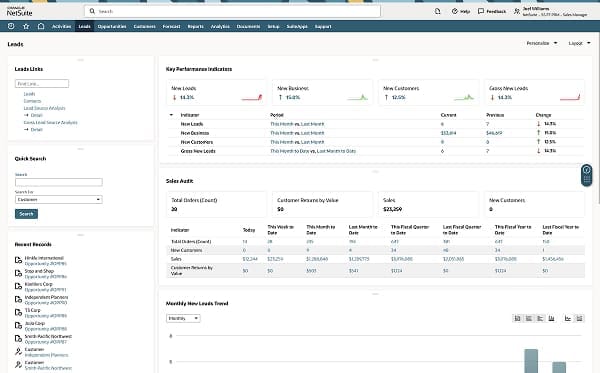
With marketing budgets spread across multiple campaigns, channels, and tools, it can be tough for marketers to see what’s working and where money is being wasted. NetSuite ERP for Advertising & Marketing Agencies eliminates this dilemma by unifying financial information, project management, and operations in a single platform, giving marketers real-time visibility into campaign costs, resource allocation, and overall profitability. This helps leaders make more-informed budget decisions before work happens, not after the fact or when resources are already wasted. Meanwhile, NetSuite CRM marketing automation allows companies to automate multichannel campaigns in close alignment with sales, so teams can convert leads into opportunities and share detailed intelligence in real time. By connecting financial visibility from ERP with campaign insights from CRM, NetSuite helps businesses tie every dollar to results, improving productivity, boosting margins, and freeing marketers to focus on strategic and creative growth.
NetSuite Marketing Automation
Marketing Spend Optimization FAQs
What is the 70/20/10 rule for marketing budgets?
The 70/20/10 rule allocates 70% of a marketing budget to proven, low-risk tactics; 20% to test new ideas or channels; and 10% to high-risk, innovative experiments.
What are the three things to include in marketing optimization?
Marketing optimization typically includes setting clear goals and key performance indicators, continually measuring performance, and making iterative adjustments based on data insights.
How often should marketing budgets be reviewed and adjusted?
Marketing budgets should be reviewed and adjusted quarterly at a minimum, while monthly check-ins can help a company respond to changing market conditions more quickly.