
Even with a solid plan, keeping a project on track can feel like chasing a moving target as shifting requirements and hidden costs pop up midstream. It’s a common frustration among consulting, construction, and professional services businesses. In fact, research shows that only 49% of organizations mostly or always finish projects on budget. When projects run over, the consequences ripple outward—stressing out teams, squeezing profitability, and straining the trust built with clients. The good news is that by identifying root causes early and using modern tools, teams can regain the control needed to keep engagements predictable and profitable.
This article defines project overrun, explores its core origins, explains how to recover when projects drift off course, and outlines practical prevention tips.
What Is a Project Overrun?
A project overrun refers to a situation in which a project exceeds its planned budget or timeline. Often discussed in financial terms, it occurs when the actual resources, time, or costs required to complete the project surpass the original estimates established during planning.
Key Takeaways
- Project overruns occur when costs or timelines exceed original project estimates.
- Scope creep, poor planning, and weak communication are leading causes of overruns.
- Early stakeholder alignment and realistic budgeting dramatically lower the risk of overruns.
- Real-time progress tracking helps teams detect issues early and adjust before costs escalate.
- Cloud-based software provides dashboards and forecasting tools to maintain project visibility and control.
Project Overruns Explained
Project overruns occur when the assumptions made during planning fail to match real-world execution. Most overruns stem from a combination of inaccurate cost estimates, planning gaps, evolving requirements, unforeseen disruptions, and operational inefficiencies. Because modern projects involve multiple stakeholders and complex moving parts—especially in the professional services industry—even small miscalculations can compound into significant deviations in cost, schedule, and quality.
Beyond impacting the balance sheet, overruns inflict a significant opportunity cost by forcing businesses to reallocate resources from other revenue-generating initiatives. If not addressed promptly, overruns cannibalize delivery timelines, strain team capacity, and erode profitability. For these reasons, project leaders must move beyond lump-sum tracking to monitoring granular data related to labor and overhead. This kind of visibility allows teams to identify risks and correct course before a manageable variance transforms into a systemic project failure.
Major Causes of Project Overruns
Project overruns rarely come down to a single mistake. They’re usually the result of a multitude of factors. While every project is different, most overruns share the following common root causes.
-
Scope Creep
Scope creep occurs when a project’s requirements or deliverables gradually expand beyond the original plan due to a lack of proper change control. As new ideas or stakeholder requests arise, unexpected tasks begin emerging during execution. Over time, these additions intensify workloads, inflate costs, and push projects beyond their intended budgets and timelines. When the baseline is constantly shifting, it becomes impossible to measure true performance, leading to a “death by a thousand cuts” where small, unvetted changes eventually bankrupt the original budget.
-
Underestimated Costs
Budgets built on optimistic assumptions, outdated benchmarks, or rough ballpark estimates often fail to reflect the true scope of work. When labor, materials, or technical requirements are underestimated from the start, the budget quickly becomes unrealistic, which forces teams to absorb financial gaps as the project progresses. This often stems from relying on historical data that doesn’t account for current market volatility or specialized technical nuances, leaving no margin for the inevitable complexities of modern delivery.
-
Poor Project Planning
When projects begin without clearly defined goals, timelines, or deliverables, teams often struggle to coordinate work and allocate resources effectively. Unrealistic schedules or one-size-fits-all estimates can further distort expectations from the outset. Without strong planning and risk assessment, small miscalculations quickly compound and disrupt project execution. This lack of a rigorous roadmap can force teams to take a chaotic, ad hoc approach, which greatly increases the risk of expensive, late-stage course corrections.
-
Bad Communication and Project Management
When sales and delivery teams can’t agree on project scope and responsibilities, unrealistic commitments often follow. Without defined feedback loops or approval processes, teams operate on assumptions rather than verified data. This fragmentation leads to mismatched expectations and unplanned work that quickly erodes profit margins. Furthermore, poor communication generates a hidden overhead, as teams spend more time in alignment meetings than they do on actual project execution. It’s a common pain point: 44% of project management professionals say they’re dissatisfied with their company’s current level of project management maturity.
-
Unrealistic Expectations
Aggressive timelines or ambitious deliverables—whether driven by internal or client pressure—frequently circumvent technical realities during the critical planning and negotiation phases. When client demands are disconnected from team capacity, the resulting rushed execution leads to burnout and quality issues. Teams then spend more time on costly revisions, creating a cycle of rework that delays the very deliverables the aggressive timeline was meant to protect.
-
Resource Limitations
Limited staff, equipment, or funding can quickly slow project progress. When teams are understaffed—or competing with other projects for the same resources—work stalls and priorities shift. Inefficient allocation often drives up labor costs, decreasing overall productivity and making it difficult to keep projects on schedule and within budget. This leads to a ripple effect of resource scarcity, bottlenecks, and degraded morale among overextended teams.
-
External Causes
External factors can disrupt even the best-planned projects. Regulatory changes, economic fluctuations, and supply chain disruptions may delay deliveries, raise material costs, or require rework. Because these events are often outside a team’s control and difficult to predict, they can quickly trigger major adjustments to project timelines and resource plans. For global initiatives, these issues may be compounded by geopolitical shifts and market volatility, meaning that a lack of contingency planning for “black swan” events can turn a minor external delay into a terminal financial liability.
-
Subpar Designs and Lack of Data Visibility
Flawed project designs or incomplete technical specifications can lead to costly problems later in the project lifecycle. Errors in initial plans often lead to rework, delays, and rising material costs. At the same time, relying on lagging or insufficient reports, rather than real-time metrics, hides budget parameters and progress, so that emerging issues aren’t detected before they grow into major overruns. By the time a manual report identifies a variance, the window for a low-cost correction has often closed, forcing leadership into a reactive mode that further strains resources.
The Impacts of Project Overruns
When a project drifts off course, the effects move through the entire business, affecting everything from the bottom line to the team’s well-being. Key impacts include:
- Profitability: Every dollar spent beyond the original budget comes directly out of net profit. As timelines extend, expenses for labor, equipment, and oversight rise but revenue remains fixed. With client-facing work, companies often must absorb these extra costs, which shrinks margins and compromises ROI.
- Project delays: Project overruns often set off a chain reaction that pushes key milestones farther out. As costs escalate, teams have to pause work to secure additional funding, renegotiate contracts, or address scope changes, ultimately delaying product launches and strategic initiatives.
- Resource pressure: Project overruns strain teams and organizational resources. Teams may be forced to reallocate staff, outsource support, or stretch workloads, which results in productivity gaps, rising costs, and declining morale.
Signs of Project Overruns
Project overruns can sneak up on teams and quickly compound, derailing budgets and schedules. Here are the signs to watch for:
- Poorly defined project scope: Deliverables and responsibilities aren’t clearly outlined from the start, generating confusion and misalignment as the project progresses.
- No utilization plan and limited contingency planning: Resource assignments and fallback measures aren’t established, leaving teams scrambling when issues arise.
- Lack of project spending or tracking measures: Budgets and performance aren’t consistently monitored, causing blind spots that hamper detection of problems before they escalate.
- Missed deadlines and milestones: Key tasks slip repeatedly, signaling that the project is off track and susceptible to delays.
- Increased rework, unplanned additions, and change requests: Frequent revisions or unexpected additions pile up, consuming precious time and resources.
- Stakeholder complaints: Negative feedback about progress, costs, or transparency mount, signaling miscommunication and inefficiencies that throw teams off course.
Best Practices for Managing Project Overruns
When project overruns do happen, the difference between a minor setback and a total failure lies in how quickly teams pivot. To minimize fallout and get initiatives back on track, teams should:
- Immediately assess overrun scope: The moment an overrun is identified, conduct a thorough analysis to quantify the exact financial gap and its impact on deliverables. Knowing the full picture helps stop unnecessary spending quickly. Minor overruns—typically those that fall within 5% to 10% of the original budget—can usually be managed through internal adjustments, while larger overruns require a formal reevaluation of budget, scope, or timelines.
- Be transparent about impacts: Communicate early with stakeholders to clearly explain what changed and why. Open, direct updates keep disappointments at bay, maintain credibility, and empower leaders to quickly decide whether to initiate adjustments, effectively moving the project from a state of crisis to collaborative problem-solving.
- Reassess and reprioritize deliverables: Revisit the project’s deliverables and refocus on what matters most. By concentrating resources on essential outcomes and scaling back lower-priority work, teams can protect the project’s core value. This level of attention means that despite budget revisions, progress remains aligned with the original high-level business objectives.
- Realign with stakeholders: Reconnect with key stakeholders to review what changed and to agree on a path forward. Present a revised plan that addresses funding gaps, contract renegotiations, or scope adjustments and confirm everyone’s on the same page. This prevents further misunderstandings and gets the project back on stable footing.
- Adjust the project plan: Once the extent of the overrun is clear, update the project plan to reflect the new realities. Revisit timelines, resource allocations, and risk assumptions to validate that the remaining work is achievable. A revised, realistic plan restores project control and significantly reduces the likelihood of further missteps.
- Implement corrective measures for future projects: After the overrun is addressed, review what went wrong and capture lessons learned. Document root causes, reassess estimation practices, and refine governance or communication where needed. The goal: Turn this setback into better execution next time.
Tips for Preventing Project Overruns
Most project overruns are predictable and avertible. By addressing the situation early on, teams gain the control and visibility needed to protect the company’s bottom line for the project. The following six tips can help teams stop project overruns before they start:
- Plan for the unexpected: Identify potential risks early, draw on historical data and experience, build contingency budgets, and schedule buffers into the project plan. Regularly revisit risk assumptions to keep teams prepared and decrease the likelihood that unforeseen issues will trigger costly overruns.
- Define project boundaries clearly: Establish a well-defined scope from the start, outlining all deliverables, milestones, and strategic goals. Clear boundaries avert scope creep by requiring that any changes will be formally evaluated and rebudgeted.
- Ground estimate costs: Base estimates on historical project data, industry benchmarks, and input from experienced stakeholders, rather than on optimistic assumptions. Breaking work into distinct components and using evidence-based forecasting methods lets teams identify true cost drivers and build budgets that better reflect real-world conditions.
- Involve major stakeholders early: Early engagement with stakeholders fosters alignment, eliminates misdirected work, and stops scope creep before it starts. Securing buy-in up front also creates a smoother path for future approvals.
- Add guardrails to prevent human error: Build in checks and balances with standardized workflows, periodic reviews, and clear approval steps. Automate workflows and leverage project management tools to catch mistakes early so small miscalculations don’t snowball into costly overruns.
- Enhance progress-tracking with real-time data: Use project management tools and dashboards to monitor costs, milestones, and resource use as they happen. Real-time insights reveal slippage early, letting teams compare actual performance against planned completion and historical data so they can adjust accordingly.
ERP Software Provides Real-Time Project Insights
NetSuite ERP for Consulting Firms provides consultancies with a cloud solution to manage the entire engagement lifecycle from project estimates and staffing to delivery, revenue recognition, and reporting. NetSuite Project Management’s role-based dashboards offer instant access to critical metrics and project actuals. Instead of waiting for month-end reports, managers can use automated forecasting and interactive budgeting to adjust scope or resources as conditions change. This centralized insight minimizes administrative friction and connects delivery teams with back-office financials, providing the precision needed to maintain healthy margins and drive consistent, on-time project completion.
Interactive Project Budgeting With NetSuite
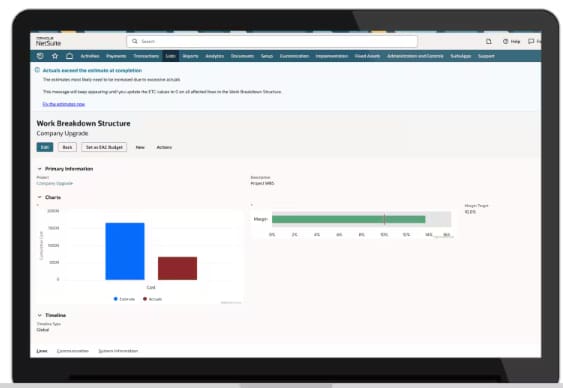
Project overruns don’t happen overnight; they usually start as tiny planning gaps or minor scope shifts that eventually escalate. The truth is, most of these hurdles are preventable. By prioritizing realistic forecasting, stakeholder alignment, and real-time project insights, businesses can catch drift before it hits the bottom line. Mastering these core principles is what separates high-performing firms from those that constantly react to the next budget crisis.
Project Overrun FAQs
What happens if a project runs over budget?
The most immediate hit is to net profit margins, as companies often must absorb the unanticipated costs. Beyond the balance sheet, overruns cause a ripple effect, delaying other strategic initiatives, straining team capacity, and damaging the hard-earned trust built with clients.
What’s an example of a project overrun?
A consulting firm quotes $200,000 for a six-month financial systems integration for a client. However, unvetted technical requirements and scope shifts add 300 extra labor hours. By month eight, costs have climbed to $260,000, erasing the original profit margin and delaying new client kickoffs.
Which industries are most impacted by overruns?
Project-based sectors, such as consulting, construction, and software development, see the most overruns. These fields rely on specialized labor and complex timelines, where even a minor miscalculation in scope or resource hours can lead to significant budgetary and scheduling deviations.