
Creative campaigns are the heart of any advertising or marketing agency worth its salt, but behind the creativity lies a complex web of numbers, clients, and billing arrangements that agencies must manage with care. Without a clear system that tracks where money comes from and where it goes, agencies may lose awareness of which clients or campaigns are truly profitable and instead be steered toward suboptimal strategic decisions and unreliable financial statements. That’s where a well-designed chart of accounts shines—by giving agencies a clear financial blueprint to follow to understand profitability, manage growth, and make better decisions.
What Is a Chart of Accounts?
A chart of accounts is a structured, categorized list of all the financial accounts a business uses to record where money comes from and where it’s spent. The chart of accounts acts as the backbone of an accounting system, allowing the business to accurately track, classify, and analyze income, expenses, assets, and liabilities. A well-designed chart not only shows how much money a company makes and spends but also identifies the specific sources and different uses of funds—information that’s essential for budgeting and smart decision-making.
Key Takeaways
- Agencies rely on a chart of accounts to meet accounting requirements and make sure their financial statements are accurate.
- Most agencies use a numeric coding system for their charts, simplifying how they sort, filter, and report on transactions.
- A typical chart of accounts includes assets, liabilities, equity, revenue, expenses, and non-operating revenue and expenses.
- Accounting software automates transactions and organizes data within the chart of accounts, helping ad and marketing agencies minimize errors, save time, and gain clearer insights into profitability.
Ad Agency Chart of Accounts Explained
A tailored chart of accounts helps make sense of complex agency revenue streams and project costs by categorizing a standardized list of all agency transactions. The chart uses a consistent numbering system to sort every dollar into predefined groups, then produces clear summaries of revenue and expenses. While manually prepared charts require repetitive data entry, a digital chart of accounts is integrated into accounting software, automatically assigning transactions to categories, updating balances, and flagging discrepancies in real time. This speeds up reporting and offers agencies a reliable view of profitability. With US advertising agency revenue exceeding $78 billion in 2025, many agencies are increasingly turning to detailed financial structures, such as customized charts of accounts, to manage growth.
Why Is the Chart of Accounts Important for Ad Agencies?
Misclassified transactions and missing documentation create real risk for ad agencies. The same goes for unclear tracking of billable hours, media pass-throughs, and contractor payments. Any of these gaps can lead to audit problems, tax errors, or regulatory violations. For this reason, agency accounting has its own set of rules: Fee revenue must remain clearly separated from client pass-through costs; production and media expenses can’t get lumped in with overhead; work-in-progress and deferred revenue must be tracked properly; and every transaction should tie back to a specific client and campaign. Under Generally Accepted Accounting Principles, the chart of accounts is what makes all of this work—it’s the backbone of the general ledger, making sure transactions are classified correctly so that financials will hold up under tax, audit, or compliance review.
Besides maintaining regulatory compliance, the chart of accounts helps ad agencies manage their increasingly complex financial operations. As agencies juggle multiple clients, campaigns, and billing arrangements, they need a system that tracks client billables accurately and supports detailed reporting. A well-designed digital chart of accounts allows finance teams to produce precise financial statements, monitor campaign profitability, and make sharper resourcing decisions, allowing the agency to both scale and get a clear view into where it’s making or losing money.
How Do Ad Agencies Use a Chart of Accounts?
Ad agencies use a chart of accounts to translate day-to-day work—pitches, campaigns, media buys, retainers, production—into bookkeeping figures they can manage. Finance teams assign transactions to the correct account codes as they come in: Invoices from platforms like Google go to media accounts; freelancer invoices hit contractor accounts; and client billings are coded to project revenue accounts tied to a particular brand or campaign. This coding happens in real time through the accounting system, so leaders can later slice and review results by client or service line without having to rebuild spreadsheets from scratch.
Agencies also rely on the chart of accounts when reviewing weekly and monthly reports on key metrics, such as gross margin by client, utilization by team, or actual spending versus budget for a campaign, to help them decide whether to adjust staffing or rebalance spending. Finance teams also use the chart of accounts to support revenue recognition and to reconcile works in progress against invoices.
What’s Included in an Ad Agency Chart of Accounts?
An ad agency’s chart of accounts, which serves as the organizing framework for the general ledger, follows the same high-level structure as it would for most businesses, but the details reflect agency-specific activities, including retainers, media buys, and production work. Most agencies assign a numeric coding system—for example, 1000s for assets, 2000s for liabilities, 3000s for equity, 4000s for revenue, 5000s-6000s for expenses, and 8000s-9000s for non-operating items. The first couple of digits act like a filing cabinet label, grouping similar accounts together—for instance, all 1100-series accounts might relate to receivables—which speeds up sorting, filtering, and reporting on transactions. Let’s explore the items an ad agency chart of accounts often includes.
-
Assets:
In a typical agency chart of accounts, asset codes are assigned to anything the agency owns or controls that has future economic value. For example, codes in the 1000-1999 range might include cash in a checking account, outstanding client invoices in accounts receivable, annual prepaid software licenses for project management tools, and fixed assets like computer equipment. For example, when an agency completes the first month of a three-month, $30,000 branding project, it records a debit to accounts receivable for $10,000 and a credit to project fee revenue for $10,000, creating an asset that represents the client’s obligation to pay for the completed work. -
Liabilities:
Liabilities, which represent what the agency owes to others, often sit in the 2000-2999 range. Examples of these obligations include accounts payable, such as vendor invoices; accrued expenses, such as employee bonuses; client advances, such as retainers billed but not yet earned; and the agency’s credit card balances. For instance, when Google sends a $10,000 bill for a client’s media buy, the agency would record a debit to media pass-through expense for $10,000 and a credit to accounts payable for $10,000, creating a liability that shows the agency owes Google until it pays the bill and invoices the client. -
Equity:
Equity accounts, which usually appear in the 3000-3999 range, represent the portion of the agency that belongs to the owners. These accounts increase when owners put money into the business or when the agency earns profits and keeps them, and they decrease when profits are paid out to the owners. Common equity accounts in an agency include the owners’ capital (assets the owners invested); retained earnings (past profits the agency retained to use for the business instead of distributing); and owner distributions (money paid out to the owners). At the end of the year, if the agency makes a profit and leaves that money in the business, it’s added to retained earnings, increasing owners’ stake in the agency. -
Revenue:
Revenue accounts capture all the ways an ad agency earns money from clients and are typically coded in the 4000-4999 range. Agencies often break revenue into a few main streams to track the money driving the business, including retainers (ongoing monthly fees for services, such as social media management); project fees for fixed-scope work (such as a website redesign or video campaign); the agency’s cut from placing a client’s ads on platforms; and performance incentives, including bonuses the client might pay when a campaign achieves a certain sales lift. An ad agency would code a $50,000 invoice for a brand redesign to a project fee revenue account, for example, while it would record a $20,000 monthly social media retainer under retainer revenue, giving the agency a clear view into which service lines are driving recurring versus one-time revenue and which are most profitable overall. -
Expenses:
Expenses usually land in the 5000-5999 range and represent the costs of running the agency and delivering client work. Common service-related accounts include salaries, production costs, and media spend, while overhead might include rent, software subscriptions, marketing, and business development expenses. An agency might pay a freelance designer to support a campaign and record it as a debit to contractors and a credit to accounts payable, showing a direct cost tied to client delivery. -
Non-operating revenue and expenses:
Non-operating revenue and expenses, often coded in the 8000-8999 range, track income and costs that are not part of the agency’s core marketing services. These may include interest income on bank balances, gains or losses on the disposal of equipment, or interest expenses on a line of credit. If an agency sells an old server for more than its book value, for instance, it might record the difference as a credit on asset disposal, reflecting a one-time, non-operating gain separate from its advertising revenue.
Example of an Ad Agency Chart of Accounts
Let’s say an ad agency needs to track five core financial components: recurring client retainers, one-off project work, media spend, performance bonuses, and the costs tied to delivering that work. To do this, the agency sets up revenue accounts, such as 4100 Retainer Revenue for monthly client agreements; 4200 Project Fee Revenue for fixed-scope work, like branding or website building; 4300 Media Commission Revenue for fees earned on ad placements; and 4400 Performance Incentive Revenue for campaign bonuses. On the cost side, it creates three more accounts: 6100 Freelance and Contractor costs for outsourced creative labor, 6200 Media Spend to separate client ad dollars from agency income, and 6300 Production Expenses for tools, software, and content creation. This chart of accounts structure allows the agency’s financial statements to clearly show which services generate the most revenue and which projects cost the most, as illustrated in the table below:
Ad Agency Chart of Accounts
| Account Number | Account Name | Account Type | What It Tracks |
|---|---|---|---|
| 4100 | Retainer Revenue | Revenue | Monthly recurring fees from ongoing client agreements (social media management, marketing retainers) |
| 4200 | Project Fee Revenue | Revenue | One-time, fixed-scope work (branding projects, website builds, campaign launches) |
| 4300 | Media Commission Revenue | Revenue | Agency commissions earned from placing and managing client advertising spend |
| 4400 | Performance Incentive Revenue | Revenue | Bonus payments tied to campaign results (Hitting ROI or sales target) |
| 6100 | Freelance & Contractor Costs | Cost of services | Payment to freelance designers, copywriters, and other outsourced creative labour |
| 6200 | Media Spend (Client Pass-through) | Cost of services | Client advertising dollars paid to media platforms, tracked separately from agency income |
| 6300 | Production Expenses | Cost of services | Tools, software, content creation, and other production-related costs |
Special Considerations for Ad Agencies in Developing a Chart of Accounts
Ad agencies juggle multiple clients, campaigns, timelines, and money that often isn't theirs—for instance, client funds that flow through the agency but don’t belong on the balance sheet. Media spend is a good example: Large sums may pass through the agency to ad platforms, but those dollars shouldn’t inflate revenue or mask weak margins. They need to be tracked separately as pass-through costs—something that’s difficult to manage without accounting software keeping track of it all. Agencies also need to reflect how work actually gets done, breaking out billable versus nonbillable labor and separating internal salaries from freelance and contractor spend. Revenue timing adds another layer of complexity. Agencies earn retainers gradually, recognize project fees over multiple months, and record performance bonuses only after results are delivered. The chart of accounts must support proper revenue recognition, not just invoices.
Create a Tailored Chart of Accounts With NetSuite Accounting Software
Running an ad agency is complicated. Between client retainers, one-off projects, media buys, and performance incentives, it’s easy for revenue, expenses, and billing to get tangled—and traditional, manual spreadsheets can’t keep up. NetSuite Accounting Software for Advertising & Marketing Agencies cuts through the chaos, bringing every transaction, whether it’s a project fee, media spend, or contractor payment, into a single, integrated chart of accounts. With automated billing, real-time cash flow visibility, and clear reporting for every client and campaign, agencies can see exactly which services drive profits, prepare for audits, and make smarter financial decisions, all without enduring the grind of manually handling data.
NetSuite Accounting Software for Advertising & Marketing Agencies
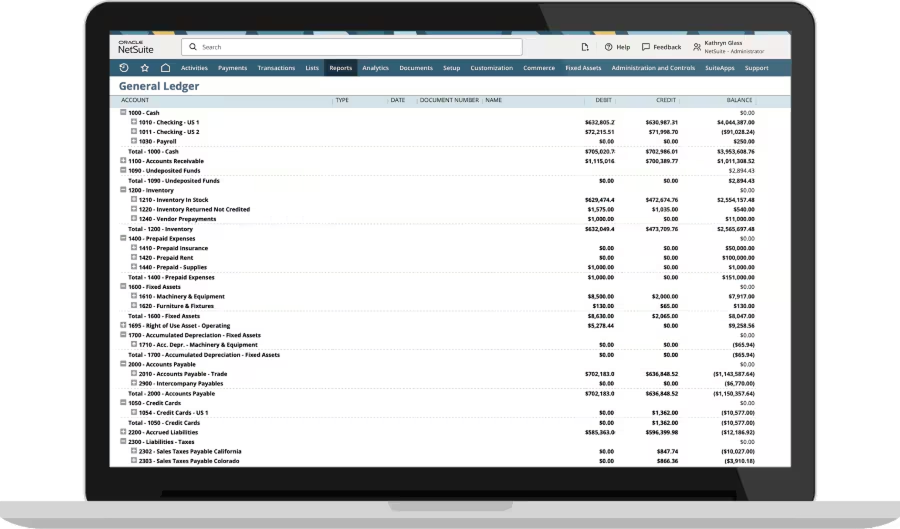
Creative campaigns capture attention, but financial insights are what keep an agency running. A well-structured chart of accounts provides agencies with the clarity they need to show exactly where revenue comes from, which projects drive profits, and how resources are being spent so they can make informed decisions and scale efficiently.
Ad Agency Chart of Accounts FAQs
What are common ad agency chart of account mistakes?
Common ad agency chart of accounts mistakes include using a generic structure that lumps all revenue and expenses together, misclassifying pass-through costs (such as media spend), and failing to track billable versus nonbillable labor or works in progress.
What are the most important categories to include in an agency’s chart of accounts?
The most important categories in an agency’s chart of accounts are assets, liabilities, equity, revenue, and expenses, with revenue and expense accounts broken down to reflect agency-specific activity, such as retainers, project fees, media commissions, media pass-through costs, labor, and production expenses.
What type of account is an advertising expense?
An advertising expense is an expense account—specifically, an operating expense on the income statement. It records the costs a business incurs to promote its own products or services, such as paid ads, sponsorships, or marketing campaigns, and reduces the net income during the period in which the expense is incurred.
How are pass-through expenses handled for an ad agency chart of accounts?
Ad agencies record pass-through expenses, such as client media spend, in separate expense accounts, and, depending on the agencies’ role, they either offset the expense when the client reimburses the amount or record both the expense and reimbursement as revenue.