
Ever since James McKinsey founded his eponymous business management consultancy 100 years ago, consultants have been providing strategic guidance to clients across industries. Though much has changed over the decades, many long-standing best practices remain as relevant as ever. At the same time, new pressures and opportunities are reshaping what it takes to succeed in 2026.
The State of Consulting in 2026
Economic uncertainty, geopolitical disruption, and AI’s rapid evolution are all redefining what clients need from consultants and how consultants deliver. At the same time, nearly 45% of organizations are now investing in in-house consulting capabilities, according to Global Growth Insights—raising the bar for what external consultants need to bring to the table.
Consulting firms are working to meet rising client demand for specialized knowledge and measurable outcomes. Companies increasingly need consultants with sector-specific depth and expertise in complex topics like ESG compliance, data localization, and cybersecurity. Clients are also scrutinizing results more closely. According to Management Consulted, demonstrating measurable value is a top challenge facing consulting firms in 2026.
AI has become its own category of expertise. From generative AI to agentic systems, clients expect consultants to deeply understand how these technologies work, where they create value, and how to implement them effectively. The AI consulting services market reflects this demand, growing more than eightfold from $11 billion in 2025 to a projected $91 billion by 2035, according to Future Market Insights.
Overall, the market for consulting services continues to grow, from an estimated $388.74 billion in 2026 to a projected $490.67 billion in revenue by 2031, according to Mordor Intelligence. While large consultancies generate more than 70% of consulting revenue, small and midsize consulting firms and independent management consultants are growing faster, seeing almost 7% compound annual growth through 2031.
12 Key Tips for Consultants
The goal isn’t just to win clients—it’s to keep them. With more than 1.1 million consulting firms in the US alone, per IBISWorld research, expertise matters, but so does how you run your practice. Here are 12 ways to stay competitive:
-
Research Your Clients
Begin by learning about your client’s business practices, leadership, revenue, and sales models, as well as causes of friction and operational complexity. Get a handle on their finances—market cap, overall revenue, gross profit, margins—and know who makes the business decisions. Set up automated alerts on clients (prospective and current) to stay on top of news that could affect your engagements. AI tools accelerate this ongoing process.
-
Understand Their Competitors and Market Environment
You must also understand the context your client operates in and what they’re up against. Research their industry and competitive landscape using analyst reports, market research, and focus groups. Use AI tools to support your discovery process. Analyze how their major competitors stack up on pricing, features, innovation, technology, and other buyer decision-making criteria.
-
Box Time for Meeting Prep and Meeting Debrief
A meeting’s effectiveness is measured by its results—decisions made and actions taken. Before scheduling a meeting, create an agenda and identify any necessary data, reports, or presentations. Block time to create or pull those materials. Use a note-taking application to record and transcribe the meeting; many consultancies now use AI to summarize key decisions, deliverables, and responsible parties. Review the summary for accuracy, draft the debriefing report, and then share the report with all responsible parties.
-
Keep Yourself Organized
Good organization starts with consistent habits: tracking time accurately, prioritizing tasks daily, maintaining standard workflows for client onboarding and deliverables, and keeping documents where they can be easily found. Calendars, task lists, and reminders help you stay on top of deadlines and follow-ups. Centralized systems, such as a professional services automation or ERP system, expand organizational efforts by housing project management details, deadlines, client contact information, deliverables, and financials in one place. That means less time searching for information and more time spent on billable work.
-
Always Review Client Deliverables
Confirm expected deliverables with your client up front to avoid miscommunication or rework. Once that’s in place, map out necessary steps and pertinent timeline, with milestones tied to the client’s key performance indicators (KPIs). Before handing anything off, review it against those expectations. Check for accuracy, completeness, and clarity and include a second set of eyes, when possible; AI tools can help catch inconsistencies, gaps, or unclear language. Polished work builds client trust.
-
Practice Active Listening
Few consultants could provide sound strategic guidance without first understanding the client’s problems and pain points. Active listening involves being fully attentive to a speaker’s verbal and nonverbal communication, then clarifying and confirming what was said by summarizing and asking relevant questions. When clients feel heard, they’re more receptive, even when you have to deliver difficult guidance.
-
Invest in Professional Development
Clients expect consultants to know things they don’t. That means staying current—not just in your specialty, but in the industries you serve, the technologies reconfiguring them, and the methodologies that deliver results. Online courses, webinars, and certification programs make it easier than ever to fortify knowledge on your own schedule. Industry websites and publications, conferences, and local meetups are other helpful resources.
-
Learn from Your Colleagues
Build a network of peers you can turn to for advice, perspective, or as a sounding board, whether you’re facing a tough decision or thinking through a new approach or idea. Online communities, local meetups, and industry associations all offer ways to connect. Finding a mentor can accelerate your growth; becoming one can do the same. Helping junior consultants often sharpens your own thinking.
-
Define Value and Deliver It Consistently
Your worth as a consultant is defined by the client’s success, not your billable hours. Be clear up front about what success looks like. Tie your work to measurable outcomes—revenue growth, cost savings, time to market, customer retention, or whatever KPIs matter most to the client. Track progress against those metrics, and be willing to adjust your approach as conditions change.
-
Maintain Professional Standards
Trust is the foundation of any consulting relationship, and it’s built through integrity, objectivity, confidentiality, and ethical behavior. Avoid conflicts of interest, act in the client’s best interests, and base recommendations on data and evidence. Organizations like the Institute of Management Consultants (IMC) have formalized these principles into codes of ethics. The IMC’s code covers 15 commitments related to clients, fiscal integrity, the public, and the profession.
-
Keep Your Skills Sharp
Stay hands-on with the tools and technologies you recommend to clients. Test new software releases, experiment with AI tools, or design sample automations or workflows. Practice what you advise: If you consult on financial modeling, build models; if you advise on CRM implementations, get into the system yourself. And stay on top of the fundamentals—writing clearly, presenting confidently, running effective meetings, and managing difficult conversations.
-
Make Use of Technology
Eighty percent of management consultants are using generative AI in their daily tasks, with 56% reporting that it saves them up to four hours on certain tasks, such as writing high-quality content and generating images and graphics, according to LexisNexis’s “Future of Work Report 2025.” AI can also analyze large data sets, summarize reports, and automate routine tasks such as contract creation. Beyond AI, ERP and professional services automation systems centralize project management, time tracking, and billing. CRM platforms help organize client relationships. The efficiency gained through these tools translates directly to margin and capacity for higher-value work.
Uncover Actionable Insights and Increase Client Satisfaction With NetSuite ERP
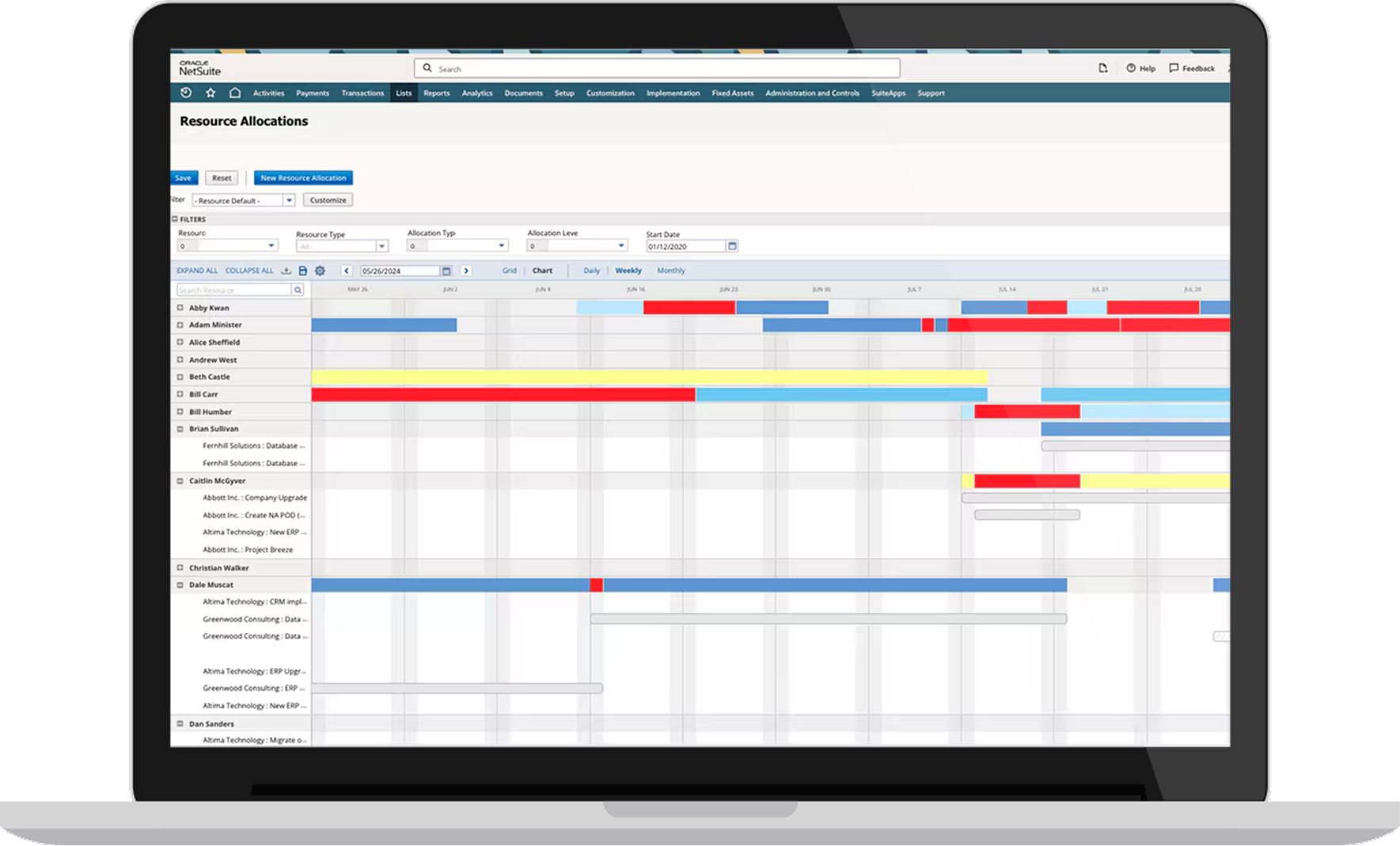
As consulting firms grow, so do their operational challenges. Acquiring more people, projects, and clients increases the chances of incurring unbilled time and expenses, resource misalignment, scope creep, and siloed data. NetSuite ERP for Consulting Firms manages the entire engagement lifecycle—from project estimates and staffing to delivery, billing, and reporting—in a single cloud solution. Real-time dashboards offer role-based visibility into important metrics, including utilization, profitability, and revenue. Automated workflows handle time sheets, expenses, and billing, while resource management matches the right people to the right projects based on skills, availability, and location. Built-in AI uncovers trends, flags potential issues, and delivers insights that help leaders strengthen their role as trusted client advisors.
Smarter Resource Management
The consulting industry is very different from the way it was 100 years ago, yet its core value proposition hasn’t changed. Clients still need trusted advisors who can solve complex problems. Delivering on that promise in 2026 means staying organized, listening closely, investing in necessary skills, embracing technology, and consistently delivering measurable value.
Consulting FAQs
What are the 5 C’s of consulting?
The 5 C’s is a concept that helps consultants understand a client’s current position before developing a strategy. The most frequently cited 5 C’s are company, customers, collaborators, competitors, and climate. The term may also refer to process best practices: clarify, collect, create, communicate, coach.
What is the golden rule of consulting?
The golden rule of consulting is best summarized as treating others as you would have them treat you. In practical terms, this means always acting in your client’s best interests, being honest and transparent, adding value, and practicing empathy.
What is the rule of 3 in consulting?
The rule of 3 is a communication principle popularized by McKinsey, that consultants are the most persuasive, memorable, and structured when they present exactly three reasons for a recommendation. The idea is simple: Three points are easier for executives to remember and act on than longer lists.