
Marketers are under constant pressure: Customers expect flawless experiences, regulators are amping up privacy rules, budgets are shrinking, data is scattered across systems, and AI is changing the game. Despite these challenges, businesses expect their marketing teams to produce compelling creative and hit ambitious growth targets every quarter.
Thriving in this environment isn’t easy, but it is possible—if marketing leaders focus their resources on the right priorities, simplify workflows, and leverage data for actionable intelligence. With the proper strategies, tools, and processes, teams can work in new ways to meet escalating demands and deliver effective campaigns that drive revenue.
The Rapidly Evolving Marketing Landscape
In recent years, the marketing industry has undergone one of the most significant transformations in its history. One of these seismic shifts has been the phasing out of third-party cookies—once the backbone of behavioral targeting—due to privacy concerns. Customers today are more discerning, with little patience for intrusive or irrelevant tactics, and they’re expressing a clear desire for greater transparency, authenticity, and meaningful value from brands. At the same time, governments around the world are strengthening privacy regulations, with the rules expected to get stricter in the coming years. This shifting landscape is pushing brands to overhaul their data strategies and measurement models and embrace first-party data and consent-first approaches so as to build and maintain trust.
Technology has also completely transformed the role of marketers, with many scrambling to keep pace with technological advancements. At the top of the list is AI, with 59% of global marketers saying AI-driven personalization and optimization is the most impactful trend shaping the future of the industry, according to a 2025 Nielsen survey. Indeed, AI helps marketers adapt campaigns in real time, anticipate user needs, and deliver tailored experiences at a scale and speed impossible just a few years ago.
Meanwhile, many marketing teams remain under-resourced, forcing business leaders to tighten budgets and demand clearer, quicker proofs of impact.
How to Address the Top 12 Marketing Challenges
It’s a pressure-cooker environment for marketing teams that must master rapidly evolving technologies, outpace competitors, and demonstrate real value, all while driving growth and developing stellar campaigns. Following are the top obstacles marketers face, along with strategies on how to overcome them:
-
Budget and Resource Limitations
Global uncertainty is causing businesses to rein in marketing budgets. More than half of organizations (54%) planned to cut ad spending, according to the 2025 Nielsen survey. Whatever the rationale—from supply chain issues to weaker consumer confidence—the result is the same: Marketers must do more with less.
To optimize their spend, marketers can focus spending on high-performing channels, leverage data to optimize campaigns, and implement marketing automation. They can also develop a strategic media plan that balances the performance of digital and traditional channels and experiments with low-cost, high-engagement tactics, such as user-generated content and influencer partnerships.
-
Demonstrating Value and ROI
Customers often interact using multiple channels, so assigning ROI to a single campaign or interaction can be tricky. Shifting from channel-specific metrics to a holistic measurement framework focused on business outcomes is crucial, yet only 32% of companies are measuring holistic performance, according to a separate 2025 Nielsen survey. Making the change entails developing business-aligned key performance indicators (KPIs), such as customer acquisition cost, lifetime value, retention rate, and contribution to revenue, rather than focusing only on tactical metrics like clicks and impressions. It also requires merging data into an integrated dashboard or analytics solution to support multitouch attribution models.
-
Developing the Right Strategy
In an environment marked by rapid change and constrained resources, it can be hard to build a strategy that drives results over time. What’s more, marketing leaders can struggle to execute their strategies, due to such challenges as team constraints (cited by 74% of marketing professionals) and limited manpower (69%), according to a 2025 RRD survey of marketing professionals.
Working with business leaders to define clear, shared goals, rather than chasing vague “brand awareness” and “engagement,” is advisable. Given resource constraints, working with strategic partners and external vendors is also helpful. Marketers can incorporate flexibility into planning by using data and feedback loops to test, learn, and pivot as conditions change.
-
Complying With Data Privacy Regulations
As lawmakers and regulators tighten privacy rules, marketers must reassess their approach to data use. Besides, the share of US consumers who are comfortable with companies using their personal data for advertising stands at only 14%, according to 2024 Statista research.
Best practices include developing privacy-first data policies; prioritizing consent-driven, first-party data gathered from email signups, loyalty programs, and other sources; and using aggregated or anonymized data and privacy-compliant attribution models to avoid regulatory violations. Ultimately, transparency about data collection and usage can become a competitive advantage, rather than a constraint.
-
Increased Competition
Companies must work harder than ever to stand out. Rising digital ad costs have intensified the fight for attention. Marketers can shift from broad, generic campaigns to value-driven positioning that highlights the brand’s unique identity and its customers’ needs. This may include focusing on niche segments and investing in storytelling. The goal is to avoid saturating the market with messaging and products that are too similar to competitors and instead focus instead on relevance, authenticity, and long-term value.
-
Recruiting and Retaining Top Talent
Hiring top talent is the biggest “people challenge” for 41% of marketing leaders, followed by identifying the best people and retaining top talent, according to a joint 2025 CMO survey by Deloitte, Duke University’s Fuqua School of Business, and the American Marketing Association.
To attract talent, companies should highlight their supportive cultures, flexible work arrangements, and career growth opportunities. Building a diverse talent pipeline through internships, referral programs, and agency partnerships can also expand the talent pool. Investment in training and upskilling helps boost retention and improve employees’ capabilities, both important benefits when technology and customer expectations change frequently and unexpectedly.
-
Rapid Shifts in Technology
In their quests for digital transformation, the vast majority (81%) of companies are struggling to keep pace with technological changes, according to a 2024 KPMG survey of executives, with more than half (56%) worried that they don’t have the budget to meet their tech needs. Marketing functions are particularly challenged by the need to continually master new platforms, keep up with evolving consumer behaviors and expectations, responsibly manage large volumes of data, and close skill gaps.
To maximize the value of technology investments, marketers should avoid chasing the latest tools, focus instead on strengthening their data infrastructure and governance, and adopt new systems that help meet defined marketing goals.
-
Channel Fragmentation
The explosion of marketing channels, ranging from social media and email to search engines and mobile apps, renders consistent messaging and effective attribution challenging. Indeed, executing productive cross-channel communication was the top challenge for retail and ecommerce marketers, according to a 2024 MoEngage survey.
Building successful omnichannel strategies starts with aggregating data across channels into shared dashboards so marketers can see the end-to-end customer journey. Using consistent messaging across platforms, implementing cross-channel orchestration tools, and tracking holistic KPIs related to lifetime value, multitouch attribution, and customer journey completion can also help.
-
Lead Generation and Customer Retention
Retaining customers is an ongoing challenge for marketers. Generating high-quality leads that convert into sales is equally difficult. The confluence of weak lead flow and volatile retention rates makes building reliable revenue streams increasingly tough.
Developing a structured lead-generation funnel with clearly defined stages and mapped-out nurture flows, along with personalized content and segmentation across channels, can boost lead quality and engagement. To enhance retention, companies can invest in loyalty programs and re-engagement campaigns—making sure they’re delivering consistent value. At the same time, tracking conversion and churn rates equips marketing teams with the insight they need to refine strategies based on data, not assumptions.
-
Enhancing Customer Experience
More than half (52%) of consumers say they stopped using or buying from a brand due to a bad experience with its products or services, according to a 2025 PwC survey, yet 70% of executives say customer expectations are evolving faster than their companies can accommodate.
To reverse this trend, companies should focus on the fundamentals of the customer journey, identifying where friction and frustration occur and improving the customer experience, for example, by simplifying online navigation or shortening customer-service wait times. Training front-line teams in empathy, problem-solving, and constructive communication, along with inviting customer feedback, goes a long way.
-
Misalignment With Sales
Marketing and sales can find themselves at odds, since the two functions may pursue different goals, metrics, and definitions of what qualifies as a solid lead, leading to frustration and unrealized revenue. Establishing dual ownership of the revenue journey by establishing a shared definition of a qualified lead, setting agreed-upon KPIs, and conducting joint pipeline reviews can foster greater understanding, collaboration, and sales growth.
-
Missing Key Software and Technology
Despite technological advances, many marketing teams still lack foundational software and are left to stitch together data from spreadsheets and legacy CRMs, therefore failing to take full advantage of available marketing automation capabilities. In fact, 62% of marketers said they use only half to three-quarters of the features in their marketing technology stacks, according to a 2025 SALESmanago survey, with 17% acknowledging their teams lacked the expertise needed to fully leverage these tools.
Marketers should map the end-to-end customer journey and identify the essential capabilities required at each stage, such as identity resolution, cross-channel orchestration, and unified customer data. Then, they can prioritize technology investments to close any gaps and elevate data-driven marketing performance.
Power Your Marketing Agency With ERP Software
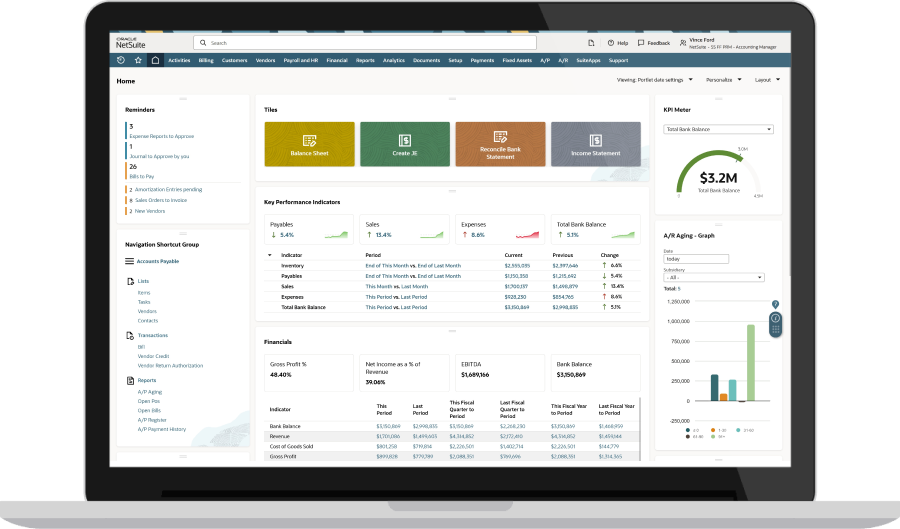
The sheer volume of operational and financial challenges can become overwhelming for marketing teams. NetSuite ERP for Advertising & Marketing Agencies helps ease marketers’ difficulties by consolidating project management, resource planning, and expense tracking into a unified cloud platform. With the ability to manage the full lifecycle from pitch to invoice in one system, marketing teams gain real-time visibility into project performance and campaign profitability, allowing them to make faster, more confident decisions. Ultimately, marketers can spend less time chasing down data and reconciling spreadsheets and more time on the kind of strategic and creative work that drives growth.
NetSuite ERP for Advertising & Marketing Agencies
The demands on marketers today are intense as they struggle to keep up with shifting rules, tame messy data, prove impacts on demand—yet still produce work that moves customers to act. Marketing teams that sharpen their priorities, close the gap between strategy and execution, and invest in the right systems and skills can stay a step ahead. The companies that view marketing challenges as catalysts for change will empower their teams to develop productive strategies that move the business forward.
Marketing Challenges FAQs
What are the big trends in marketing right now?
The big marketing trends today include the rise of generative AI and automation for personalization, content production, and media optimization; a major shift toward first-party data, as third-party cookies disappear and regulations increase; and an emphasis on omnichannel, journey-based experiences.
How do marketing challenges impact businesses?
Marketing challenges, including lean budgets, fragmented data, rapid tech change, and rising customer expectations, make it harder for a business to demonstrate marketing impact, retain customers, and grow. Other obstacles, like talent shortages and aging legacy systems, slow decision-making and limit a company’s ability to adapt, leaving the door open for more agile competitors to gain market share.
What are the seven principles of marketing?
The seven principles of marketing are:
- Focus on understanding customer needs.
- Use segmentation, targeting, and positioning to reach the right audience.
- Define a clear value proposition that differentiates offerings.
- Create integrated marketing across all channels for consistent messaging.
- Prioritize relationship marketing to build loyalty and long-term engagement.
- Uphold sustainability and ethical practices.
- Measure marketing performance.