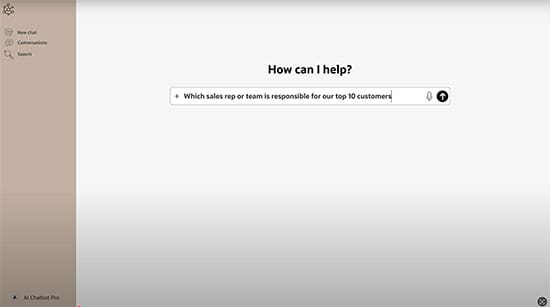
NetSuite 2026 Release 1 brings major advances in AI-native platform capabilities, enhanced REST web services, and new extensibility features across the SuiteCloud stack that empower both developers and business users. You’ll find production-ready integrations with commercial AI systems, like Claude and ChatGPT, through Model Context Protocol (MCP) and AI-powered assistance that accelerates SuiteScript development tasks. And 2026.1 closes SuiteTalk REST web services gaps, setting the stage for retiring legacy SOAP-based integrations.
AI takes center stage with three breakthrough capabilities
The NetSuite AI Connector Service brings natural-language interactions with NetSuite. NetSuite now integrates with leading AI platforms, including ChatGPT, Claude, and any other MCP-compatible system, through the new AI Connector Service. This scalable integration layer allows leading AI agents to securely access your NetSuite data and functionality using natural language prompts while fully conforming with NetSuite’s security model and role-based permission structure.
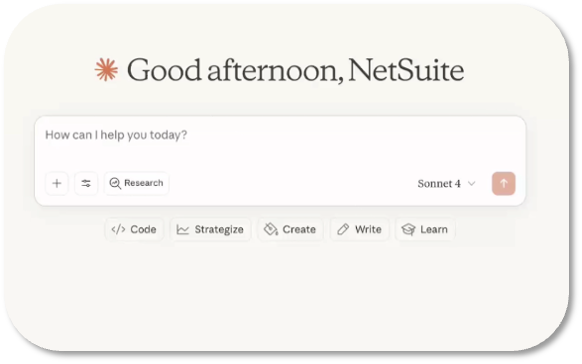
The connector exposes a rich set of tools through the MCP Standard Tools SuiteApp. Because the integration follows open standards, developers can support any MCP-compliant agent platform while relying on SuiteCloud’s proven security layer.
What this enables. Generative AI apps like Claude and ChatGTP are now direct interfaces with ERP functionality. AI systems can request NetSuite operations, such as data retrieval, transactional actions, and record creation, directly, while SuiteCloud Developer Network (SDN) Partners can build and monetize AI-powered SuiteApps that plug into this new capability without creating their own integrations.
SuiteCloud Developer Assistant: AI-powered development in VS Code and Cline
The SuiteCloud Developer Assistant introduces an AI-driven coding companion that integrates with Visual Studio Code via the Cline plugin. Developers can generate SuiteScript 2.1 code, including unit tests, using natural language prompts. The assistant also generates SuiteCloud Development Framework objects; explains or refactors existing code; and follows SuiteScript API standards, TypeScript definitions, and SDF schemas.
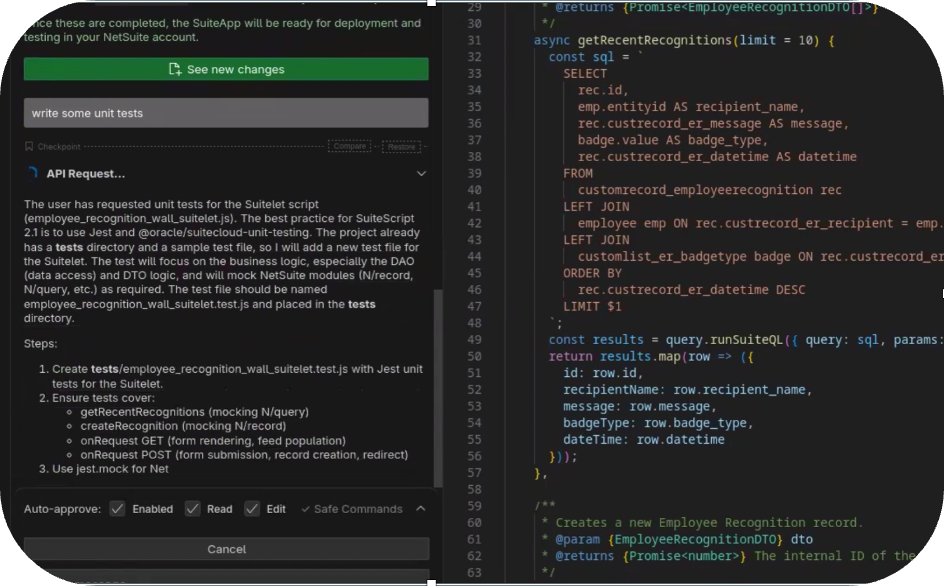
Benefits are immediate. New developers will be able to deliver high-quality code faster thanks to a short learning curve with SuiteScript, while veterans will find it easier to maintain and extend enterprise-scale SuiteApps.
SDF enhancements strengthen lifecycle management
Before un-deploy hook. SuiteApp developers can now execute custom logic immediately before an app is uninstalled. By configuring an sdf-installation-script in the application.xml file, developers can automate cleanup tasks, such as removing dependent records, files, and data, to prevent orphaned assets after an uninstall. This ensures a cleaner uninstall process, reducing support overhead and delivering an improved customer experience.
File permissions for .ss and .ssp files: SDF now supports explicit file permissions for. ss and .ssp files by using an XML permission tag, closing a gap where permissions set in the UI were not fully preserved in SDF projects.
Developers gain fuller control, better security auditing, and improved CI/CD workflows now that user and system permissions are tracked in source control.
SuiteScript adds a custom tool script type
The new Custom Tool Script Type allows developers to build tools that external AI clients can invoke through the NetSuite AI Connector Service. These scripts also support the N/log module and include UI support for listing and managing deployed tools through MCP.
REST APIs move to full parity with SOAP web services
A top NetSuite priority in the 2026.1 release is closing all remaining REST API gaps to support a smooth transition from SuiteTalk SOAP. These enhancements align SuiteTalk REST web services and APIs with industry benchmarks and let developers move away from integration solutions based on legacy SOAP protocols.
Homogeneous batch operations. Developers can now submit multiple same-type operations in a single REST call, which is ideal for large imports or mass updates. Batch operations will run asynchronously, reducing network overhead while improving throughput and performance.
Create-form operation. This new initialize-style operation lets developers prepopulate form fields. An example is creating an invoice from a sales order—now users need to add only specific required information. They can then submit the final record without manually recreating UI logic.
Attach and detach operations. REST APIs now support attaching and detaching records or files, easing common tasks such as document management, custom workflows, and integration logic.
SelectOptions operation. Developers can now retrieve the available options specified fields directly through REST, simplifying mapping within partner integrations, iPaaS platforms, and custom applications.
Learn More About What’s Coming in NetSuite 2026.1
These highlights represent a major evolution in how developers customize, automate, and integrate with NetSuite. Explore our Sneak Peek page or review the full release notes (opens in new tab) to dive deeper, and request your Release Preview (opens in new tab) test account to experience these capabilities firsthand.
Stay in the know
Want to hear about NetSuite products? Sign up to get our latest product news, expert webinars, local events and more delivered straight to your inbox. Subscribe now (opens in new tab).
The preceding is intended to outline our general product direction. It is intended for information purposes only, and may not be incorporated into any contract. It is not a commitment to deliver any material, code, or functionality, and should not be relied upon in making purchasing decisions. The development, release, timing, and pricing of any features or functionality described for Oracle’s products may change and remains at the sole discretion of Oracle Corporation.