
In an industry where customer attention and loyalty shift with the social media winds and AI has the potential to reshape campaigns in real time, digital transformation is more than a trend—for marketing organizations, it’s a strategic imperative that allows teams to turn reactive, instinctive, and siloed processes into integrated, data-driven engines of revenue. The marketing agencies and in-house teams that lead the charge to leverage unified data, automation, and cloud-based enterprise systems can redefine customer journeys and relationships, boost efficiency and cost savings, and beat out competitors in a hypercompetitive market. Meanwhile, those that fail to get on board risk irrelevance.
What Is Digital Transformation in the Marketing Industry?
Digital transformation in the marketing industry is the strategic integration of data, systems, and processes to improve how brands understand, reach, and engage current and prospective customers. Digital initiatives can guide marketing operations and customer experiences toward becoming more personalized, measurable, and agile.
Digital transformation in marketing represents an evolution from traditional, siloed campaigns to always-on, omnichannel programs fueled by data, analytics, and automation throughout the customer journey. Common technologies include customer data platforms, AI, CRM, and marketing automation. Although approaches to digital transformation vary by organization, typical goals aim to personalize content at scale, gain and act on real-time insights, and continually improve performance in alignment with overall business strategy.
Key Takeaways
- Digital transformation in marketing refers to the use of digital tools, data, and processes to fundamentally change operations.
- Data analysis, often performed in real time, can uncover applicable and measurable insights into messaging, offers, and customer experiences.
- Pursuing digital change isn’t a fad; customer expectations, competitive pressures, and technology advances are steering marketing in this direction.
- Understanding the core aspects of digital transformation—along with its benefits, challenges, and best practices—positions companies to succeed in these efforts.
Digital Transformation in Marketing Explained
Digital transformation in marketing marks a shift from traditional, channel-specific processes to an integrated, technology-enabled approach that spans the end-to-end customer journey. It involves rethinking how a company attracts, converts, and retains customers by using digital tools, such as analytics platforms, marketing automation, social and search advertising, and customer data platforms. Instead of relying on intuition or one-off campaigns, marketers use real-time data to increase pertinence and constantly test and refine messaging, offers, and experiences.
The primary aim of marketing’s digital transformation is personalization at scale, whereby a brand can tailor content, timing, and channels to individual customer preferences and behaviors. Technologies, including AI, machine learning, and predictive analytics, make this possible by helping marketers segment audiences more easily and quickly, recommend products or content, and activate automated journeys based on user actions—say, browsing products online or abandoning a cart. Digital transformation efforts can increase relevance for customers while improving marketing efficiency and return on marketing spend for the business.
Digital transformation can also change how the marketing function operates and connects to the rest of a business. When the marketing team shares unified customer data, goals, and workflows with sales, product, and customer service teams, these groups can collaborate on shared aims, such as boosting customer lifetime value (CLV), customer retention, or customer experience quality. This, in turn, elevates marketing from a support function focused mainly on promotion to a strategic growth partner with the ability to influence product innovation, customer experience, and business growth.
Why Are Marketing Organizations and Agencies Pursuing Digital Transformation?
Digital transformation—and the large volumes of data it generates—is all but mandatory for marketing functions and agencies to reach customers, compete effectively, and quantify marketing’s impact. For most businesses, there’s little choice in the matter: In the digital era, maintaining the status quo with traditional, siloed, or instinct-based approaches to marketing can result in inefficiency, increased costs, weakened customer relationships, and eventual erosion of market share. The primary drivers of digital transformation in marketing include:
- Shifting customer expectations: Today’s customers have grown accustomed to the level of convenience and customization they get from leading digital-first brands. As a result, they expect all brands to deliver seamless, personalized, and timely interactions across a range of channels, including search, social media, email, apps, websites, and real-life experiences. Digital transformation equips marketers with the tools and processes required to deliver the right messages, offers, and support at the right time to the right customers.
- Increasing competition: Marketing teams have always been under pressure to outperform rival brands, which today include startups and digital-first companies not weighed down by legacy systems and processes. When competitors are using digital tools and data to target audiences precisely, evaluate spend continuously, and measure results in detail, marketing teams must invest in similar capabilities or risk losing customers and market share to more efficient, digitally equipped contenders.
- Evolving technology: Advances in data analytics, AI, automation platforms, and advertising technologies continue to expand the art of the possible for marketing, allowing organizations to uncover deeper insights and create test-and-learn campaigns cost effectively at scale. But it’s sometimes easier said than done: Just 47% of marketers have a clear understanding of how to use AI in their strategic decisions, according to a 2025 HubSpot survey, and only 48% have a clear understanding of how to measure the impact of AI on their marketing strategy.
Core Areas of Marketing Digital Transformation
Digital transformation can revolutionize nearly every aspect of marketing. And though this portends seemingly limitless opportunities for improvement, it can also be overwhelming. Understanding the following six focus areas of digital transformation in marketing is essential to determining where your organization should invest its time, budget, and talent to stay competitive and relevant.
-
Emerging Technologies
Knowing how marketing automation, AI, chatbots, augmented and virtual reality, and advanced analytics can be used to create more targeted, engaging campaigns is vital. For example, a retailer might provide AI-driven product recommendations in email and onsite searches, while an enterprise software company might use marketing automation to translate customer leads into acquisitions with email sequences triggered by behaviors like webinar attendance. Understanding emerging technologies (and their importance to the marketing function) and staying abreast of new tools, trends, and vendors is a fundamental aspect of any successful digital transformation effort. Jumping headfirst into implementing a hot new tool without knowing its real value to the organization can result in costly failures; on the other hand, missing out on a potential game-changing system can put marketers at a disadvantage.
-
Data Integration
Clean, up-to-date, integrated data is the foundation upon which a marketing team’s digital transformation efforts are built. Integrating data sources often involves bringing together information from disparate origins—CRM systems, websites, ecommerce platforms, social channels, offline touchpoints—to establish a unified view of the customer. For instance, a restaurant chain that combines transaction data, loyalty activity, and email engagement can determine when a customer is likely to visit again and issue them tailored offers at the right moment, instead of sending out generic blasts that yield lesser returns.
-
Personalized Customer Experiences
One of the most powerful marketing applications of digital technology is the ability to customize messages, content, offers, and timing to suit individual customers or customer segments. Consider how an ecommerce retailer’s product recommendations based on transactional and behavioral data, or a streaming service’s content suggestions based on viewing history, can boost relevance, conversion rates, and engagement. Some brands take this a step farther by empowering customers to customize products, such as Nike’s “Nike By You” functionality that allows shoppers to design their own shoes.
-
Frictionless Customer Journeys
Mapping each phase of the customer journey from discovery to post-purchase is the first step to a smooth customer experience. From there, marketers work to remove obstacles, delays, and bungled handoffs across channels. A luxury department store, for example, wants to make it easy for a customer shopping on Christmas Eve to move from a social media ad to a mobile-optimized product page to one-click checkout and use a digital wallet for in-store pickup or same-day delivery. Meanwhile, a B2B SaaS provider’s ideal customer journey would allow buyers to self-serve demos, sign up online, onboard using guided tools and tips, get on-demand support, easily upgrade their software, and refer peers. In both examples, integration between CRM systems and marketing automation tools makes sure vital data follows the customer to guarantee a seamless experience.
-
Real-Time Metrics and Reporting
Implementing digital systems that support the ongoing delivery of key metrics and reporting allows marketers to monitor campaign performance, channel effectiveness, and customer behavior in real time rather than waiting for end-of-month reports. This capability supports better decision-making and greater agility. A brand running a multichannel product launch, for instance, can monitor metrics to understand how ads, keywords, or emails are performing and quickly shift funding or creative efforts toward what’s working best.
-
Back-Office Automation
Opportunities for business automation abound in marketing, particularly when it comes to back-office tasks that eat up time and resources. Using software to automate repetitive tasks, such as campaign setup, approvals, budget tracking, invoicing, and reporting, not only increases the efficiency and accuracy of marketing operations, but it frees up marketing professionals to focus on strategy, engagement, and creativity. Case in point: A marketing agency may automate time tracking, billing, and recurring performance reports for clients, thereby reducing errors, increasing the speed of reporting, and giving team members time for higher-value activities, such as campaign development and testing.
Advantages and Drawbacks of Digital Transformation in the Marketing Industry
There’s no magic bullet for digital transformation; it’s a significant and continuous undertaking often accompanied by considerable challenges. It’s important to set realistic expectations and understand both the advantages and drawbacks of digital transformation. By doing so, leaders will be prepared to justify digital investments and mitigate the risks of costly missteps. In certain situations—such as when there’s a weak data foundation, lack of skills, or ineffective planning—the downsides may outweigh the benefits of digital transformation, at least temporarily. Let’s take a closer look at the advantages and challenges to anticipate.
Advantages of Digital Transformation
Digital transformation in marketing can empower brands to reach wider audiences more economically, analyze data to target customers more precisely, and personalize experiences. Such actions often result in improved engagement, higher conversion rates, and stronger returns on marketing investments. Consider a hotel chain that connects its website, app, and email so it can send tailored offerings based on a customer’s browsing, loyalty, and stay history. It may also deploy real-time analytics in an effort to understand which campaigns perform best and then shift spending accordingly. Some best practices for achieving the full value of digital transformation efforts include starting with clear business goals (such as lowering acquisition costs or increasing CLV); establishing a robust data and privacy framework; and rolling out new tools in phases so that marketing teams can learn, experiment, and fine-tune performance over time.
Challenges and Drawbacks of Digital Transformation
Digital transformation can require significant up-front investment and complex integration work. It also may necessitate closing talent and skills gaps, addressing cultural resistance to change, and alleviating risks related to data quality, protection, and privacy compliance. The challenges of digital transformation are compounded when organizations buy individual tools and technologies before developing a strategy, when they overwhelm teams with multiple new systems, or when they neglect data governance. Doing everything, everywhere, all at once is a mistake that can lead to inconsistent data, wasted resources, and degraded customer experiences. Some recommendations for averting these issues include getting executive sponsorship; bringing together marketing, IT, cybersecurity, and legal teams early and often; focusing on a few high-impact use cases to start; and investing in training so marketers can use new automation and analytics tools with confidence.
Tips for Developing a Marketing Digital Transformation Strategy
When it comes to designing a digital transformation strategy, it’s essential for marketing leaders to align technology investments with measurable business outcomes, avoid wasteful spending on the wrong tools, and develop team capabilities that deliver a sustained competitive advantage. Without a solid strategy in place, marketing organizations may inadvertently adopt disjointed technologies, limit buy-in and adoption, create siloed data, and devise processes that fail to scale or deliver benefits. The following six best practices can help:
- Invest in employee development and training: Employee development and training equip marketers with essential skills in AI, data analytics, and automation—all three named as top requirements for digital transformation initiatives in a 2025 Robert Half survey. Agencies and marketing organizations can offer hands-on workshops, e-learning, and cross-functional training to help their teams leverage new tools and processes effectively to cut down on errors and accelerate returns.
- Connect digital transformation objectives with business goals: Aligning digital transformation aims with business strategy helps make sure marketing efforts directly support company priorities, such as revenue growth, customer retention, or cost reduction, rather than pursuing technology for technology’s sake. If a strategic business goal is to boost CLV, for example, digital transformation may focus on CRM integration and personalization tools that track and nurture customer relationships and leads.
- Consider which improvements would best serve clients: Making customer needs the North Star for digital transformation allows marketing organizations to prioritize investments and capabilities that ease pain points and differentiate services. An ecommerce retailer might focus on automation to cut back on cart abandonment, while a manufacturer might emphasize lead-scoring integrations.
- Foster a culture of innovation and adaptation: Digital transformation is about more than implementing the latest technologies; it demands shifts in mindset and behavior, as well. Forward-looking marketing leaders will encourage experimentation and the use of integrated, agile workflows so teams can adapt to changes in platforms and consumer behavior. Celebrating digital accomplishments, such as a successful AI campaign pilot, and eliminating silos using cross-team methodologies can further establish a digital-friendly culture.
- Put your data to work: Today’s marketing teams can engage with an abundance of data to drive digital transformation—making sure that data is digital-ready is table stakes. Unifying data from CRM, website analytics, and ad platforms is critical for effective targeting and measurement. In many cases, modern enterprise systems, such as CRM software, can centralize customer profiles for personalized journeys, turning raw data into actionable segmentation that boosts conversion rates.
- Audit your tech stack: Layering digital tools on top of a legacy technology environment is a recipe for confusion and inefficiency. Businesses should first assess their tech stack, looking for redundancies, integration gaps, and underused tools; this step will facilitate consolidation to boost efficiency and cost savings. Mapping current systems against digital transformation goals is a good place to start; then, the business can develop a plan to replace legacy systems with cloud-based, API-connected platforms with scalable modular architectures that will serve it well over time.
How Does ERP Software Support Digital Transformation?
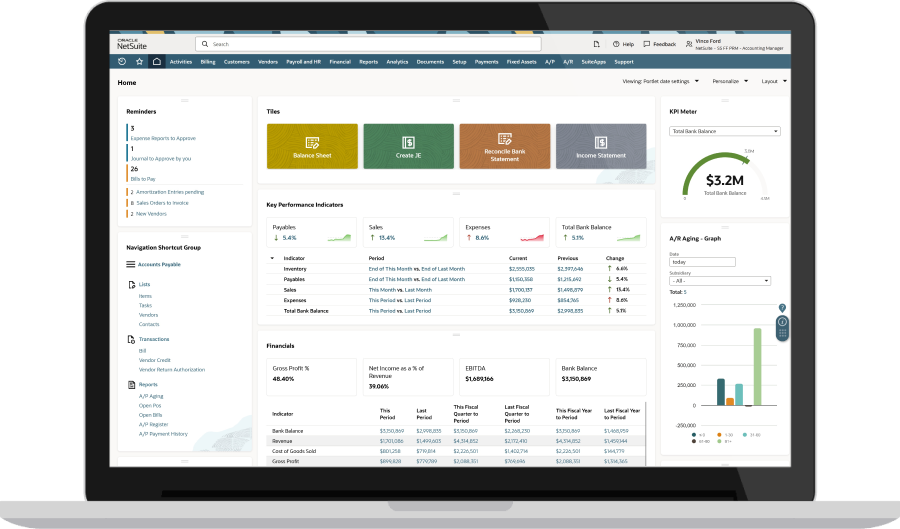
NetSuite ERP for Advertising & Marketing Agencies integrates project management, financials, and analytics into a single cloud-based platform, allowing marketing agencies and departments to replace siloed tools for real-time visibility throughout the customer lifecycle from pitch or discovery to sale and beyond. Key features including marketing automation, campaign management, and resource allocation. The unified platform’s holistic view of clients and campaigns supports personalized campaigns, automated lead nurturing, accurate ROI tracking, and smoother marketing operations that align with sales and profitability goals.
NetSuite CRM, meanwhile, automates multichannel campaigns, lead scoring, and customer segmentation based on demographic, behavioral, and transactional data. It also integrates directly with sales systems for easy handoffs and real-time reporting on program performance. Marketing leaders will also appreciate its project management, resource assignment, expense tracking, and complex billing model capabilities that help keep campaigns on time and budget.
Manage Finances With NetSuite ERP for Advertising & Marketing Agencies
Customer behavior and demands, emerging technology advances, and market competition are all shifting at an ever-increasing pace. Developing and implementing a digital transformation strategy is the only way modern marketing teams and agencies can keep up with these changes. Businesses that take a thoughtful approach—understanding which digital technologies make sense for their organization, putting customers at the center of their efforts, establishing a solid data foundation, fostering a digital-savvy culture, and aligning digital initiatives with business goals—will see the greatest returns on their investments.
Marketing Digital Transformation FAQs
What are the four types of digital transformation?
Four types of digital transformation are business process transformation (to improve workflows, cut costs, reduce errors, and hasten execution); business model transformation (to change how a company creates, delivers, and captures value); domain transformation (to move into new markets or industries); and cultural/organizational transformation (to adopt new methodologies and train employees to work in new digitally enabled ways).
What are the three stages of digital transformation?
The three stages of digital transformation are commonly defined as modernization, enterprisewide transformation, and new-business creation.