
Shrinking packaging. Curbing energy consumption in warehouses. Tracking greenhouse gas emissions in the supply chain. Preparing climate disclosures for investors. Previously treated as peripheral corporate social responsibility concerns, these efforts have become central priorities for businesses amid rising regulatory requirements, investor scrutiny, and consumer pressure. In fact, 67% of C-suite leaders surveyed in 2025 by Forbes Research called sustainability a top-three business priority, up from just 22% three years earlier. Part environmental expert, part data analyst, and part business strategist, sustainability leaders have become essential players—inspiring change and managing companies’ impact on the planet while identifying opportunities to lower costs and propel business growth.
What Is a Sustainability Professional?
A sustainability professional refers to a leader who helps an organization minimize its environmental impact while improving long-term business performance and regulatory compliance. In working to meet companies’ environmental, social, and economic goals, these professionals may be responsible for a range of tasks, including measuring greenhouse gas emissions, developing decarbonization strategies, analyzing climate-related risks, managing sustainability data, overseeing compliance with environmental regulations, and finding ways to lower costs by using energy, materials, and other resources more efficiently.
Key Takeaways
- The role of sustainability leaders has shifted from primarily managing corporate reputation and making climate pledges to helping companies navigate regulations, identify business risks, and lower costs.
- Demand for sustainability professionals is growing because companies increasingly see the work as a driver of long-term profitability.
- Retail and information technology companies have seen especially rapid growth in sustainability hiring, fueled by customer expectations and demand for transparency in the supply chain.
- AI-powered forecasting and analytics tools help sustainability leaders identify trends, flag risks, and uncover ways to limit energy use and refine supply chain operations.
Sustainability Professionals Explained
Sustainability professionals are playing a very different role inside companies today than they were a decade ago. Rather than focusing primarily on making climate pledges or managing the company’s reputation, many are now tasked with helping companies navigate increasingly complex climate regulations, identify long-term business risks, and discover ways to save money by cutting down on waste.
The profession has also become significantly more technical and data-driven, with employers seeking candidates who are experts in emissions accounting, climate disclosure frameworks, environmental policies, and sustainability analytics. As a result, sustainability professionals are now embedded in core business functions, guiding resource allocation, shaping supply chain strategy, steering product design, and influencing financial planning.
Why Is There Demand for Sustainability Professionals?
Demand for sustainability professionals is strong in 2026—and not just because customers, investors, regulators, and other stakeholders are putting increased pressure on companies to track emissions and manage climate risks. Companies are increasingly looking to hire workers with green skills because they know sustainability initiatives can deliver tangible business benefits, from lowering energy costs to minimizing waste. In fact, 88% of companies globally view sustainability as a potential force behind long-term value, and 25% say higher profitability is their top sustainability opportunity for the next five years, according to a 2025 Morgan Stanley survey.
This demand for workers with sustainability-related skills is outpacing the supply of qualified talent. A 2025 LinkedIn report shows that the rate of growth in green hiring is almost twice as fast as the increase in the number of workers with green skills. As sustainability becomes more deeply integrated in a variety of business strategies, companies are hiring fewer broad environmental evangelists in favor of targeting more specialists who can zero in on lowering costs, managing regulatory risk, and improving operations.
Common Sustainability Professional Roles
Although responsibilities vary by industry, the roles of sustainability professionals typically fall into a few common categories, all aimed at helping businesses manage environmental impact, regulatory requirements, stakeholder expectations, and long-term business resilience.
Sustainability Specialists and Managers
Sustainability specialists and managers are among the most common sustainability-focused roles at midsize and large companies, particularly in industries with significant environmental footprints, such as energy, technology, and consumer goods. These professionals oversee an organization’s daily sustainability initiatives and environmental goals while helping to integrate sustainability into broader business operations and long-term strategy. Their responsibilities may include working with other department leaders to coordinate emissions-reduction efforts, track sustainability metrics, or implement energy-efficiency and waste-reduction projects.
ESG Analysts
As companies face mounting pressure from investors, regulators, and customers to provide reliable sustainability data and climate risk disclosures, environmental, social, and governance (ESG) analysts have become more important not only for compliance purposes, but also for identifying operational risks and protecting a brand’s reputation. ESG analysts help businesses track sustainability performance, prepare disclosures for investors and regulators, evaluate climate-related financial risks, and monitor environmental metrics throughout a company’s operations and supply chains.
Environmental Compliance Specialists
Failing to comply with environmental regulations and permitting requirements is a common—and costly—problem. In fiscal year 2025, the US Environmental Protection Agency finalized more than 2,100 civil enforcement cases and assessed more than $1.2 billion in civil penalties and criminal fines related to environmental violations. Environmental compliance specialists may conduct regular audits to avoid fines, as well as prevent operational shutdowns, lawsuits, and reputational damage. These professionals are especially prevalent in heavily regulated industries, such as transportation, construction, and utilities, where companies must comply with complex, constantly evolving federal, state, and international requirements related to emissions, hazardous waste, chemical safety, water quality, and more.
Corporate Responsibility Directors
Corporate responsibility directors typically oversee how a company’s broader social, ethical, and environmental commitments connect with its public identity and long-term corporate strategy. These leaders often manage projects related to corporate philanthropy, ethical sourcing, and employee volunteer programs, and they make sure the company’s sustainability messaging aligns with its business practices. Sought-after at large corporations and consumer-facing brands, these directors frequently work with executives and communications teams to shape sustainability priorities, respond to reputational risks, and lead efforts to maintain public trust amid growing scrutiny of corporate behavior.
What Are the Responsibilities of Sustainability Professionals?
The tasks sustainability professionals take on vary, depending on the company and industry, but most focus on helping their businesses measure environmental impact and manage regulatory risk. The most common responsibilities include:
- Collecting, analyzing, and reporting data related to greenhouse gas emissions, energy use, waste, and water consumption.
- Conducting lifecycle assessments to evaluate the environmental impact of products, services, or processes from raw material extraction through disposal.
- Making sure the company remains compliant with evolving environmental laws, regulations, and reporting requirements.
- Preparing ESG reports and climate disclosures for investors, regulators, customers, and other stakeholders.
- Identifying ways to cut costs, emissions, energy use, waste, and overall resource consumption.
- Coordinating companywide sustainability initiatives, including decarbonization efforts and energy management, in various departments, such as operations, finance, and legal.
- Working with suppliers and business partners to reduce environmental impacts in the supply chain.
- Managing sustainability goals and performance metrics to help companies track progress toward hitting environmental targets over time.
- Assessing climate-related risks and helping companies develop long-term sustainability and resilience strategies.
6 Tips for Sustainability Professionals
Passion for sustainability alone is no longer enough to succeed in the field. Sustainability professionals are expected to balance environmental goals with business realities, regulatory pressures, and operational constraints, all amid growing scrutiny from stakeholders. These six tips can help sustainability professionals translate ambitious climate goals into measurable results.
-
Keep Your Skills Sharp
As sustainability becomes more data-driven and integrated into core business strategy, companies increasingly expect leaders in these roles to have a broad mix of technical and analytical skills with the ability to translate sustainability goals into solid business outcomes. Key skills to strengthen include:
- Analysis and strategic thinking: A major part of the job includes interpreting emissions inventories and energy-use data, as well as identifying business risks and helping leaders make smarter long-term strategic decisions related to their resource use and operations.
- Stakeholder communication: Strong communication skills are essential for building support for sustainability efforts within the company, translating complex environmental data into clear business recommendations, and reporting on performance outcomes.
- Leadership: Sustainability professionals need to know how to take charge of motivating colleagues, aligning sustainability with company priorities, and turning ambitious goals into measurable action.
- Problem-solving: Applying creative thinking and problem-solving skills is necessary as leaders take into consideration challenges that can include operational issues, budget constraints, and political pressures to reach sustainability goals.
- Technical and subject-matter expertise: Companies increasingly seek candidates with knowledge in specific areas, such as carbon accounting, ESG reporting, climate risk analysis, environmental regulations, and supply chain sustainability.
-
Avoid Greenwashing Initiatives
Consumers, investors, and regulators are becoming more adept at spotting “greenwashing”—when companies exaggerate, oversell, or market themselves as more environmentally responsible than they really are. So remember to ask the hard questions that keep the company honest: Can we verify this claim? Is the company measuring its real impact? Does the environmental initiative meaningfully move the needle? Companies that prioritize transparency and show measurable progress are far more likely to earn credibility than those that make vague promises or roll out flashy marketing campaigns with little substance.
-
Foster Cross-functional Relationships
It’s up to sustainability leaders to convince teams that have different priorities, pressures, and ways of thinking that sustainability is a business advantage, rather than an obstacle or a box to check. That requires building strong relationships throughout the company and showing a willingness to listen and learn about the needs of each department before pushing for change. And as they build internal bridges of support, the best sustainability leaders also keep their eye on connecting climate initiatives to the goals that matter most to all departments: saving money, engaging employees, increasing customer demand, and sparking innovation.
-
Set and Measure Impact Progress
Ambitious goals may go nowhere if companies aren’t closely tracking whether projects are working. Top-notch sustainability professionals understand the importance of measuring progress, both for accountability and to discover what generates impact. That could involve tracking key performance indicators related to emissions reductions, waste diversion rates, water use, and supplier compliance with standards, for example. Increasingly, companies are using automation, AI, and data analytics tools to get a real-time view of their environmental performance, identify trends, and flag areas that need more attention. ERP platforms, for example, can consolidate data from operations, the supply chain, and finance to automatically track resource consumption, while AI-powered analytics can reveal patterns—such as unusual energy usage or underperforming suppliers—that might otherwise go unnoticed. Measuring progress also creates credibility with stakeholders. Transparent reporting, even when the results aren’t perfect, often builds more trust than glowing success stories that gloss over the challenges.
-
Stay Informed
Regulations are constantly evolving, investors’ expectations often shift, and climate risks can intensify quickly, making a strategy that looked innovative a few years ago suddenly appear outdated. That’s why successful sustainability professionals make continuous learning part of the job. Keep up with policy changes, industry research, emerging technologies, and the latest climate science to help the business anticipate challenges. Attend conferences to compare notes with peers, participate in webinars and professional forums, listen to experts, and regularly read sustainability reports, academic research, industry publications, and regulatory updates to stay informed.
-
Consider Joining a Professional Association
While sustainability can be exciting and gratifying work, it can also feel isolating, especially for professionals trying to shape change inside companies that are still wrestling with their priorities. By joining a professional association, leaders can gain a valuable sense of community, keep on top of industry changes and certifications, build relationships, and perhaps even pursue mentorship opportunities. Besides, hearing how other businesses are tackling similar challenges can spark new ideas that help you avoid common mistakes and allow you to stay energized in a field that requires persistence and optimism.
Does My Business Need a Sustainability Specialist?
The short answer: most likely. As companies face growing pressure from customers, regulators, investors, and employees to demonstrate strong environmental and social impact, many are finding that sustainability can no longer be handled as an occasional responsibility tacked onto someone else’s job. In fact, 89% of business leaders participating in the Forbes survey say they plan to increase their sustainability budgets, with many survey-takers citing investor expectations and business outcomes as the factors driving their environmental efforts. And let’s face it, the CEO may not have time to take on the many responsibilities of the role: tracking emissions, navigating disclosure requirements, managing sustainability in the supply chain, reducing waste, pursuing energy efficiency, and more. Most businesses benefit from having a dedicated specialist who can help translate a company’s goals into a coherent strategy that will present concrete results.
Industries That Benefit from Sustainability Professionals
While nearly every sector now employs sustainability talent, some industries are seeing especially strong demand due to strict regulatory requirements, complex supply chains, or heightened public scrutiny. Every industry hired more sustainability professionals between 2014 and 2024, but the highest growth took place in retail and information technology, where demand for talent surged by more than 1,000% in the decade, according to a 2025 Deloitte report.
Yet, the reasons for seeking specialists differ. For retailers and consumer brands, sustainability has become closely tied to customer trust, with shoppers wanting to know where products come from, how they’re made, and whether companies are living up to their environmental promises—pressures that have made sustainable practices in the apparel industry a prominent example of the push to rethink sourcing and packaging, minimize textile waste, and improve labor conditions. Meanwhile, for technology companies, the explosive growth of AI, cloud computing, and data centers has brought renewed attention to energy use and resource consumption, requiring teams to balance their ambitions for growth with commitments to energy efficiency and emissions reductions. Similar pressures are emerging in other industries—banks assessing climate-related financial risks, manufacturers rethinking supply chains, hospitals cutting waste—making sustainability expertise a valuable asset in a wide variety of fields.
How ERP Software Enables Sustainability Success
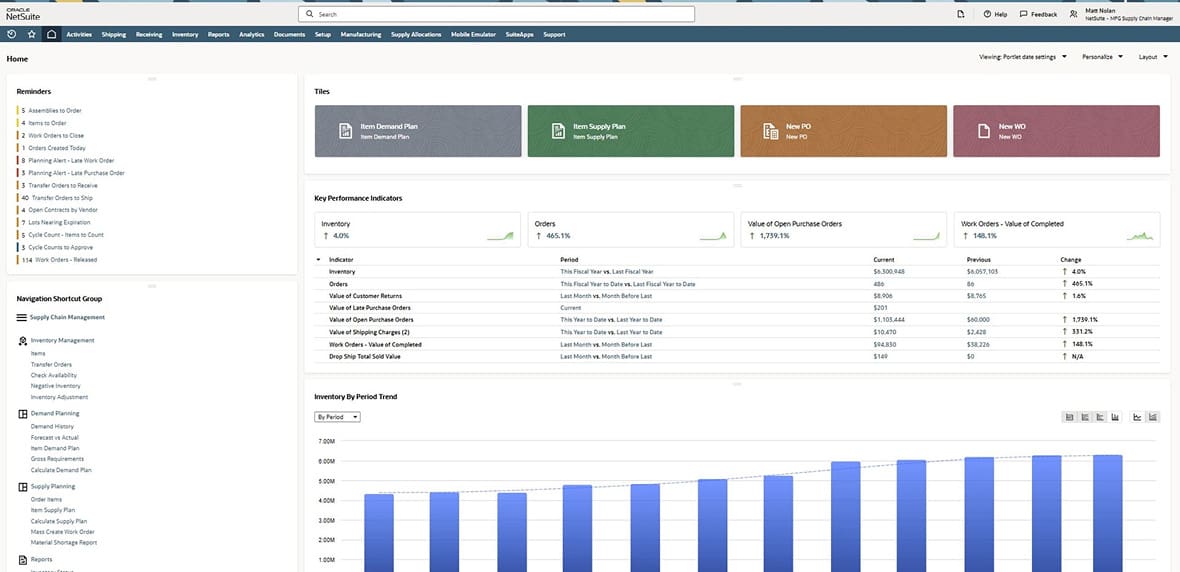
Sustainability professionals need to track emissions, resource consumption, supplier performance, and regulatory compliance—but when that data lives in multiple systems, monitoring progress gets complicated. NetSuite ERP brings together information from finance, inventory, operations, and the supply chain into a single platform. With real-time visibility, sustainability teams can monitor resource usage, identify waste reduction opportunities, and measure progress toward environmental goals. AI-powered analytics helps spot trends and inefficiencies, and NetSuite Supply Chain Management provides insights into sourcing and supplier relationships. Together, these capabilities help turn sustainability goals into operational improvements and better decision-making.
NetSuite Supply Chain Management Solutions
Today’s sustainability professionals are taking on the broader strategic work of helping companies make smarter decisions about how they use resources, manage supply chains, comply with regulations, and prepare for a future shaped by shifting market expectations and new climate realities. Whether a business is trying to lower costs or satisfy stakeholders, sustainability expertise can provide a valuable competitive advantage. As companies continue to integrate sustainability into everyday operations and strategic planning, sustainability leaders are playing an integral role.
Sustainability Professionals FAQs
What are the five Cs of sustainability?
There’s no single standard, but one common framework uses customer, company, community, cost, and circularity, which covers stakeholder value, corporate responsibility, local impact, financial viability, and waste reduction. Another version emphasizes consciousness, conservation, community, commerce, and culture, which brings environmental awareness and cultural values more to the forefront.
What are the seven pillars of sustainability?
In business, the most widely recognized framework is the three pillars of sustainability: environmental, social, and economic or financial. A contemporary framework expands this concept into seven pillars: circular economy and sustainable materials; climate action and renewable energy; green innovation and clean technology; waste and resource management; sustainable consumption and behavior change; governance, policy, and ESG alignment; and ecosystems, biodiversity, and water security.
What are sustainable development goals?
The sustainable development goals are 17 global goals adopted by the United Nations in 2015, which are designed to address major social, economic, and environmental challenges by 2030. Though they’re not legally binding, they provide a widely used framework for governments and businesses to follow to gear their sustainability efforts toward shared global priorities covering a wide range of issues, including poverty and hunger reduction; clean water and sanitation; affordable, clean energy; sustainable communities; and responsible consumption and production.