
Few customers decide to leave their insurer on a whim. Signs that a policyholder may be drifting—a subtle coverage downgrade or request for a payoff quote, for example—appear long before they reject a renewal notice. Actively watching for and acting on indicators like these go a long way toward retaining current customers, which, by any measure, is far cheaper than finding new ones. The 12 strategies in this article help insurance businesses hold on to more of the customers they’ve already earned.
What Is Customer Retention in Insurance?
Customer retention in insurance is the practice of keeping existing policyholders from canceling or switching to a competitor. Unlike a one-time sale, retention compounds; each year a policyholder stays deepens both the relationship and the revenue it generates.
Key Takeaways
- In insurance, customer retention is measured at renewal, but that’s not where it’s won.
- Customer loyalty in insurance rests on five main drivers, only one of which is the price on the bill.
- A premium increase doesn’t have to cost a customer if it’s explained in advance.
- Machine learning models trained on policy, claims, and service history can find at-risk accounts early.
Insurance Customer Retention Explained
Insurance is a unique industry: The products—life and health coverage, annuities, and auto, home, and other policies that protect a household’s everyday risks—are intangible, and customers can go years without using them. But then a premium increase takes them by surprise. Or the unfortunate day comes when they have to file a claim, and processing is fraught with mistakes and delays. Either scenario could put customer retention at risk if the business hasn’t consistently provided a good customer experience all along: phone calls promptly returned, bills clearly explained, proactive notification about an upcoming change, or a post-claim check-in to touch base.
That said, equating retention with satisfaction is a dangerous assumption. A customer can be thrilled with how a claim went and still leave over a renewal quote, or they might grumble about a bill yet stay for a decade. Most often, though, loyalty fades gradually. A book of business isn’t held together by any one transaction going well—it’s the cumulative sense that the agency is in the customer’s corner.
Why Customer Retention Matters in Insurance
The economics of insurance are unkind to customer churn. First, winning a new policyholder is costly. For property and casualty insurance, commissions and acquisition expenses consume 10 to 25 cents of every premium dollar, and for life insurance as much as 80 cents of the first year’s premium, according to McKinsey. Costs include the price of the lead, quote, underwriting, and onboarding. Retaining policyholders through subsequent renewal periods helps insurers recover that upfront investment and improve the relationship’s lifetime value.
Retention efforts are also critical amid softening premium growth across property and casualty, life, and group lines as competition intensifies. When rate increases no longer lift revenue on their own, keeping customers from being swayed by competitors chasing them with promises of easy quoting and better pricing becomes a priority. AI tools have also made it easier for customers to seek out other companies on their own.
Retaining customers matters for yet another reason: They tend to buy more, refer more often, call less, and price shop less. That’s the essence of customer lifetime value (CLV)—the total profit a customer generates across the full arc of the relationship. An insurance business that raises retention by a few points gains years of tenure, multiplied by every additional policy those customers buy.
What Motivates Customer Loyalty in Insurance?
Loyalty takes time to build. Even so, according to J.D. Power’s “2026 Insurance Intelligence Report,” highly loyal, high-value customers with multiple policies are starting to defect amid rate increases. Understanding why starts with reinforcing five key drivers:
- Trust: Insurance is a promise to perform under stress, and customers stay with companies they believe will keep theirs. Trust is built through accurate quotes, bills that match estimates, and callbacks that come when they’re supposed to.
- Customer experience: Every interaction feeds the customer’s judgment. A positive customer experience holds together across channels. This can be as simple as a live agent picking up the coverage change a client started in the mobile app the day before.
- Price and value: Price matters, though customers judge it relative to perceived value. Those who understand what they’re buying often tolerate rate increases that less-informed customers would accept.
- Claims handling: From the customer’s perspective, the claim is the product. Speed, clarity, and communication during the claims process all shape renewal behavior.
- Convenience: Customers prefer to handle simple tasks by themselves, such as downloading an ID card or checking a claim’s status. An online portal or mobile app allows them to do so. When a call is necessary, short wait times and first-contact resolution show customers their time is valued.
12 Customer Retention Strategies for Insurance Agents
The following retention strategies may not be brand new, but the use of AI-embedded business systems to carry them out faster and more precisely is. AI tends to do three kinds of work: reading patterns in data to uncover who’s slipping away, drafting the outreach that keeps them, and acting on signals in between. Uptake is already underway, with more than two-thirds of independent agencies planning to expand their AI use in 2026, according to a report from the Independent Insurance Agents & Brokers of America.
-
Analyze Customer Churn
Start by measuring churn where it commonly happens: by product line, tenure band, acquisition channel, claims history, or premium change. Machine learning models trained on years of policy and claims data can help uncover which combinations of attributes preceded past policy lapses and score active customers against them. This churn analysis also provides a baseline: Without knowing the current retention rate, there’s no way to tell whether a new tactic is working.
-
Personalize Customer Experiences
Personalization in insurance is more than knowing that a customer added a new driver to their auto insurance policy or called twice with a billing question. It’s also putting that knowledge to work so the customer can tell that you have it, which helps make them feel valued as a client rather than just a policy number. Generative AI makes this practical across an entire book, drafting outreach grounded in each customer’s record.
-
Utilize Customer Segmentation
Segmentation categorizes thousands of individual clients into organized groups with similar profiles so they can be served in ways most likely to retain them. Besides the usual classifications, like demographics or products held, valuable segments include CLV and churn risk. For example, a group of high-value households with several policies would warrant a more hands-on approach with a familiar point of contact. Meanwhile, price-sensitive, single-line clients may require detailed rate conversations before they go looking on their own. Machine learning clustering can find previously undefined segments.
-
Communicate With Customers Proactively
No news isn’t good news when insurance customers are hit with an unexpected change. A premium increase is the highest-stakes example. According to J.D. Power’s “2025 US Home Insurance Study,” customers who understood why their rates were increasing and were offered options to lower their premium averaged 184 points higher on a 1,000-point scale for customer satisfaction than those who got neither. The takeaway is to pair an explanation with a path forward. Generative AI can draft the message for each customer, to be reviewed by an agent and sent weeks ahead of the official notice.
-
Identify At-Risk Customer Behaviors
Customers contemplating their exit tend to exhibit similar behaviors. These include downgrading coverage, switching to monthly payments, missing a payment, requesting a declarations page, going silent after a claim closes, or asking outright what a competitor charges. Spotting those signals across thousands of accounts is where AI excels. AI agents can monitor every account daily, create a task when risk crosses a designated threshold, and trigger what happens next, such as automated outreach or alerting a human agent to follow up.
-
Solicit and Evaluate Feedback
Direct feedback is an excellent early-warning system for churn. Methods of collection span short surveys triggered after a closed claim or a rate change, a follow-up call after a significant interaction, review sites and social posts where customers vent unprompted, and the notes and recordings collected from everyday service calls. Generative AI can assist by summarizing open-ended responses and service transcripts into recurring themes with representative examples.
-
Enhance the Onboarding Process
Insurance policies are dense with percentages, prices, and small print. Clients who sign on the dotted line but are fuzzy on what their policy covers or how to file a claim start on shaky ground—and that uncertainty is a common reason new policies lapse before a first renewal. Auto insurers, pay attention: More than 40% of customers don’t fully understand their policies and what they cover, according to another J.D. Power study. A structured welcome sequence backed with easy-to-reach resources, like downloadable guides, a self-service portal, or an AI chatbot that answers coverage questions anytime, helps ease the onboarding process.
-
Offer Rewards and Incentives
Loyalty programs work when they reward customers with meaningful perks. In insurance, that could be accident forgiveness, claim-free discounts, deductible reductions that grow with tenure, or referral credits. Usage-based and driving-telematics programs also work by turning safe behavior into savings and give customers a reason to stay engaged between renewals. Bear in mind that anti-rebating laws can limit the gifts and incentives an agent can offer. Where they are permitted, AI can weigh the cost of an offer against a customer’s CLV.
-
Develop Thoughtful Cross-Sell and Upsell Strategies
Multipolicy households tend to be stickier because leaving means having to replace several policies at once. Effective cross-selling starts as a service activity. For instance, recommending umbrella coverage to someone whose assets have grown lands as genuine advice. Upselling is most effective when the timing is right, such as raising liability limits for a client who just bought a house. Recommendation models that read policy data alongside life events can pinpoint the next logical policy to add or the right moment to deepen an existing one.
-
Increase Self-Service and Omnichannel Support
Many service interactions are routine requests that customers would rather handle independently. A solid self-service portal covers that first tier. When more help is needed, an AI assistant can step in to respond on whichever channel the customer is using. When human intervention is necessary, the assistant can route the customer to a live agent, along with the full context of the conversation, so the customer doesn’t have to start over. This approach boosts agent productivity, too. While the tools are taking care of time-consuming tasks, human agents can focus on more complex, higher-value engagements.
-
Benchmark and Monitor Key Retention Metrics
Retention isn’t managed on a single number. Start with the top-line rates—policy retention and customer retention—in context with other insurance KPIs for a fuller picture. Churn broken out by segment, tenure band, and product line shows where a book is losing ground. Policies per household demonstrates how deeply a customer is tied to the company. Premium (or dollar) retention reveals how effectively a company is holding on to high-value households. Leading indicators, such as Net Promoter Score, claims cycle time, post-claim satisfaction, and first-contact resolution, also can pick up on dissatisfaction before it’s too late to fix.
-
Audit Your Tech Stack
The first step of a tech stack audit is to inventory the systems that store customer data. That includes the core policy system, the CRM that manages the customer relationship, the ERP that runs billing and commissions, and the business intelligence tools that turn it all into coherent reports. The next step is to make sure they’re connected. Integrated systems make for a better customer experience—an agent sees every policy, payment, and past conversation without switching screens. A comprehensive audit should also confirm that the data is high-quality, structured, current, and available in real time. Security and compliance with privacy regulations must be checked, as well. Get all of that right, and the data is ready for AI to put to work.
Upgrade to a Modern CRM With NetSuite
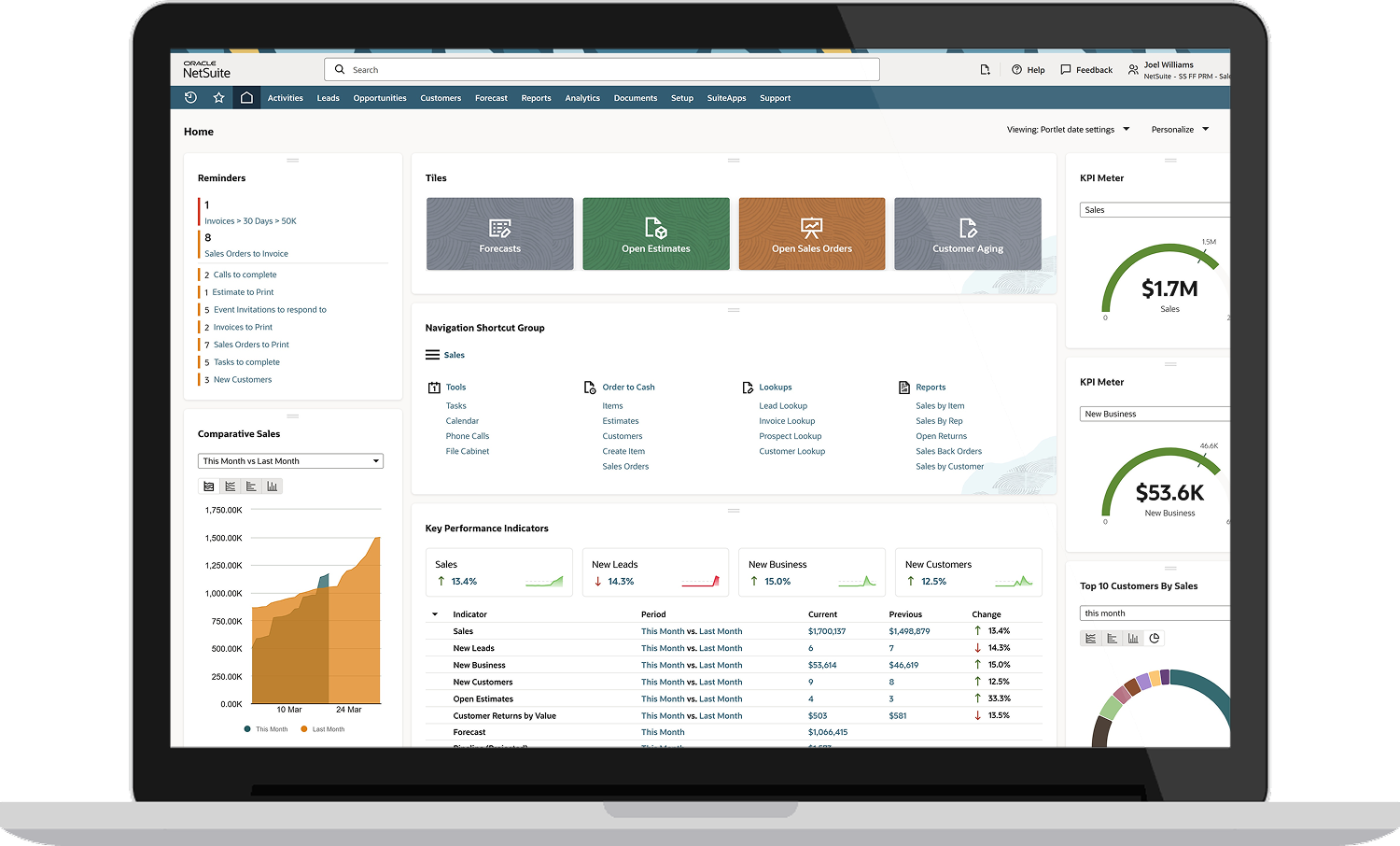
Retention strategies fail on fragmented data long before they fail on execution. NetSuite Insurance ERP brings policy, billing, commissions, and financial data into a single cloud platform that automates error-prone manual workflows. NetSuite CRM extends this connected view of the customer throughout the full relationship lifecycle, pairing sales force automation, marketing campaigns, and customer support with the interaction history and segmentation that retention work depends on. Built-in AI agents monitor every account for potential attrition, with machine learning calling attention to unusual patterns that tend to precede a lapse. These real-time capabilities, coupled with conversational and generative AI, give insurance companies the knowledge they need to retain wavering policyholders and grow the business.
Retaining a policyholder rarely comes down to one grand gesture. It’s the returned call, the clearly explained bill, the heads-up before a rate hike, the check-in after a claim—small proof, again and again, that the company is paying attention. Technology helps insurance companies deliver that at scale, backed by solid strategies that can prevent policyholders from slipping away.
Customer Retention in Insurance FAQs
What’s a good customer retention rate in insurance?
A good customer retention rate depends on the line of business and type of insurance agency. Generally speaking, higher is better; personal lines tend to hold better than a heavily price-shopped book; and multipolicy households stay put far more often than single-line ones.
Can technology help in retaining insurance customers better?
Yes. A connected system that pulls policy, payment, and service history into one view helps an agent spot early signs of churn and personalize outreach. It also automates routine follow-ups—such as renewal reminders and coverage-review prompts—so agents can concentrate on more valuable relationship-building, which no tool can replace.