
A product idea is easy to get excited about. Understanding whether enough people will pay for it to sustain a business is the hard part—and something technology startup founders often neglect to do. A business plan forces a founder to resolve that issue—and others—before betting a year or two of runway on an assumption that’s never been fully tested. This article covers what belongs in a tech startup business plan and the 10 steps for writing a successful one.
What Is a Tech Startup Business Plan?
A tech startup business plan is a written document that lays out what a technology company intends to build and how it plans to make money before it runs out of its initial funds. It exists to answer the questions a founder ultimately must answer for key stakeholders, including investors and banks.
A startup business plan usually covers five areas: the problem being solved, the size of the market opportunity, the business model, the people running the company, and the financial path to profitability or the next funding round. It’s a fluid document that typically changes depending on the audience. For example, a plan built to recruit a cofounder might focus on vision and equity terms, whereas one built for a Series A funding round is anchored in a full financial model and strong market data.
Key Takeaways
- A tech startup business plan puts a founder’s biggest assumptions on paper, so they can be tested before significant money and time are invested.
- A business plan changes depending on who’s reading it; a version built to recruit a cofounder looks different from one built to raise a funding round.
- A thorough plan addresses the problem being solved, the market opportunity, the business model, the team behind it, and the financial path to profitability.
- A lot of work needs to happen before a plan is written, including early customer conversations and building a working prototype.
- A finished plan isn’t static. Founders pull out pieces of it and reuse them as the company grows, checking them against reality as they go.
Why Your Tech Startup Needs a Business Plan
A startup business plan is often considered a formality on the way to fundraising, but that undersells its importance. About half of new US businesses survive to their fifth year, according to the Bureau of Labor Statistics—a much different figure from the widely repeated claim that “90% of startups fail,” which has no traceable source. A roughly 50-50 chance is a long way from a stacked deck, which leaves significant room for a founder’s decisions to affect the outcome. A business plan is one of the clearest ways to reach those decisions using real information.
A business plan also changes how a founder gets evaluated. Investors weigh the strength of the founding team heavily, usually because there’s not enough traction to judge the business on numbers alone, and both the product and the market can shift considerably after early funding. A founder who can explain the market and the financial path to profitability in a coherent document gives investors something beyond a product pitch upon which to form their judgments.
What Components Need to Be in a Tech Startup Business Plan?
A tech startup business plan gives stakeholders a complete picture of the market opportunity and the numbers behind it. A thorough plan includes the following core components that outline different segments of the business case:
- Executive summary: Condenses all sections that follow into a one- to two-page overview, expressing the problem, the solution, the market opportunity, and the funding ask. A strong summary states the ask directly. For example: “The company is raising $750,000 to reach $50,000 in monthly recurring revenue within 12 months.”
- Value proposition: States exactly what the product does and why a customer would choose it over alternatives, using specific language. A vague claim, such as “smarter software for supply chains,” doesn’t have much chance of convincing an investor. But a specific proposition, like “cuts inventory reconciliation time from three days to four hours,” does.
- Problem statement: Names the target audience currently facing a problem and why the way they are solving it isn’t working. The statement should be grounded in specific evidence, such as interviews with prospective customers or details of the workarounds they already use to manage the problem.
- Market analysis: Lays out the size of the opportunity using credible, named data sources, such as government statistics, industry filings, and direct customer outreach. This analysis typically breaks the market into a total, addressable figure and a smaller segment the company can realistically serve in its first few years, with the math behind each number.
- Go-to-market (GTM) strategy: Specifies the exact channels the company will use to find its first paying customers, including cold outreach, paid advertising, and partnerships, along with the cost of acquiring a customer through each one. GTM strategy also states what happens to that cost if the primary channel underperforms.
- Competitive market analysis: Provides thorough research into other companies and workarounds now solving the problem and where each comes up short. An example would be a legacy competitor whose implementation takes six months or a manual spreadsheet process that breaks as a team grows.
- Business model: Tells exactly how the company will charge for its product—a monthly subscription, say, or a one-time license. It should also include price points and the reasoning behind the pricing structure for each specific customer segment.
- Operations and product roadmap: Maps out what gets built and in what order over the next 12 to 18 months and ties this information to important operational milestones, such as a new hire or a new piece of infrastructure.
- Key hires: Names the specific roles the company needs next, in what order, and what each role will accomplish. Investors read this section closely because it strongly indicates how well a founder understands what the business needs beyond the founder’s own skills.
- Financial plan: Contains monthly or quarterly revenue and cost projections built from named, defensible assumptions, such as a specific conversion rate or churn figure. The plan typically covers 12 to 36 months and states which assumption the founder considers most fragile.
- Funding requirements and milestones: States exactly how much funding the company is raising, tied to the specific, measurable milestone that the amount is meant to reach. This could be a revenue threshold or a completed product feature.
Writing a Tech Startup Business Plan in 10 Steps
Filling in the above components takes work that never finds its way into the business plan. For example, steps like validating the idea and building a minimum viable product (MVP) influence what eventually goes into the plan, but you won’t find them in the plan itself. Here are the 10 most common steps that help inform a final tech startup business plan.
-
Executive Summary and Company Description
The summary presents conclusions the founder can’t have reached until every other piece of research and planning was done. The company description portion is usually straightforward—naming the founders, their relevant background, and the corporate structure. The most common mistake in this step is writing the executive summary too early, then bending every subsequent step to fit that story.
-
Idea Validation
Idea validation involves testing the founder’s core assumption with real prospective customers before committing to build. The key is designing a test that can actually come back negative. Asking people whether they’d use a product almost always gets a yes, because agreeing is free—so it proves nothing. A real test asks for a costly action instead, such as asking visitors to a landing page to hand over their email, or requesting them to put a small amount of money down before the product exists. Set the bar in advance—say, 50 signups from 1,000 visitors—so a result below it clearly means the assumption was wrong. The output is a short, written record of what was tested and what happened, which becomes the evidence behind the problem statement and value proposition later.
-
Market Research
Market research means gathering data on the market opportunity from named, credible sources—government statistics, industry filings, or direct outreach to potential buyers—and confirming where each figure came from before it goes into the market analysis section of the plan. The reason to insist on primary sources is that the popular version of a market is often wrong, and a plan built on it overstates the opportunity. Take AI as an example. It’s easy to assume most businesses already use AI, because that’s the story dominating funding headlines. But, in reality, the US Census Bureau’s Business Trends and Outlook Survey shows that just 17% to 20% of US businesses use AI, rising to roughly 40% in the information sector.
-
Business Model Selection
Choosing a business model comes out of informal pricing conversations with prospective customers. What do they pay for the solutions they use now? What would they pay for your product? How would they want to be billed—by subscription, per seat, or one-time license? Having these conversations before the business plan is written avoids massive revisions once actual customers start weighing in, and it grounds the pricing assumptions the financial plan will later depend on.
-
MVP Development
An MVP is the smallest version of the product that still delivers its core value, enough for real users to test it out, not just react to a pitch. While idea validation tests whether people want the product, the MVP tests whether they’ll use it once it exists. The hard decision is choosing which features to cut so the build stays small enough to answer that question quickly. The common mistake runs the other way, with founders adding features that are easy or interesting to build before confirming that early users want the core functionality.
-
Marketing Strategy
Small, cheap marketing tests of two or three channels come before committing a full budget to any one of them. For example, a founder might spend a few hundred dollars on a short LinkedIn ad campaign aimed at a specific job title while sending cold emails to 50 or so prospects in that same niche, then compare the reply rates before deciding where the budget goes. This matters more than it used to, because organic search, long the default channel for early awareness, no longer delivers the way it once did. In the first four months of 2026, 68% of US Google searches ended without a click to a website, according to clickstream research firm SparkToro, largely because an AI summary answers the query on the results page before the user reaches the links.
-
Personnel and Operations
In this step, a founder lists the tasks they can no longer handle alone, then checks the list against a realistic hiring budget. Whichever roles fix the biggest obstacles to growth get filled first. Hiring a specialist role before the business generates enough of that specific work to justify it is one of the more common ways this step goes sideways.
-
Financial Plan Creation
A founder builds the financial plan from the bottom up, starting with unit economics for a single customer—what the customer pays compared to what it costs to acquire and serve them—then multiplying that by a realistic growth assumption. The model projects revenue and expenses; the difference between them is the monthly burn, and cash on hand divided by that burn is the runway. Benchmarks give founders something to compare their plan to. For instance, a competitive B2B SaaS Series A generally starts around $2 million to $5 million in annual recurring revenue, with net revenue retention of 110% to 120% considered strong. An accountant or fractional CFO should check the assumptions before investors see them.
-
Funding and Expended Runway
Monthly burn against cash on hand is the first number to pin down, because it sets exactly how many months of runway exist. The amount to raise gets sized based on the next milestone the company needs to hit—with enough cushion built in to accommodate how long that milestone may realistically take to reach. The median interval between a seed round and a Series A reached 774 days in the most recent data available, up 84% from three years earlier. Careful working capital planning is what keeps a startup operating through that stretch, separate from whatever’s been raised for growth.
-
Milestone Establishment
Here, a founder translates the financial plan into a small number of named, dated checkpoints, with a predetermined answer for what happens to hiring and spending if that checkpoint is hit, missed, or delayed. Milestone metrics function as a planning tool only if the founder revisits them on schedule, which is the step many founders skip once the plan is finished and fundraising begins.
Using Your Tech Startup Business Plan
Despite all the hard work that goes into building a tech startup business plan, the harsh truth is that once it’s written, it rarely gets read from start to finish again. But that doesn’t mean it just collects dust. Pieces of it get pulled out and used on their own. Perhaps the financial plan shows up in a board update, or the operations and product roadmap gets handed to a new hire learning about what the company is planning to build next.
Each time part of your business plan is used, it’s a good moment to reevaluate the information and update anything that’s changed. That habit is a lighter version of what larger companies eventually formalize into an integrated business planning process, which is a regular cycle that keeps every part of a plan tied to current numbers.
Build a Strong Foundation for Your Startup With NetSuite
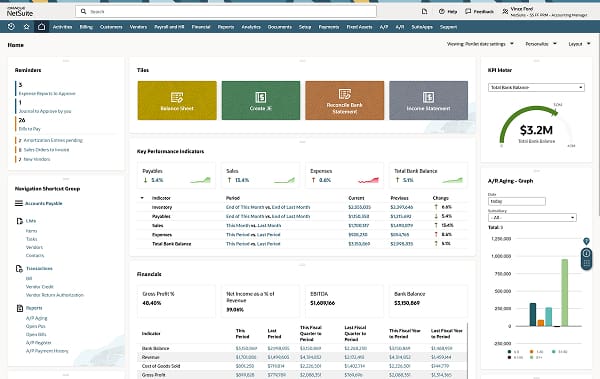
A financial model built in a spreadsheet gets harder to keep current once a startup has real transactions and investors expecting updated numbers. NetSuite Financial Management ties a business plan’s financial model directly to a startup’s books, so a projection updates the moment a real transaction posts. The AI behind NetSuite’s forecasting shows which assumption, such as a churn rate or a sales cycle length, is driving the projection. A separate AI capability compares those assumptions against actual results and explains, in plain language, where the plan and reality began to diverge. Both AI tools pull from the same live financial data already inside NetSuite, updated in real time as new transactions post.
It goes without saying that writing a tech startup business plan doesn’t guarantee anything. What it does do is force a founder to confront and validate their own assumptions. By the time an investor or a cofounder reads it, the document should already have done its hardest work.
For startups that aren't quite ready for a full ERP suite, NetSuite's QuickStart delivers an AI-powered accounting platform packed with early-stage essentials. With free access and one-day configuration, QuickStart brings a start-up's business plan to life thanks to time-saving automation for record management, banking, payments, inventory, and more.
Tech Startup Business Plan FAQs
What do you need to start a tech startup?
At minimum, a founder needs a validated problem worth solving and enough money set aside, whether from savings or an early investor, to reach a first test of demand. A full team and a finished product can follow once that test has been run.
How much money do you need to start a tech startup?
There’s no fixed number, and published figures on this vary enormously by product type and industry. A more useful exercise than aiming for a specific total is building a monthly burn estimate, covering the founder’s own living costs plus whatever it costs to build and test the product, and multiplying it by how many months are needed to reach the first test of demand.