
A single product might contain aluminum, steel, plastic resin, and a rare earth magnet, and each material follows its own chain of mines and shipping routes before it reaches an assembly line. Most manufacturers can name the first link—their direct suppliers—but far fewer can pinpoint where the harder-to-trace cobalt in a battery was mined or what farm the cotton in their lining came from. Could these blind spots be hiding harsh labor conditions or a potential environmental disaster? Pressure for that information is also mounting from regulators and buyers, with disclosures increasingly becoming legal requirements and customers asking harder sourcing questions before placing their orders.
Sourcing teams looking to keep pace can start by learning how to build the proof their supply chains currently can’t provide.
What Is Sustainable Raw Material Sourcing?
Sustainable raw material sourcing is the process of choosing vendors and acquiring the materials that go into manufactured products, such as metals or textiles, while weighing the environmental, economic, cost, and ethical impact of each purchase. It spans the full upstream chain, from extraction or harvest through processing and transport, and applies the same scrutiny to a material’s origin and production conditions as it does to pricing and delivery.
Key Takeaways
- Sustainable raw material sourcing extends a company’s due diligence past direct suppliers to the materials’ actual origin point, often several tiers upstream.
- Environmental, economic, cost, and ethical factors now shape sourcing decisions.
- A mature sourcing program treats multiple principles—supplier relationships, material lifecycle, resource conservation, and regulatory compliance—as connected parts of the same strategy.
- Beyond reducing supply chain risks, sustainable sourcing can serve as a selling point for customers.
- Software and AI can give sourcing teams the supplier visibility they need to document their sustainability efforts.
Sustainable Raw Material Sourcing Explained
Sustainable procurement practices cover a wide range of factors, including vendor selection, logistics, packaging, and third-party services. Underlying each one of these are the raw materials themselves—where they originate, how they’re extracted or grown, how they’re delivered, and what happens to them before they reach the factory floor.
Most manufacturers know who their direct suppliers are, but even the biggest organizations see visibility drop fast after that. According to EcoVadis and Accenture’s “2026 Sustainable Procurement Barometer” report, 48% of global organizations say they have visibility into 75% or more of their Tier 1 suppliers. But nearly 90% of organizations see less than half of their Tier 2 suppliers, and Tier 3 remains “largely opaque.” For companies that rely on global supply chains, materials pass through many links—mines, smelters, brokers, processors, logistics companies, and intermediaries—and each handoff creates another chance for forced-labor risks or unreported greenhouse gas emissions to creep in. The same data shows that 30% of suppliers provide no emissions data at all to their buyers.
Why Is Sustainability an Important Consideration in Raw Material Sourcing?
The selection of raw materials carries consequences that affects a business before they arrive, and they linger long after goods are sold. A cheaper input might save some money in the short term but turn into a regulatory fine or a stalled production line years later. Materials strategies often aim to balance priorities in these four categories:
- Environmental impacts: Extracting and processing raw materials accounts for a large share of a product’s footprint, long before manufacturing begins. Using recycled aluminum, for instance, instead of making new aluminum from ore, can significantly reduce the environmental impact of each unit produced.
- Economic impacts: A material shortage, supply chain disruption, supplier failure, or lost sustainability certification can leave a business scrambling. Spreading purchases among several well-vetted sources helps prevent single points of failure from disrupting production. And because raw material costs can change quickly—for example, global aluminum prices rose 49% between May 2025 and May 2026—having multiple suppliers gives businesses the flexibility to buy from whichever offers the best price.
- Cost impacts: Sourcing decisions increasingly carry a direct price tag tied to environmental performance. For example, since January 2026, the EU’s Carbon Border Adjustment Mechanism has required importers of cement, iron, steel, aluminum, fertilizers, electricity, and hydrogen to purchase certificates covering the emissions embedded in those goods. Such regulations turn a material’s carbon footprint into a line-item cost and a proof-of-emissions requirement for the exporter.
- Ethical impacts: Forced labor and unsafe working conditions can enter a supply chain several tiers removed from a manufacturer’s factory. Even if the direct supplier is unaware, unethically sourced materials can harm the manufacturer’s reputation once they’re discovered and lead to lost business, customs seizures, regulatory penalties, and contract terminations.
Principles of Sustainable Raw Material Sourcing and Procurement
A sustainable sourcing program revolves around six main principles that work together to keep raw materials flowing. A manufacturer can deploy a detailed traceability system, for example, but if its suppliers don’t cooperate, the system will capture data from only the manufacturer’s own tier. Although the principles are interdependent, the weight placed on each may shift as a business’s priorities change.
Material Traceability and Transparency
Supply chain traceability allows a business to view the full history of its materials through every supplier tier, so it can substantiate its sourcing claims to customers and regulators through sustainability reporting. This visibility is becoming a requirement in some markets. For example, beginning Feb. 18, 2027, businesses that place finished batteries for e-bikes, e-mopeds, and e-scooters, as well as industrial batteries with a capacity greater than 2 kilowatt-hours, on the EU market must create and maintain an electronic passport for each battery. A QR code affixed to the battery provides access to its passport, which contains information about its materials, carbon footprint, performance, origin, and other details. Independent organizations also publish their own standards, such as the Responsible Minerals Initiative’s Conflict Minerals Reporting Template, which provides its 500-plus member companies with a standardized way to trace minerals’ country of origin.
Supplier Selection and Collaboration
Choosing the right suppliers sets the baseline for a sustainable supply chain, and ongoing monitoring and follow-up help maintain commitments. Collaborating with suppliers on sustainability efforts, such as waste reduction, recycling, low-emission logistics, and ethical sourcing, can lead to innovations that save both parties money. For long-term relationships, objective reporting and key performance indicators (KPIs) like supplier sustainability scores help quantify improvements and keep both parties honest.
Product Lifecycle Considerations
Raw material choices set a product's environmental baseline, and designing products to last longer and be easier to repair can extend those savings even further. Offering recycling programs and repairable/swappable components to customers can also bring financial and operational benefits, as reused materials reduce procurement costs and the burden on sourcing and traceability teams.
Resource Consumption and Conservation
Every raw material draws down a finite resource, whether it’s mined ore or fresh water, and sourcing decisions determine how much. A sourcing team that looks to scrap and recycled stock as a first option conserves both the material and the energy that would otherwise go into fresh extraction. This reduced consumption can also benefit nearby communities by minimizing delivery emissions and landfill waste.
Ethical Labor Practices
Labor conditions at a mine, farm, or processing facility aren’t always visible to the manufacturer buying the finished material. That’s why regulators are starting to require companies to investigate their own supply chains through mandates such as the EU’s Corporate Sustainability Due Diligence Directive, which takes effect in July 2029. This directive will require US and other non-EU companies generating more than €1.5 billion (approximately $1.7 billion) in annual EU revenue to identify and address significant human rights and environmental risks in their operations and supply chains. Although smaller suppliers may not be directly on the hook under this directive, many are opting for similar internal controls to keep their business aligned with new rules and customer demands.
Regulatory Compliance
Sourcing regulations have expanded from country-specific import rules into a stack of overlapping environmental, social, and governance (ESG) requirements from different regulators. For global sourcing, a single shipment can cross multiple jurisdictions, each with its own timeline and paperwork requirements. Companies that build ESG and compliance checks into their processes can reduce the risk that a shipment gets held at the border for missing proof of ethical labor practices or of a contract being terminated when a supplier can’t produce a required certification. AI agents can help simplify these multistep regulatory checks by automatically documenting origin and supplier data and comparing records against current regulations before handing off a detailed compliance report to staff.
Benefits of Sustainable Material Sourcing
Companies with sustainable material practices can keep reaping benefits long after they check their compliance boxes. Procurement often sees the most immediate results with fewer supply disruptions, while sales and brand teams can position sourcing as a selling point in a competitive bid. The five categories below cover both immediate and slower-to-materialize gains.
Environmental Benefits
A sourcing program that favors recycled or responsibly extracted materials cuts a manufacturer’s footprint on every product it makes. Sustainability extends to deliveries, too. Shipping by sea instead of air, or consolidating orders to reduce rushed shipments, cuts transportation emissions. Companies can also revisit their schematics and material orders from time to time to see whether they can substitute an input with a greener choice without affecting product quality.
Economic Benefits
Sustainable sourcing programs are demonstrating quantifiable financial returns in addition to their eco-friendly impact. AI is also playing a significant role in helping companies keep up with complex global supply chains. Companies with mature, AI-led sourcing processes are roughly 2.5x more productive, and resilient organizations outpace their peers in revenue growth by 3.6%, according to EcoVadis/Accenture. This performance gap often comes down to data. AI relies on the same supplier information that sustainable sourcing programs already collect for compliance and traceability, so those companies often have a faster, cheaper path to deploying it. With more than $1.6 trillion in potential annual growth lost to supply chain disruptions, per EcoVadis/Accenture, any advantage can make a big difference to net profits.
Brand Reputation Benefits
Buyers, investors, regulators, and a company’s own employees pay attention to a manufacturer’s inputs. A sourcing scandal, exposé on a dumping site, or mislabeled recycled-content claim can spread fast and stick longer than most companies realize. Conversely, a credible, well-documented sourcing story can be an asset worth promoting to draw in new business.
Risk Management Benefits
According to EcoVadis/Accenture, organizations with mature sustainable sourcing programs cited regulatory preparedness (70%) as the top benefit, followed by risk reduction (62%)—a growing focus of sustainability risk management programs. Knowing where a material comes from before a regulator asks turns a compliance audit into a routine check instead of a costly, last-minute records hunt. That same head start and provable due diligence also limit how much a supplier’s troubles can spill over into the business’s own operations.
Social Benefits
A sourcing program that requires verified fair wages and safe working conditions gives suppliers a real incentive to provide them to the miners, farmers, smelter workers, and factory personnel who rarely have direct leverage over the companies buying their output. That requirement extends fair treatment to workers a company will likely never meet in person. It also gives customers the confidence to purchase without unknowingly funding practices they wouldn’t support.
5 Sustainable Raw Material Sourcing Tips
Building a sustainable sourcing operation is easier with a framework to follow. The five tips below run from an initial audit through ongoing software support:
- Audit existing sourcing procedures and suppliers: Start by mapping out what’s already known about each product line and supplier tier and identifying where information is missing. Most organizations already have a good sense of their direct suppliers, so an audit’s real value comes from documenting the exact limits of that understanding.
- Identify and benchmark key metrics: Track KPIs like supplier emissions data, recycled content percentage, audit pass rates, and certification coverage, then compare them against a baseline. Organizations that measure the financial return on these initiatives through formal sustainability accounting can better allocate resources where they’ll provide real value.
- Look for reputable industry certifications: ESG frameworks and standards like ISO 14001 demonstrate that a supplier has a working environmental management system in place. Certifications don’t always tell the full story, of course, but they can help teams narrow the field to suppliers that are worth a closer look.
- Collaborate with suppliers: Share sustainability expectations early, along with incentives for meeting them. That way, sourcing teams can weed out uninterested vendors and prioritize those that want to work toward the same goals.
- Use software to identify gaps and opportunities: Vendor management and procurement software keep orders and supplier performance in one place so teams can easily run side-by-side risk and spend reports. AI agents run even deeper analyses to identify irregularities, such as a supplier’s missing emissions data or an unusual spending pattern, then compare those findings with existing benchmarks to spot opportunities, like consolidating fragmented orders with a stronger-performing supplier. From there, the agents can recommend adjustments or new supply chain sustainability strategies for a buyer to approve.
How ERP Software Enables More Sustainable Material Sourcing
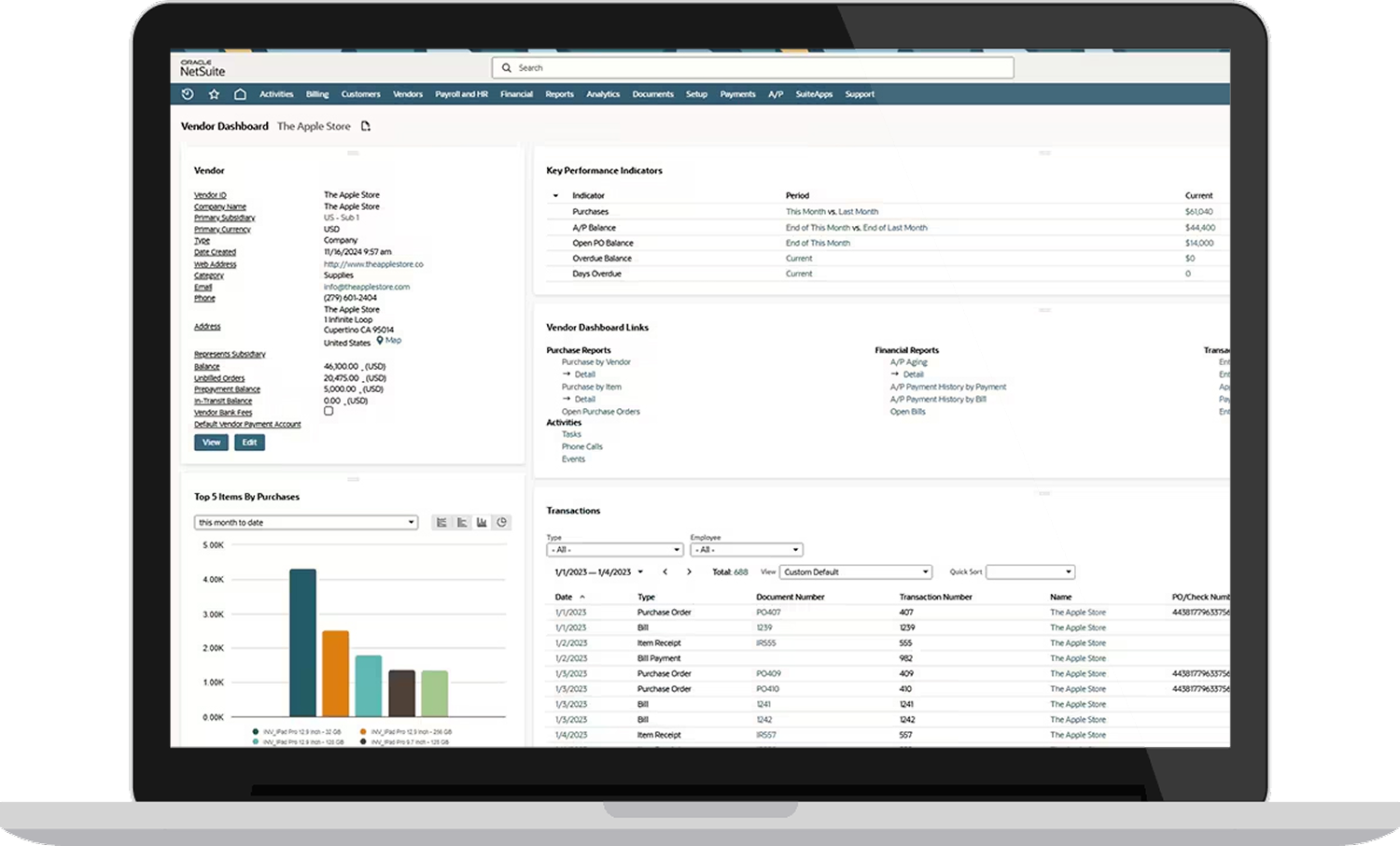
When supplier certifications, emissions reports, violation records, and audit histories sit in spreadsheets or systems that don’t talk to each other, sourcing teams must manually cross-reference each system and reconcile the data before they can make decisions. An ERP system syncs procurement and supplier data with inventory records so that sourcing teams can see the full picture in one dashboard.
ERP software with embedded AI helps turn historical data into forward-looking action. GenAI helps teams search unstructured supplier documents and summarize risks in language tailored to the user’s role. At the same time, AI agents can continuously monitor supplier and regulatory data and call out missing certifications or new risks before they become compliance issues. But these AI tools are only as effective as the data behind them. An integrated ERP keeps that data current and specific to the business so that AI-generated recommendations reflect the company’s actual records instead of generic assumptions.
Enhance Procurement Visibility With NetSuite ERP
Where did this material come from? Is that supplier still in good standing? Sourcing teams jumping between spreadsheets, supplier questionnaires, product spec sheets, and disconnected trackers struggle to answer those straightforward questions. NetSuite Manufacturing ERP simplifies that search by integrating inventory and supplier data into one cloud platform that staff can access through role-based and customizable dashboards. NetSuite Procurement runs on the same software, so sourcing teams can track certifications, audit history, vendor performance, and spending against sustainability criteria in the system they already use to place orders. This data also powers NetSuite Next, the company’s suite of AI capabilities, so built-in AI agents can monitor supplier records and call out missing documentation or a lapsed certification within their preset parameters. These tools work together to give sourcing teams a real-time view of supplier risk every time they place an order.
NetSuite’s Procurement Dashboard
Traditional sourcing focused on price and lead time; for many companies, sustainability came second, if it was a consideration at all. But now regulators, buyers, investors, auditors, and insurers all want to know where a company’s materials come from, backed by documentation to prove it. Building that visibility into daily sourcing work is becoming commonplace for manufacturers that want to minimize their impact as they grow.
Sustainable Raw Material Sourcing FAQs
What is an example of sustainable raw material sourcing?
Consider a can manufacturer switching from new aluminum to recycled aluminum scrap. Doing so cuts the energy needed to produce the material and reduces the manufacturer’s exposure to price swings and extraction-related risks that come with mining new ore. Other examples of recycled materials include reclaimed cotton in textiles or certified, traceable timber in packaging.
What are the 4 types of sustainability?
Most sustainability frameworks group impacts into four areas: environmental, economic, cost, and ethical. In a sourcing context, that translates to a material’s environmental footprint, any regulatory expenses or additional supply chain expenses sourcing incurs, the labor conditions in harvesting/processing it, and its effect on the communities where it’s produced or grown.