
A borrower fills out a loan application online at 11 p.m. By the time anyone starts work the next morning, artificial intelligence has already read, verified, scored, and added the file to a loan officer’s queue for a closer look. AI now does this sort of work at nearly every stage of a loan’s life, from the first marketing touch to the final payment. Banks, credit unions, and fintech lenders have come to treat AI as core infrastructure.
What Is AI in Lending?
AI in lending refers to the use of machine learning models, natural language processing, computer vision, and generative and agentic technologies to perform or support tasks that loan officers, underwriters, analysts, and compliance staff once handled on their own.
Key Takeaways
- Lenders are turning to AI to provide the fast, responsive service that today’s borrowers demand.
- AI works at every phase of the loan process, from marketing and document intake through underwriting and portfolio monitoring.
- By spotting patterns in data that manual review would miss, AI strengthens risk assessment and fraud detection.
AI in Lending Explained
Lenders have scored credit risk with statistical models for decades, but AI and ML are reshaping how the industry operates. The magnitude of data these models digest, the speed at which they adapt, and their appetite for alternative signals help humans make more accurate decisions while relieving them of tedious work.
An ML model studies years of lending history—who repaid, who defaulted, who committed fraud—and identifies patterns that predict how a new applicant will behave. NLP and computer vision add a second layer, turning bank statements, tax returns, pay stubs, and identity documents from a pile of disorganized paper or PDFs into clean, usable data.
For its part, generative AI can produce original text for borrowers, such as credit memos, loan-file summaries, and plain-language explanations. Retrieval-augmented generation (RAG) feeds the model a specific set of documents to work from—a borrower’s actual file, the lender’s credit policy—and the AI tries to build every summary or memo from those verified sources. Agentic AI can string these capabilities together to run a whole task from end to end. It plans the steps, pulls data, takes action, and adjusts as it goes, with a person supervising the outcome.
This doesn’t replace the rules—the if-then logic a lender programs by hand, such as “decline any application with a debt-to-income ratio above 45%.” Lending operations often run AI and rule-based systems together, letting the rules engine handle the black-and-white policy checks while AI handles prediction, classification, and orchestration of longer workflows.
Why Are Modern Lenders Looking Toward AI?
Borrowers today expect a loan to move at the same speed as everything else in their online lives, something neobanks and embedded finance services that deliver instant answers have trained them to expect. But a traditional lender can’t compete with those digitally native firms’ lean cost structures by running its old processes faster. That’s because as loan volume scales, manual underwriting, document review, and reconciliation slow down and become more expensive.
AI eases that strain, and the previously siloed data feeding these models is now within reach, with bank transaction, payroll, and accounting software feeds flowing through APIs. Lenders can now read alternative financial signals, including a borrower’s cash flow, rent, and utility payment histories, and extend credit to people with thin files. However, fraud rings are also using GenAI to forge identity documents and clone voices faster than fixed rules can keep up with. To counter these risks, lenders are answering with models that learn from each new attack.
The Advantages of AI in Lending
Most lenders already hold much of the necessary information to spot borrower patterns, including application histories, transaction records, and repayment behavior. But the sheer volume of that data—and how quickly it changes—outpaces a human team’s ability to act on it. AI handles it faster than any person can, resulting in these benefits:
- Increased agility: An ML model can be retrained or updated as fresh data arrives, so lenders can rework underwriting criteria, pricing, and routing, allowing even a small lender to compete on speed.
- Improved insights and risk assessment: A traditional credit score might not account for factors that together signal risk—for example, a cash balance dip along with rising credit card use. AI models can weigh those combinations directly, giving lenders a sharper read on whether a borrower will repay.
- Greater consistency: A well-governed model applies the same logic to every file, reducing the variations introduced by human review.
- Enhanced fraud detection: Fraud models can be retrained as tactics evolve. Behavioral biometrics, device intelligence, and document forensics can help distinguish suspicious applications from legitimate ones.
- Better customer experience: On straightforward applications, AI cuts approval times from days to minutes. Virtual assistants answer routine borrower questions 24 hours a day.
- Competitive edge: Automating high-volume document review, reconciliation, and servicing lets lenders hold down the cost of loan origination and service while delivering the sort of speed that borrowers often take for granted.
Use Cases of AI in Lending
Most people equate AI in lending with the approval decision. But a loan’s life embraces everything surrounding that decision—intake, servicing, collections, reconciliation, reporting—and a lot of AI’s value sits in unglamorous back-office plumbing. The uses below trace that full path, from the front to the back office.
Document Intake and Processing
Every application arrives with a stack of paperwork—pay stubs, tax returns, appraisals, identity documents. Automating intake and processing allows analysts to spend more of their hours on making credit judgments. Intelligent document processing combines optical character recognition, computer vision, and NLP to pull structured data from those files, cross-check it against other sources, and note anomalies. This is crucial, because an error during intake can ripple downstream.
Delinquency and Collections Management
Once a loan is on the books, AI models can analyze changes in transaction patterns and account activity to identify borrowers at risk of missing a payment. Collections teams can then place early, well-timed calls to reach the accounts most likely to recover. AI agents are starting to run entire collections cases, but contact is tightly regulated. For debt collectors covered by the FDCPA, Regulation F limits certain communication practices and telephone-call frequencies. Automated collections workflows therefore need controls to keep them aligned with the rules that apply.
Cash Flow and Working Capital Visibility
For commercial lenders and those serving small enterprises, a borrower’s cash flow and working capital position reveal how the business is really doing day to day. AI forecasting tools pull in transaction and accounting data, as well as market news and other outside signals, to project a company’s cash position under a range of scenarios. That same view shows whether a business has enough working capital to cover payroll, suppliers, and other short-term obligations. Those projections help a lender decide how much credit a business can safely take on. They also identify borrowers whose liquidity is thinning before a decision is finalized.
Application Fraud Detection
AI fraud-detection systems combine document forensics, device and behavioral biometrics, and network analysis to catch application patterns, including inflated income and AI-forged documents, that are difficult to see on a single file review. Document forensics spot evidence of tampering with electronic documents, while network analysis links applications that share a device or IP address. Because GenAI makes convincing fake documents cheap to produce, these defenses have crossed from optional to essential.
Compliance Monitoring
A compliance team reviewing files manually can spot-check a sample, but AI tools can review every document. AI can scan loan files, communications, and transaction data in near real time, and help lenders navigate fair-lending rules, disclosure requirements, and anti-money-laundering laws. These tools also spot patterns a person might miss—say, quoting higher rates or approving fewer applications for a protected demographic—and keep audit trails that log what they checked and when, giving examiners a clear record to review.
Credit Underwriting and Credit Memo Preparation
AI models can weigh a huge range of inputs when sizing up an applicant, including cash flow and transaction data. In commercial lending, GenAI increasingly drafts credit memos, pulling in the financials, echoing standard memo formats, and building a narrative around the five Cs of credit: character, capacity, capital, collateral, and conditions. Conventional software still calculates the hard numbers, including debt-service coverage ratios, to avoid potential AI hallucinations. A human underwriter can still review, edit, and approve the final memo under a lender’s governance process. Federal adverse-action rules focus on giving applicants accurate, specific reasons for credit decisions, including decisions that use complex algorithms.
AML and KYC Workflow Orchestration
AI automates the work of bringing on a new customer under AML/KYC rules such as verifying identity documents, screening names against sanctions and adverse-media databases, and mapping a company’s ownership chain. Some banks field multiagent systems in which each agent owns a stage—data extraction, entity resolution, ownership analysis, adverse-media screening—and a quality-assurance agent checks the work before a human sees it. This allows the person to spend time on genuinely tricky, high-risk cases. After onboarding, the AI agent continues monitoring each customer’s risk profile, recommending manual reviews only when something changes, rather than doing routine annual checks.
Loan Servicing and Order-to-Cash Operations
After a loan closes, AI takes on the order-to-cash processes, including payment posting, escrow administration, borrower questions, and payoff processing. Virtual agents can handle routine service, such as payment status checks and payoff quotes, then pass more complex tasks that require human judgment to staff. Consumer-protection requirements vary by product: mortgage rules address payoff statements and loss-mitigation applications, while Regulation Z governs billing-error procedures for covered open-end credit. Automated servicing workflows need controls aligned with the rules that apply. On the commercial side, AI reconciles incoming payments against outstanding invoices and labels deviations for a person to handle.
Financial Close and Reconciliation
Month- and quarter-end financial close processes traditionally involve matching transactions between systems, chasing exceptions, and posting journal entries against a hard deadline. AI reconciliation platforms learn a lender’s historical patterns and handle that matching autonomously. They can also pull anomalies for review throughout the period, resulting in a faster, cleaner close that feeds faster, steadier reporting.
Portfolio Credit Risk Monitoring
Lenders must track the credit health of entire portfolios, and the traditional approach—reviewing each borrower’s financial statements every quarter—tends to shine a light on problems only after they’ve mushroomed. AI risk management systems watch continuously, noting a borrower’s transaction activity, covenant compliance, shifts in market indicators, and adverse-media mentions, and scoring these items for early signs of trouble. A single event, such as a bounced payment or a breached covenant, can initiate a fresh risk assessment.
Portfolio Performance Reporting
AI can analyze a lender’s portfolio performance, checking the underlying data for errors, duplicated records, and misclassified loans. It can also draft required reports for management, investors, and regulators, citing exceptions, such as a rise in delinquencies or a buildup of loans in one risk grade. This work leaves analysts free to interpret the figures, instead of assembling them.
Marketing
ML models score prospects by how likely they are to qualify for credit so marketing and lending teams can focus their spending on the leads most likely to convert. Commercial prospecting tools dig into firmographic data, growth signals, and corporate hierarchies to uncover high-value opportunities before a relationship manager picks up the phone.
Master Data Fragmentation
When one borrower or counterparty shows up in a dozen mismatched records spanning origination, servicing, CRM, ledger, and risk systems, no one has a single, accurate picture of that relationship. Answering a basic question about how much the borrower owes or how much sits at risk means reconciling those records by hand. AI addresses this shortcoming through entity resolution. ML models compare records in different systems and identify which belong to the same borrower or counterparty. Rather than having an analyst manually cross-reference five systems to confirm that the “J. Smith” in the CRM and the “John A. Smith” in the loan origination system are one person, the model scores the likelihood of a match, consolidates high-confidence pairs, and sends lower-confidence ones for human review. Once matched, records get merged into a single, trusted “golden record” that every downstream AI use case can rely on.
3 Tips for Implementing AI in Lending
Successful AI implementation usually depends more on the organizational and technical foundations than the selected model. These three tips distinguish the lenders that get lasting value from AI:
- Start with solid data: Models and agentic workflows require accurate, up-to-date, comprehensive, and reliable data. Before sinking money into model development, successful lenders build a cohesive system for core records—often an AI-integrated ERP system—that can catch errors as data comes in. Certain situations, such as fraud screening and early-warning monitoring, depend on continuous updates, so systems must also be able to deliver data the moment it’s created.
- Maintain strong governance and controls: ECOA and Regulation B require creditors to provide specific principal reasons for adverse action, while FCRA adds notice requirements when a consumer report or credit score is used. Lenders that use AI to review loan applications should vet a model’s risk before it goes live and keep watching its performance afterward. Building compliance rules directly into agentic systems that act on their own can facilitate governance.
- Invest in change management and effective training: To fully utilize AI capabilities, people in each role need to know how an AI model fits into their work and why they should use it. They also need guidance on how to spot when a model gets a decision wrong, such as approving a borrower it should decline or declining one it should approve, and understand when to override it.
Emerging Techniques and Technologies in AI for Lenders
Several technologies at the frontier of AI are already landing in production environments. Lenders are exploring how to use agentic AI for document extraction, fraud screening, integrating agents with legacy systems, and building new applications and workflows for agentic capabilities. Meanwhile, RAG ties every output to an auditable set of sources, which is critically important in regulated, document-heavy settings.
New explainable AI techniques translate a complex model’s decision into the specific reasons behind it—showing, for example, exactly which factors prompted a denial. Behavioral biometrics and device intelligence look at how someone fills out an application—typing rhythm, mouse movements, the device and network they’re on. Unusual patterns, such as data pasted in all at once or a device linked to past fraud, help spot a fraudulent application, and some lenders are testing whether those same signals reveal anything useful about a borrower’s creditworthiness.
Your AI Strategy Comes to Life With a Modern ERP
AI relies on trustworthy data inside a lender’s core financial systems. NetSuite ERP Software for Financial Services brings finance, operations, and compliance onto one cloud platform, consolidating data among entities so that AI works from a single, reconciled record for each borrower and counterparty. Automated reconciliations and controls speed the financial close, and since the system reconciles continuously rather than only at period end, fraud signals and covenant breaches can be spotted the moment they occur, instead of being caught during the next scheduled review. Built-in governance and audit-ready records ease regulatory pressure, and NetSuite’s AI cites the specific data and reasoning behind every insight—the kind of transparency ECOA and FCRA require when a lender must explain a credit decision. AI-powered analytics spots real-time trends and exceptions. And because new capabilities tap existing data, the platform grows as a lender adds entities, moves into new markets, or extends AI from back-office reconciliation into its underwriting, collections, and portfolio-monitoring workflows.
NetSuite ERP Turns Data Into Insights
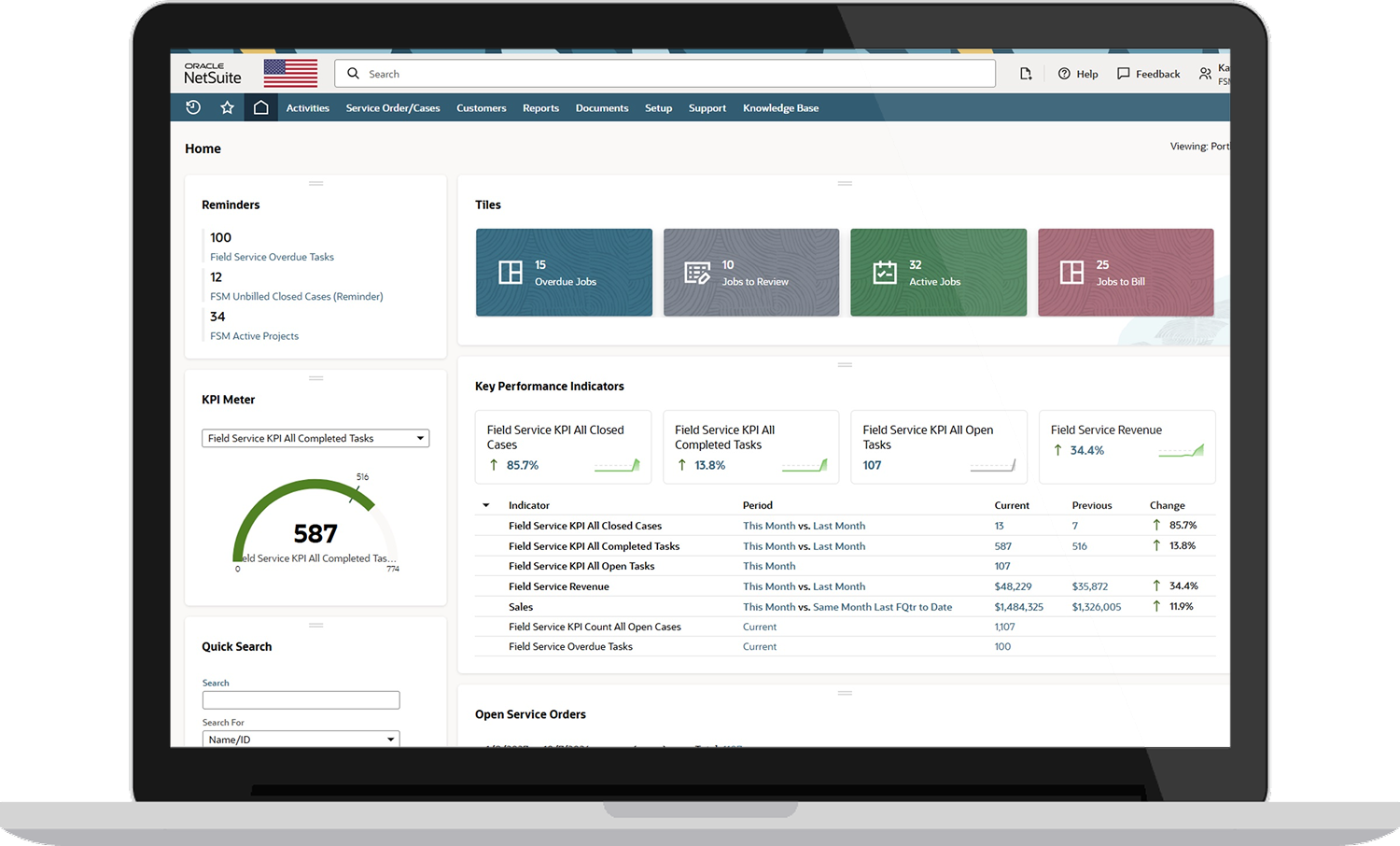
AI now runs through every stage of a loan—it reads documents, scores risk, catches fraud, drafts credit memos, and monitors portfolios. As agentic AI and embedded finance move more of that work out of human hands and closer to the point of sale, lenders with strong data and governance foundations will be best positioned to approve loans faster, judge risk more accurately, and give borrowers a smoother path from application to payoff.
AI in Lending FAQs
How can AI be used in lending?
AI can be used in lending to read and verify application documents, confirm identities, screen for fraud, judge creditworthiness, draft credit memos, monitor compliance, and service loans. It delivers the most benefits when it supports well-governed human processes.
How do embedded finance and AI impact the lending sector?
Embedded finance tucks lending straight into nonfinancial platforms like checkout pages, and AI scores live transaction and sales data to supply split-second credit decisions to complete a transaction fast. Together, they increase competition for traditional lenders and raise borrower expectations for speed and ease of use.
What is the future of AI in lending?
The future of AI in lending runs toward integrated, agentic orchestration over the full loan lifecycle, tighter regulatory expectations, and steady growth in AI-driven underwriting and fraud defense.